
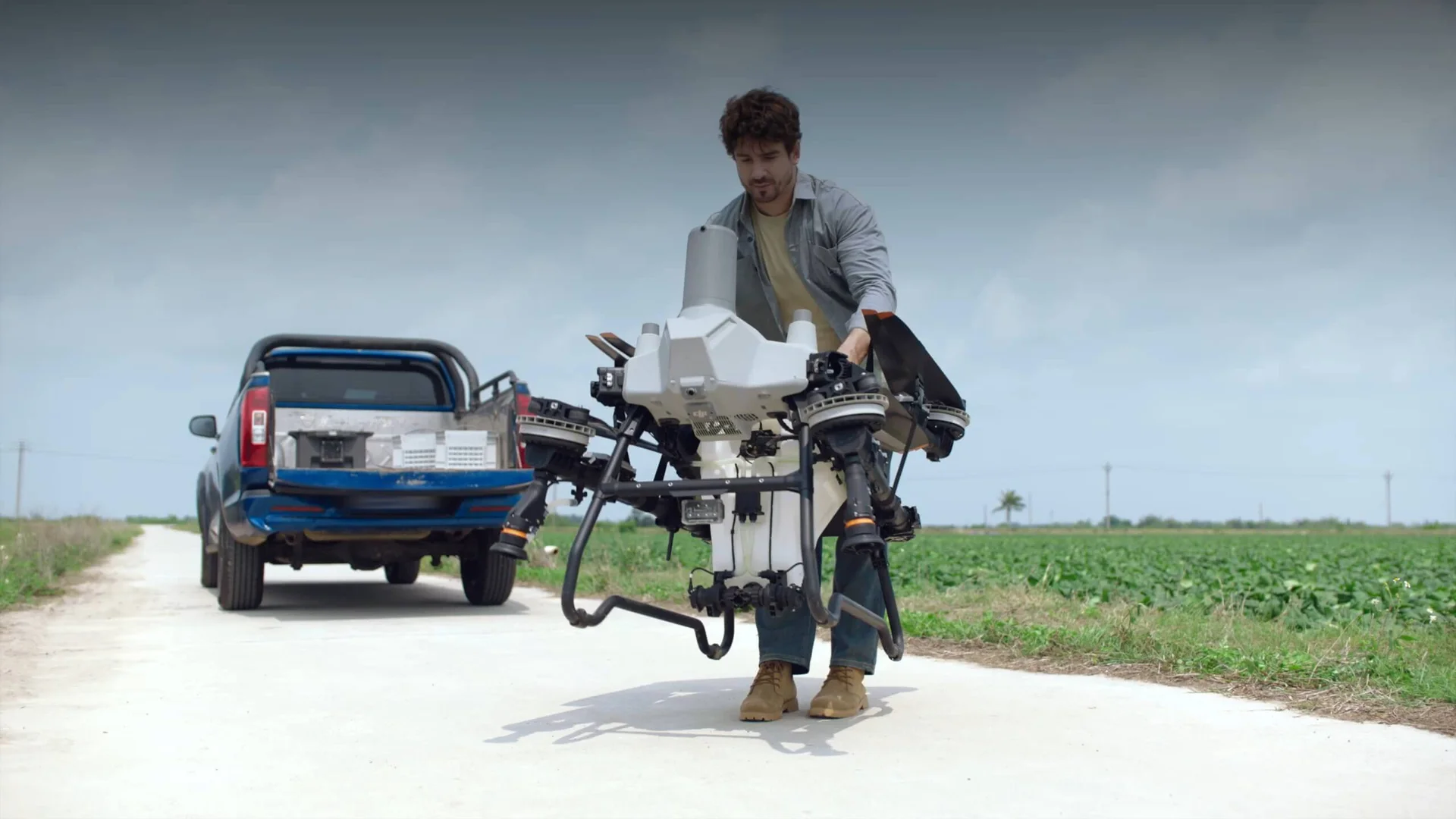
Spray, spread or lift with the DJI AGRAS T55. Its modular equipment, automated flight functions and onboard battery cooling bring different agricultural tasks onto one aircraft. Choose the setup around your crops and working conditions.
Six capabilities. One aircraft.
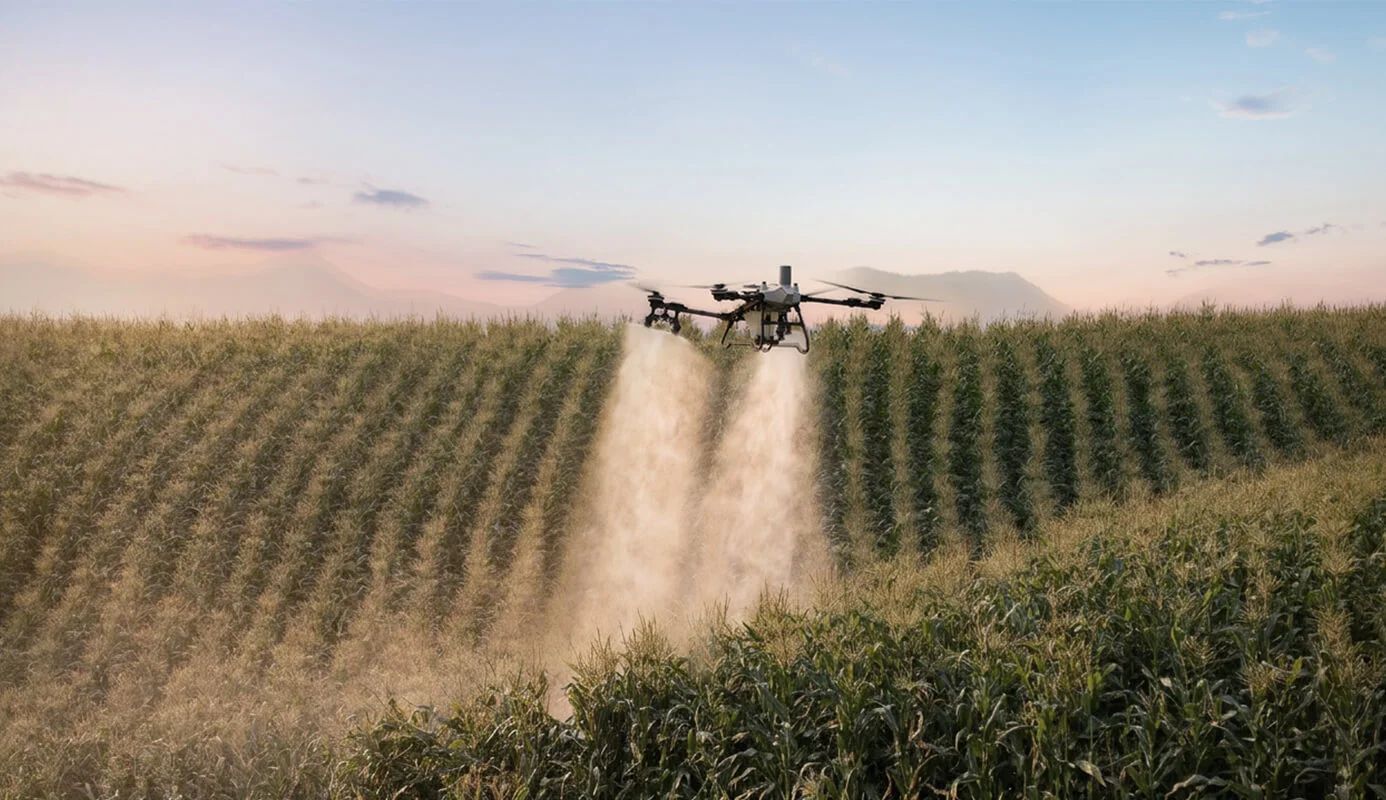 50 L spray tank
Up to 50 L/min with optional mist sprinklers
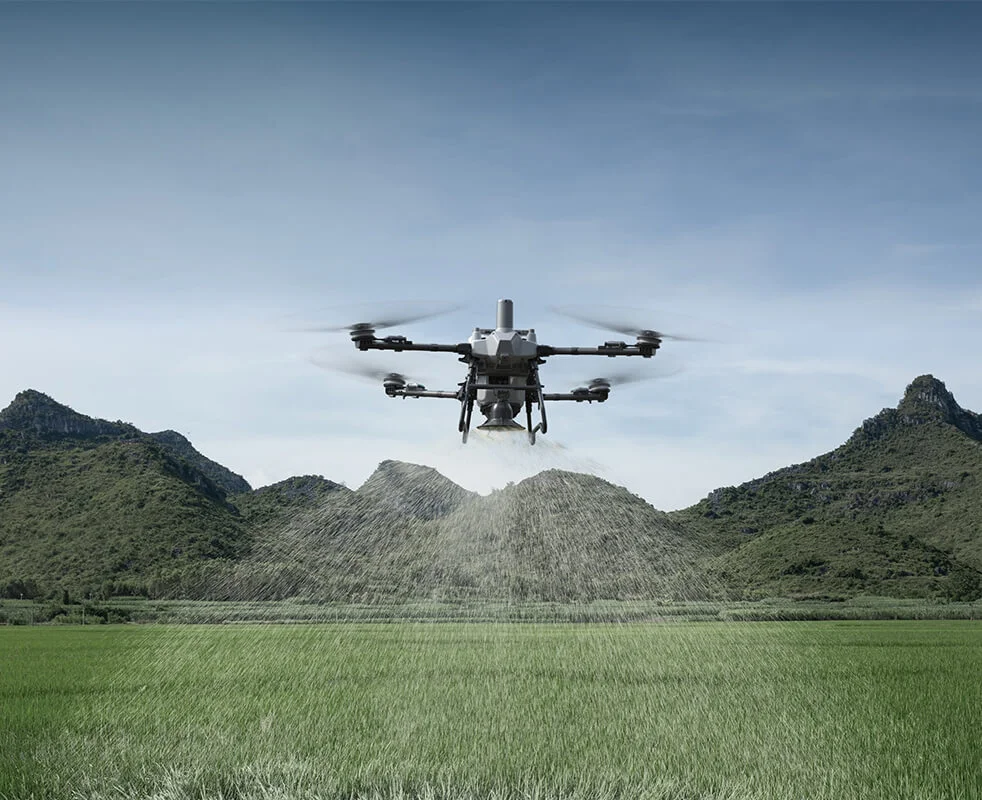 55 kg spreading payload
Up to 400 kg/min with compound fertilizer
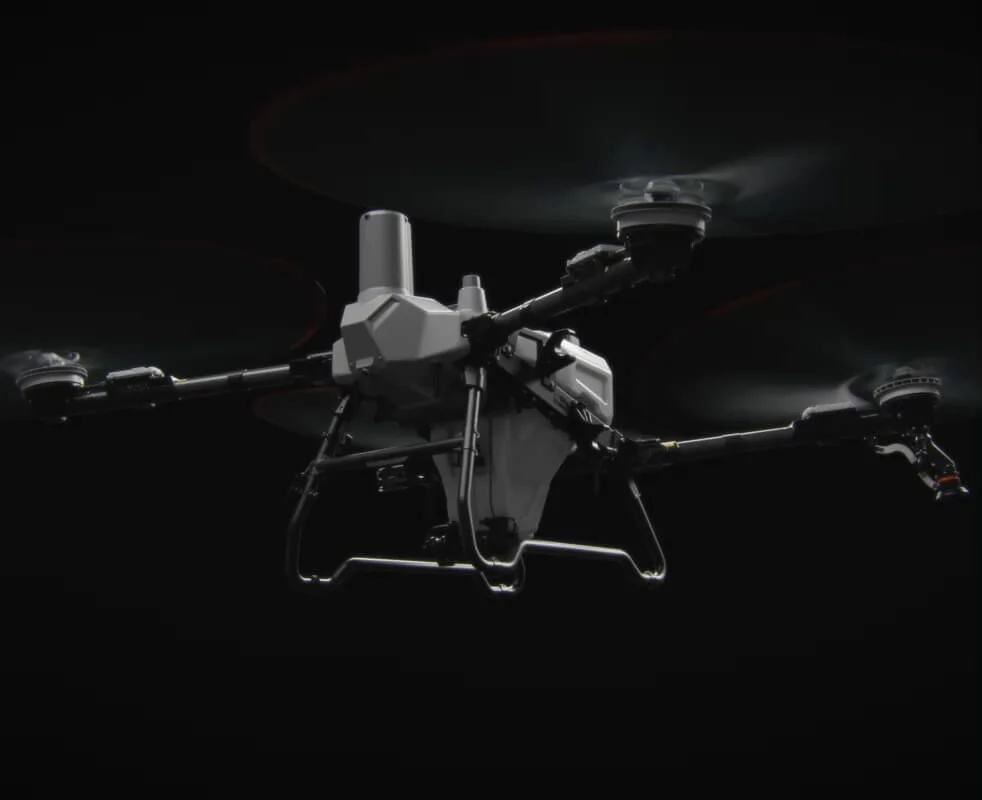 Radar and vision
Obstacle detection and bypassing
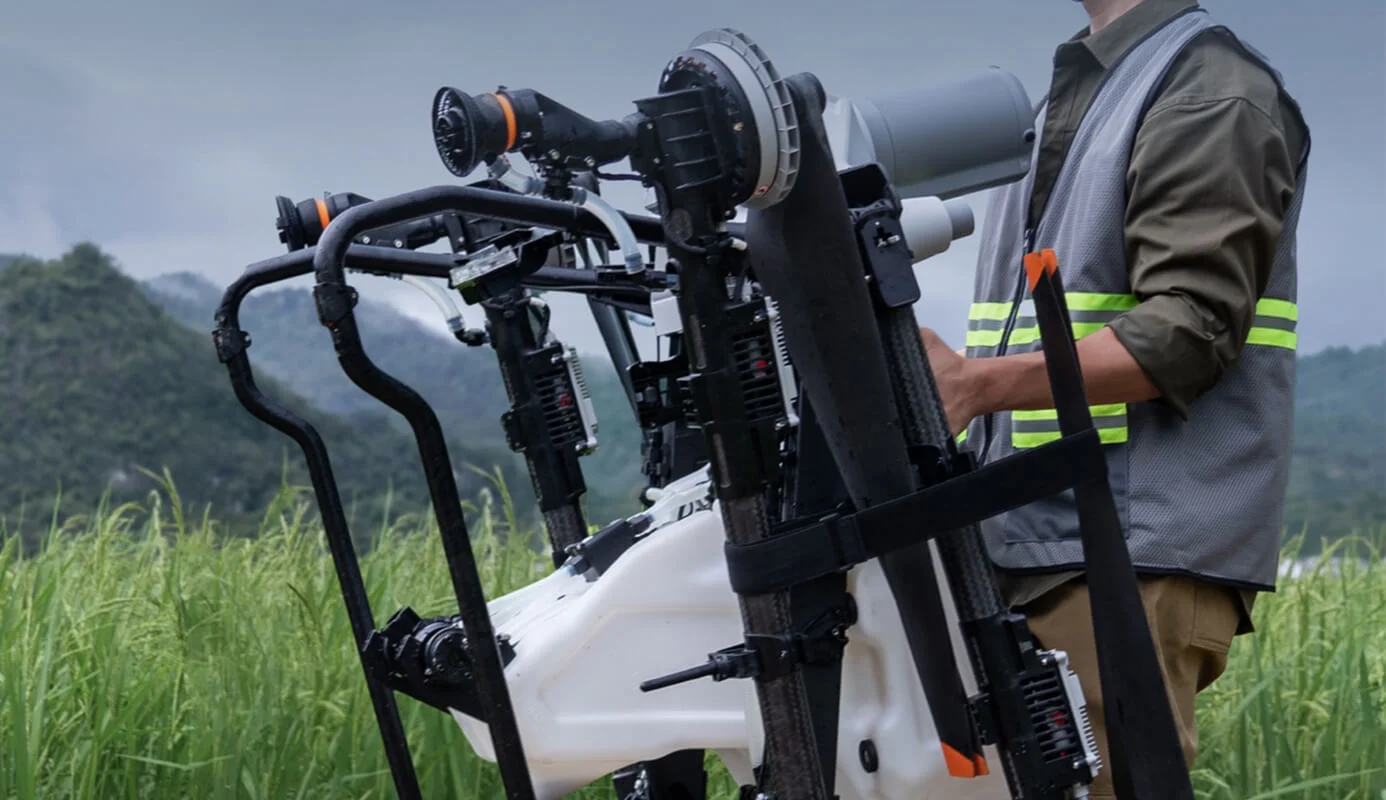 Folding airframe
Designed for transport
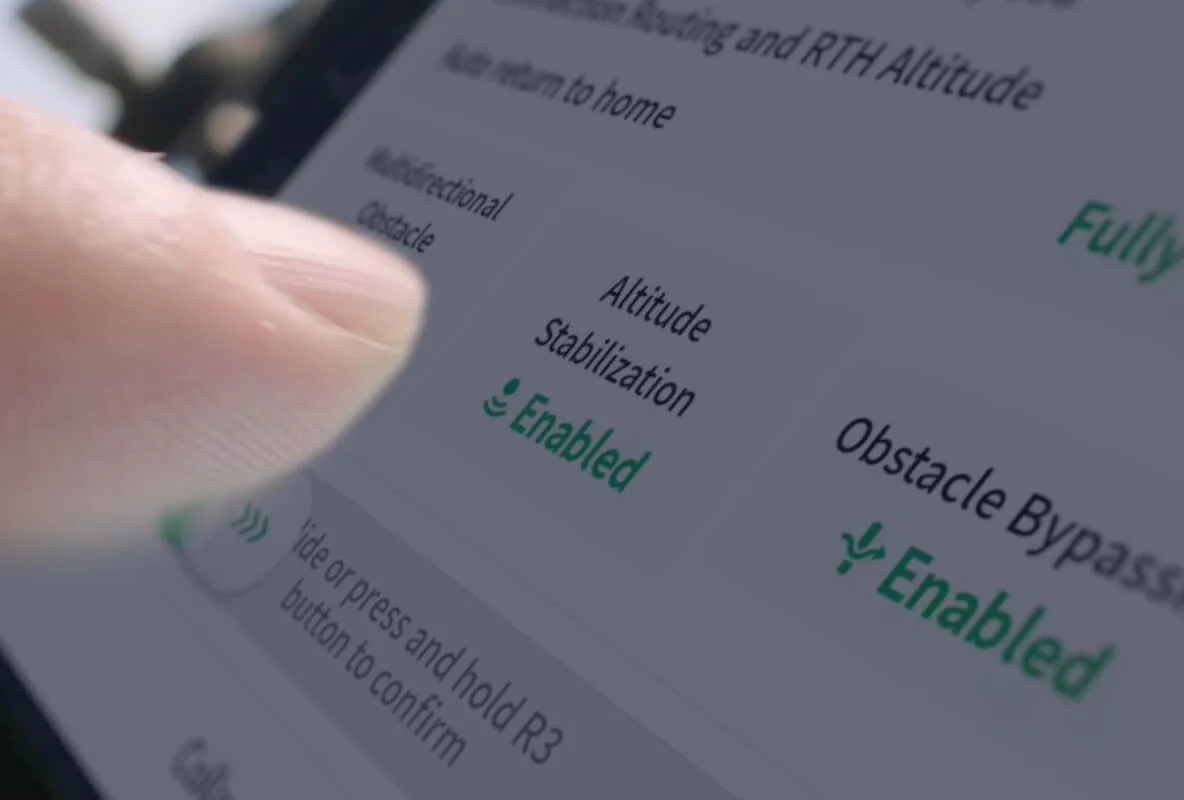 Automated operations
From field boundary to flight plan
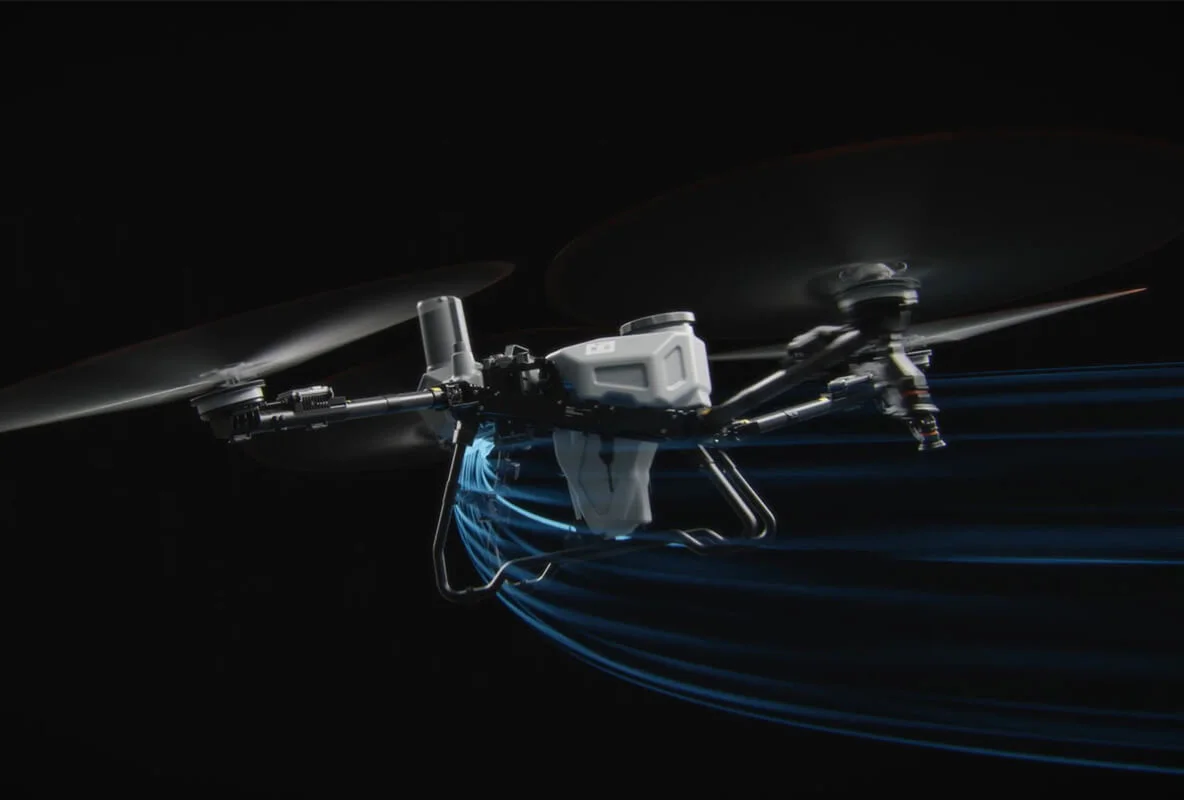 Onboard battery cooling
Heat management during flight
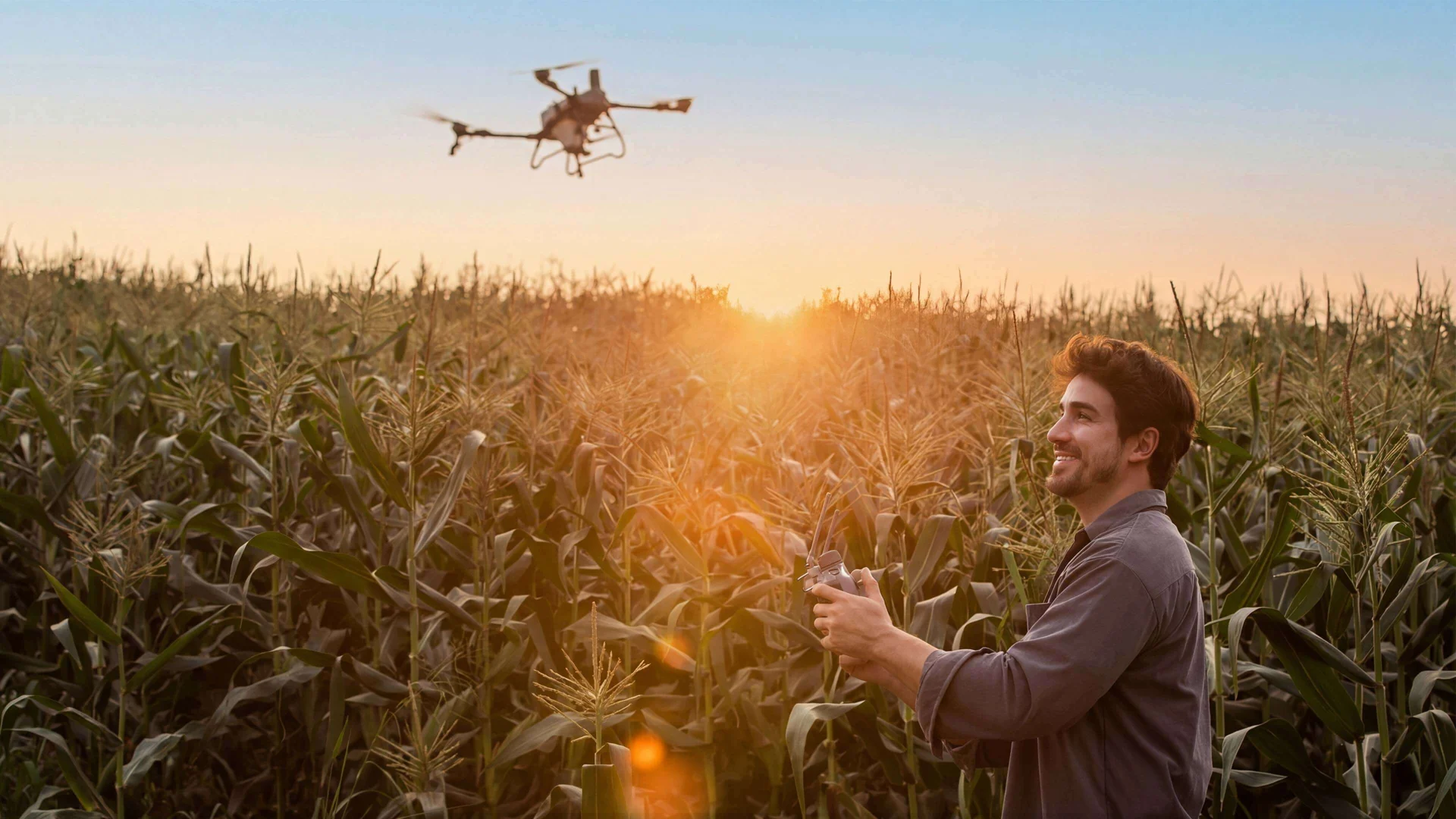
Easier to move between jobs
The folding frame and carrying handles help with loading, unloading and moving the aircraft around the work site. Plan transport together with batteries, charging equipment and application systems.
From field boundary to automatic operation
Record the field boundary and obstacles in flight to create the working area. The aircraft can then follow the planned operation and return when the tank is empty or the battery is low. The pilot remains responsible for supervising the flight.
Following the terrain
Terrain sensing supports altitude stabilization and terrain following. In suitable orchard conditions, this allows operation without a separate aerial mapping flight. Suitability depends on the terrain, crop structure and sensing conditions.
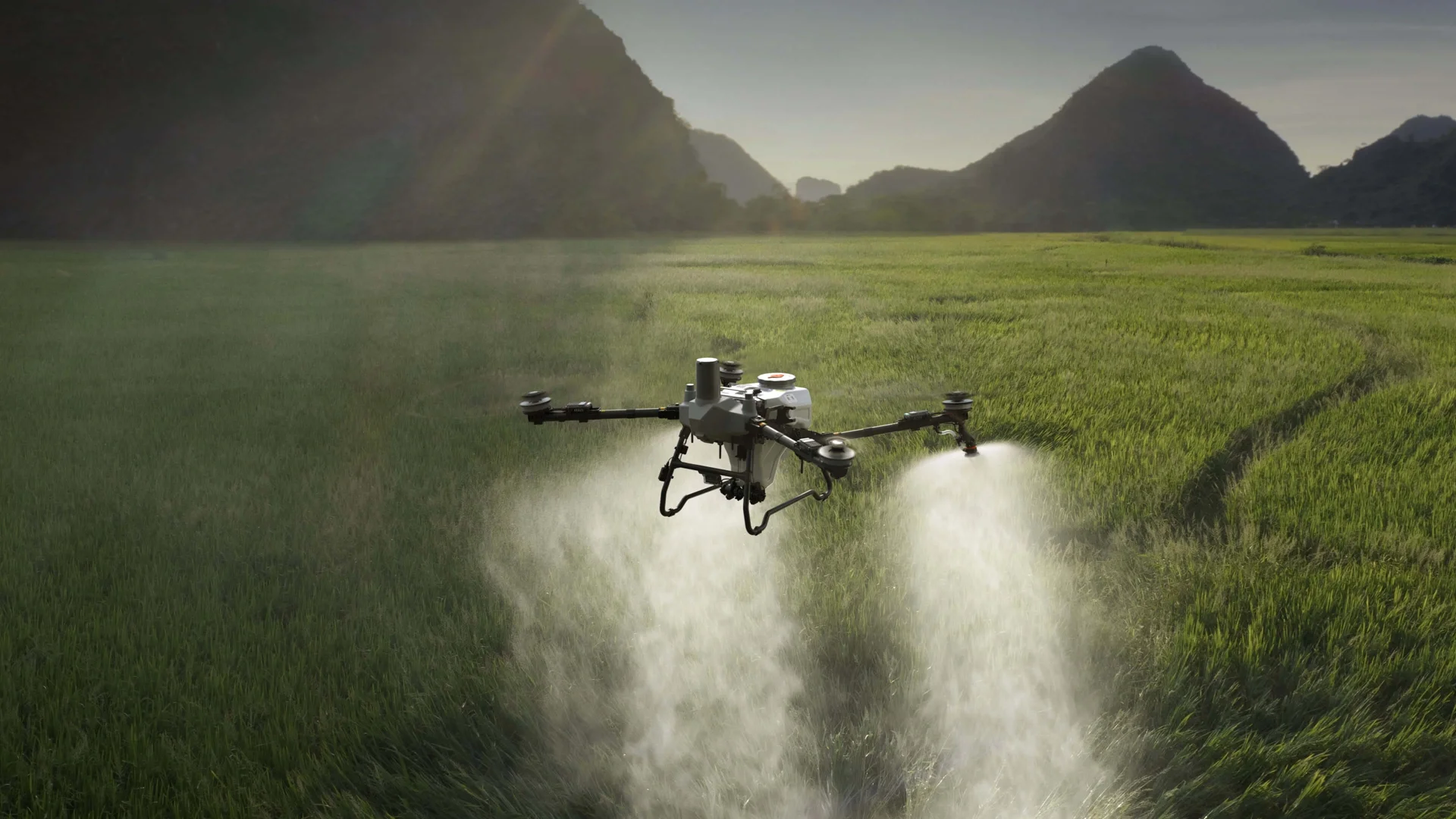
Standard configuration: two centrifugal sprinklers, up to 40 L/min flow and adjustable droplets from 50 to 500 μm. Effective spray width is 4–11 m, depending on the application conditions.
The optional rear four-mist-sprinkler layout increases maximum flow to 50 L/min. It is intended for applications that need a higher flow and consistent coverage at lower flight speeds.
Inside the spraying system
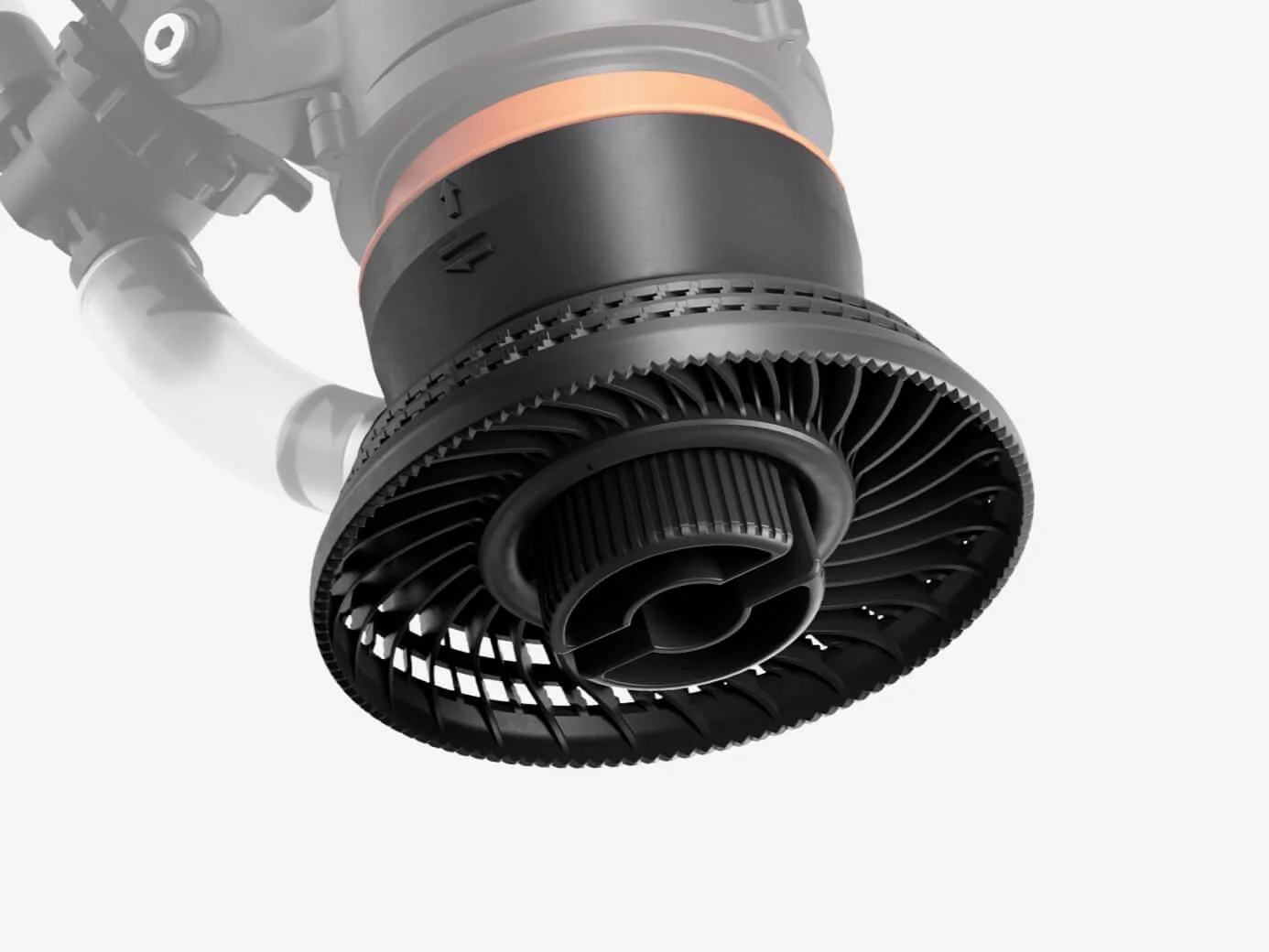
Two standard sprinklers deliver up to 40 L/min, with droplet size adjustable to the task.
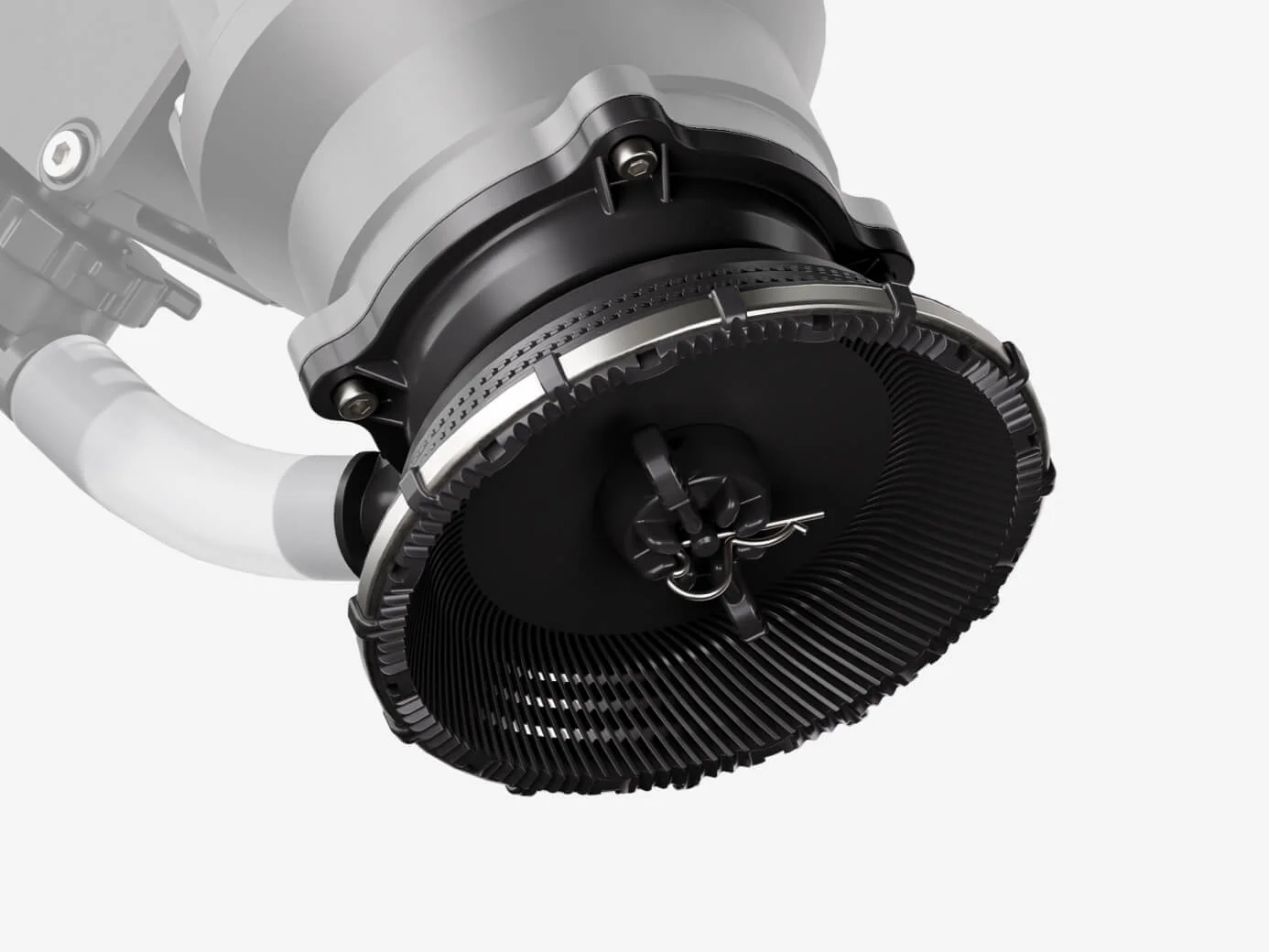
Fine droplets down to 50 μm support coverage within the crop canopy. Select settings for the product and crop being treated.
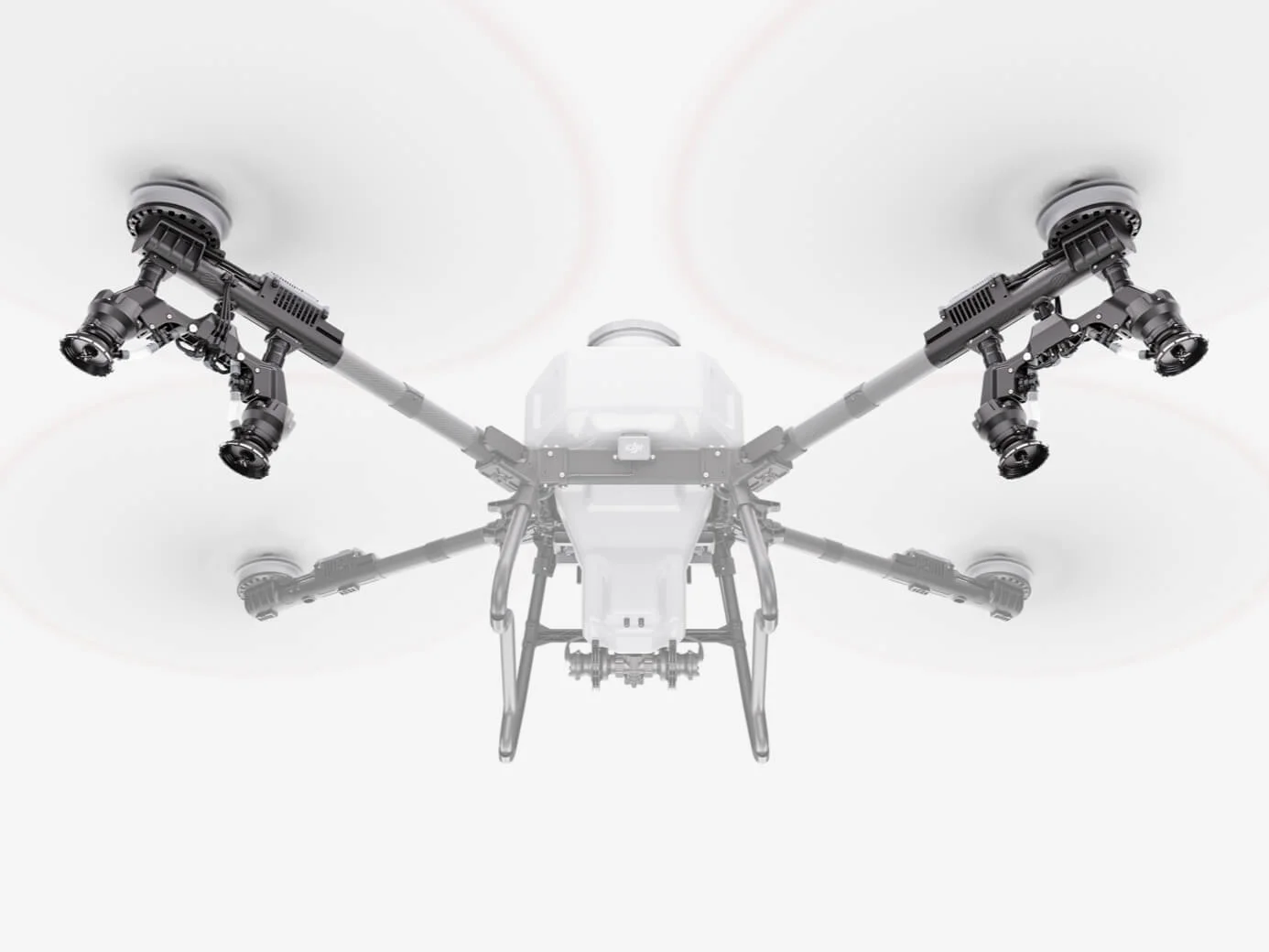
The rear layout supports low-speed orchard applications and reduces spray mist in front of the vision system.
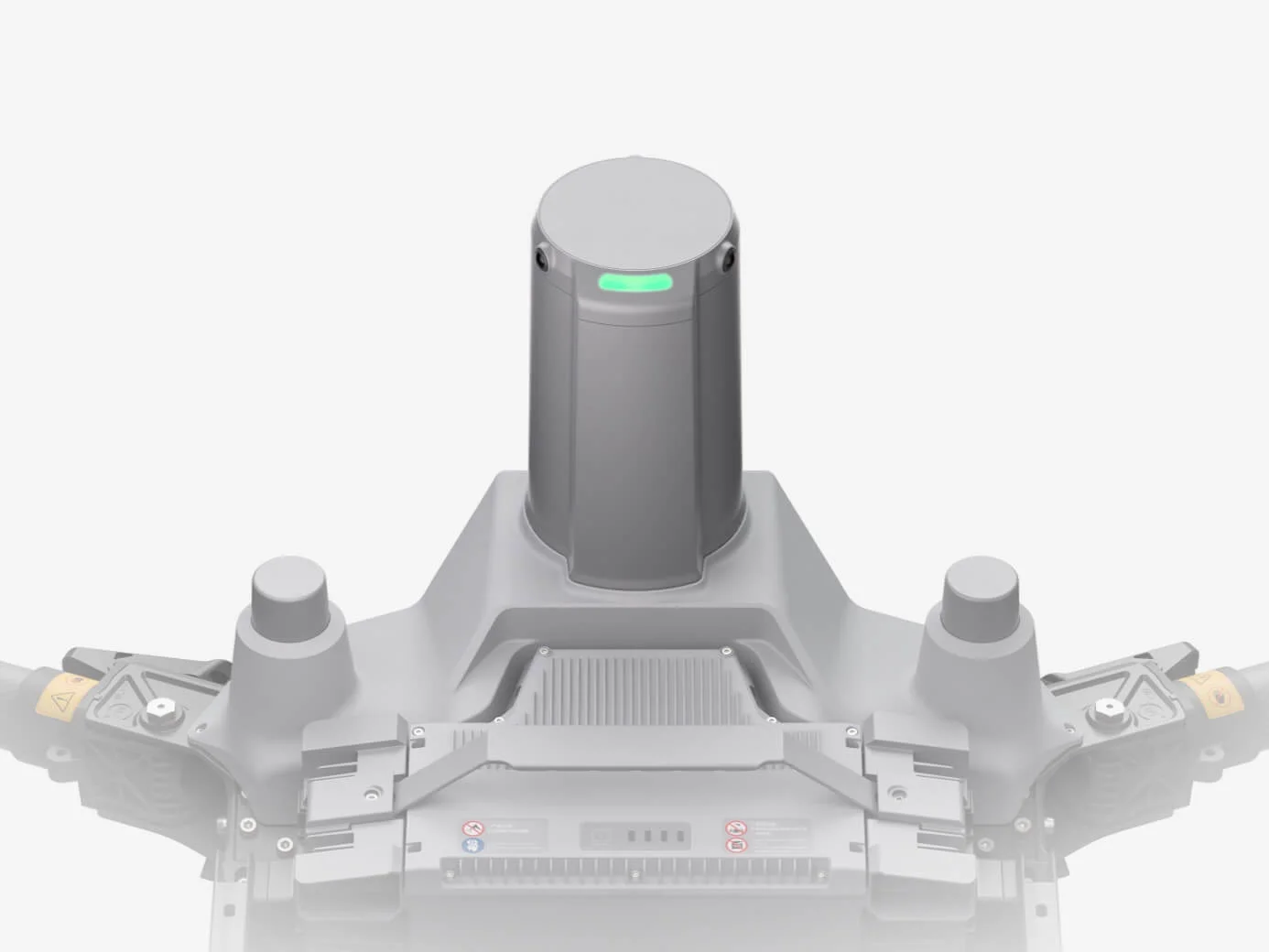
Light signals make it easier to check the tank level during preparation and refilling.
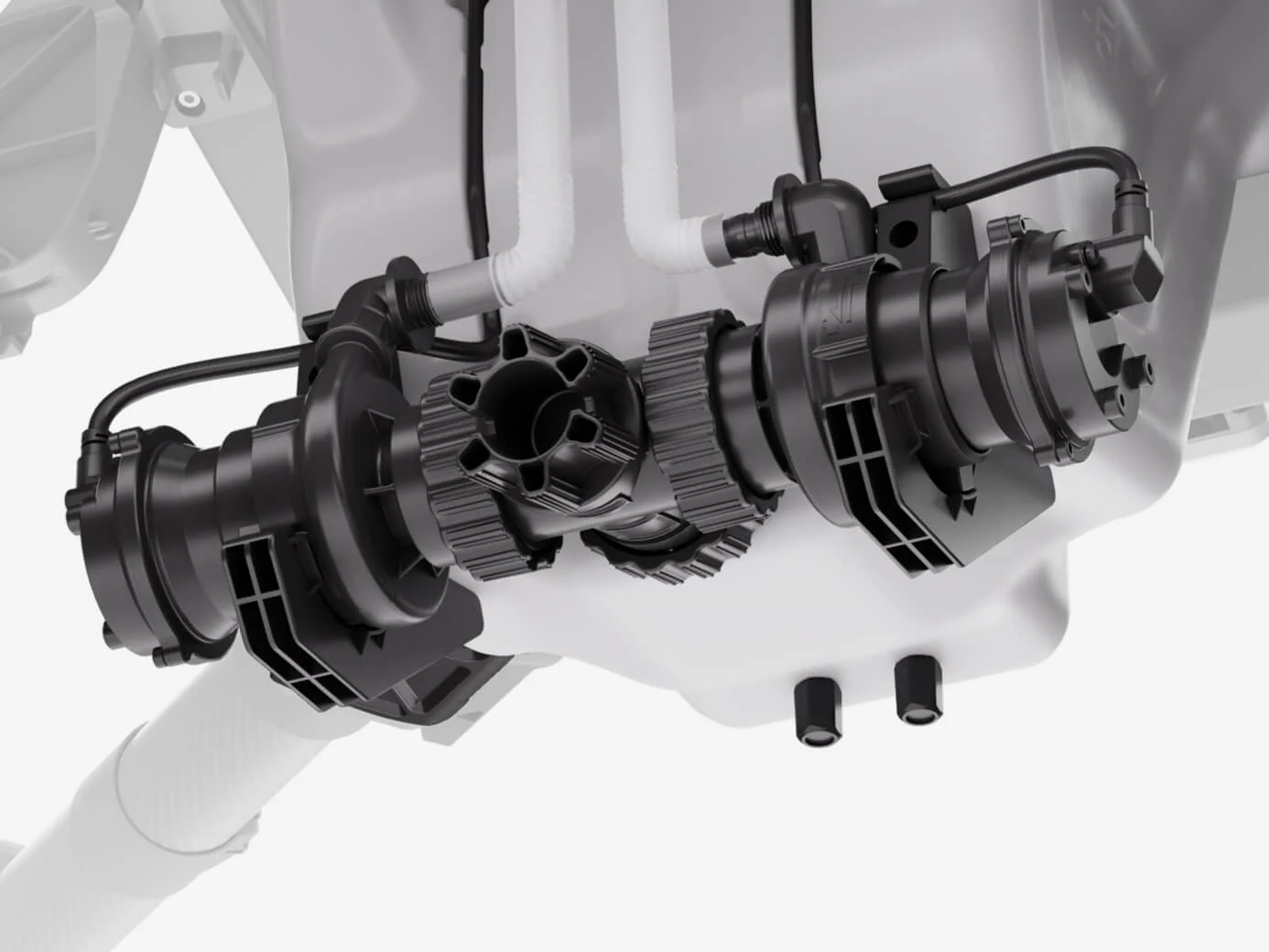
The pump design supports high-flow applications while isolating components from corrosive liquid.
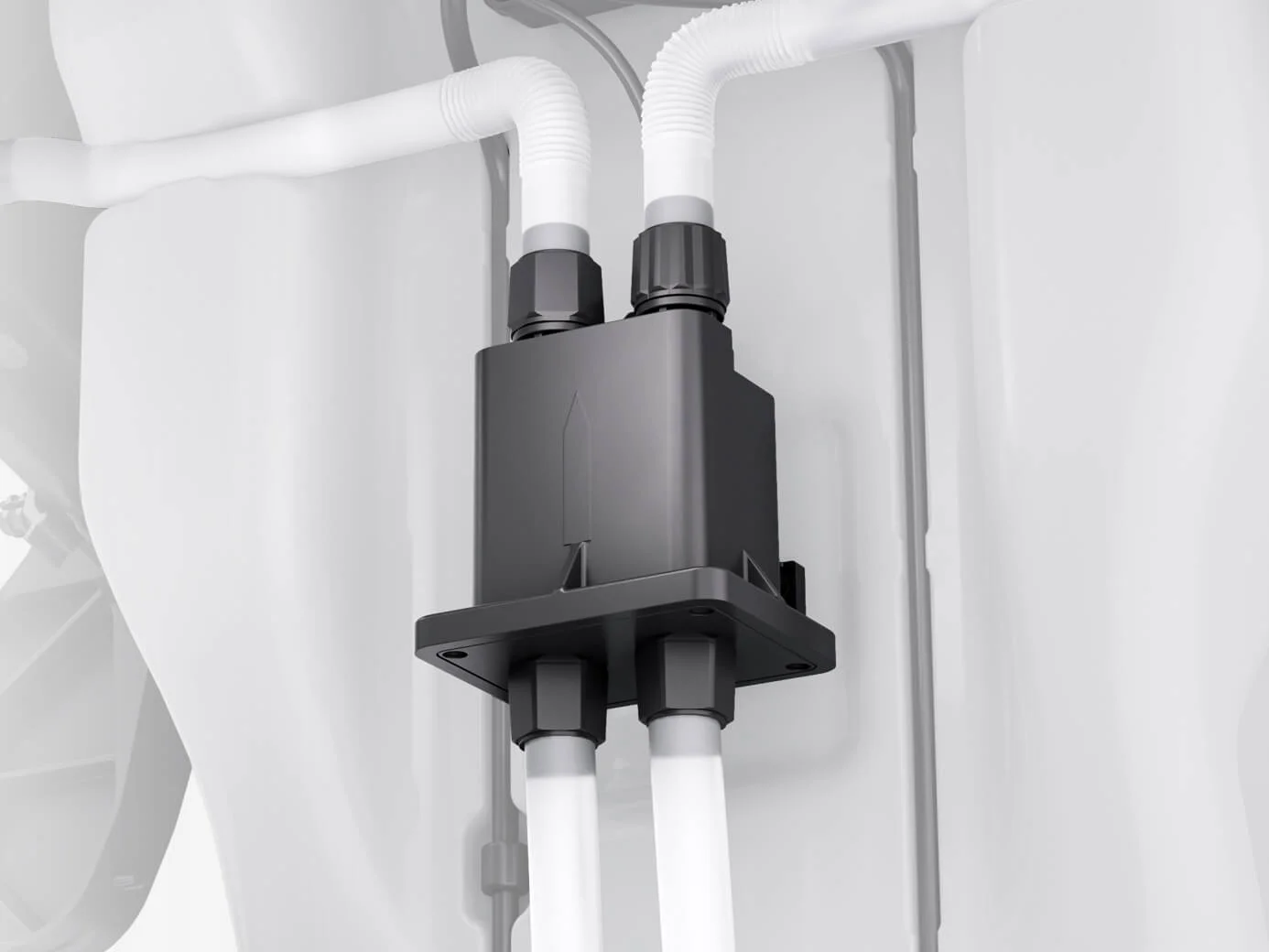
Real-time flow measurement supports automatic adjustment during application, without direct liquid contact with the sensing elements.
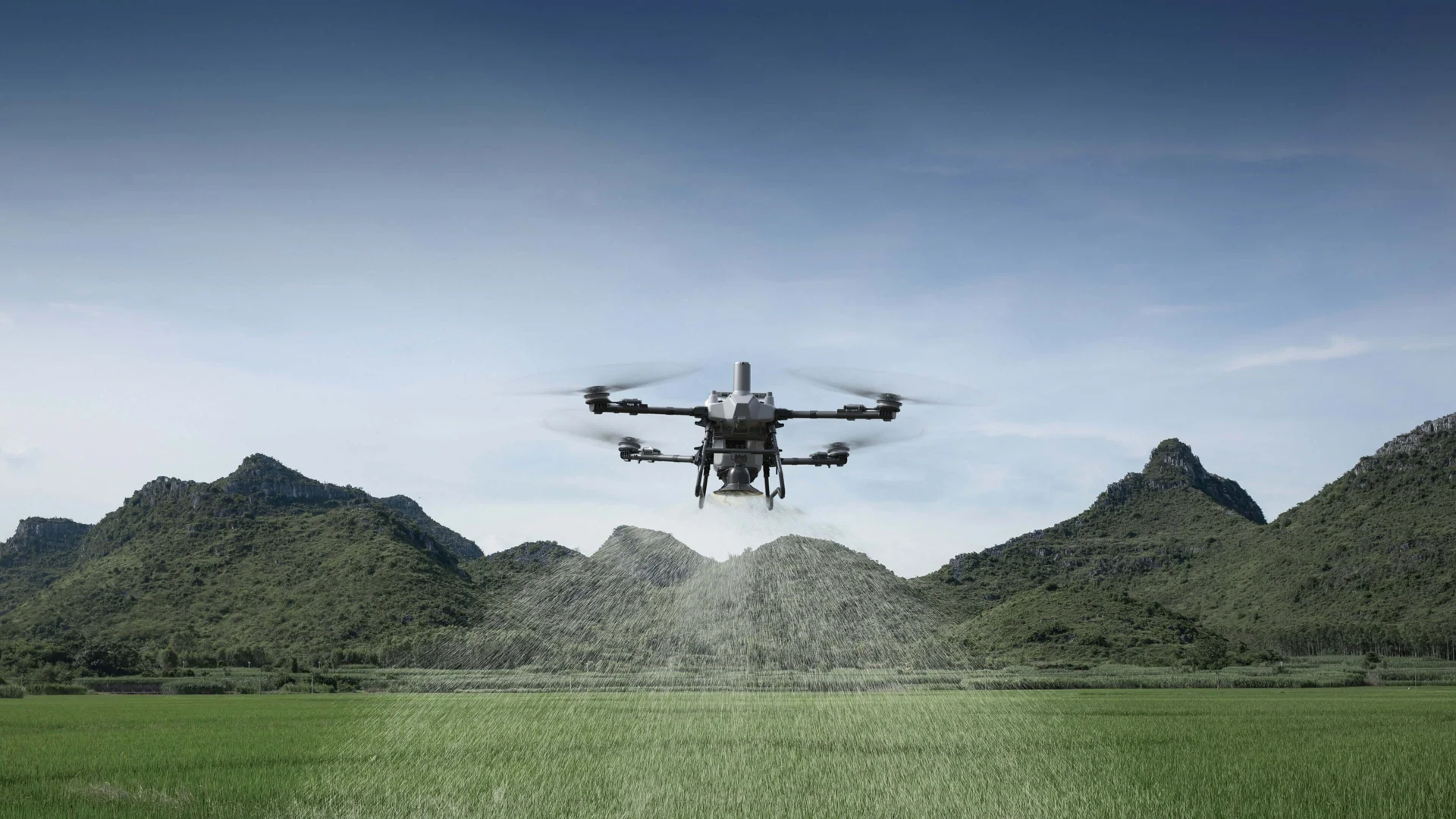
80 L hopper. Up to 55 kg payload.
The DS80L spreading system combines a large hopper with a 55 kg operating payload. The amount that can be loaded depends on material density and the permitted payload for the flight.
Up to 400 kg/min discharge
Maximum discharge is measured with compound fertilizer. Effective spreading width is 3–10 m; actual output and width depend on material characteristics and operating settings.
Controlled dosing throughout the job
Material templates shorten setup. Flow is adjusted during operation to match the selected application rate.
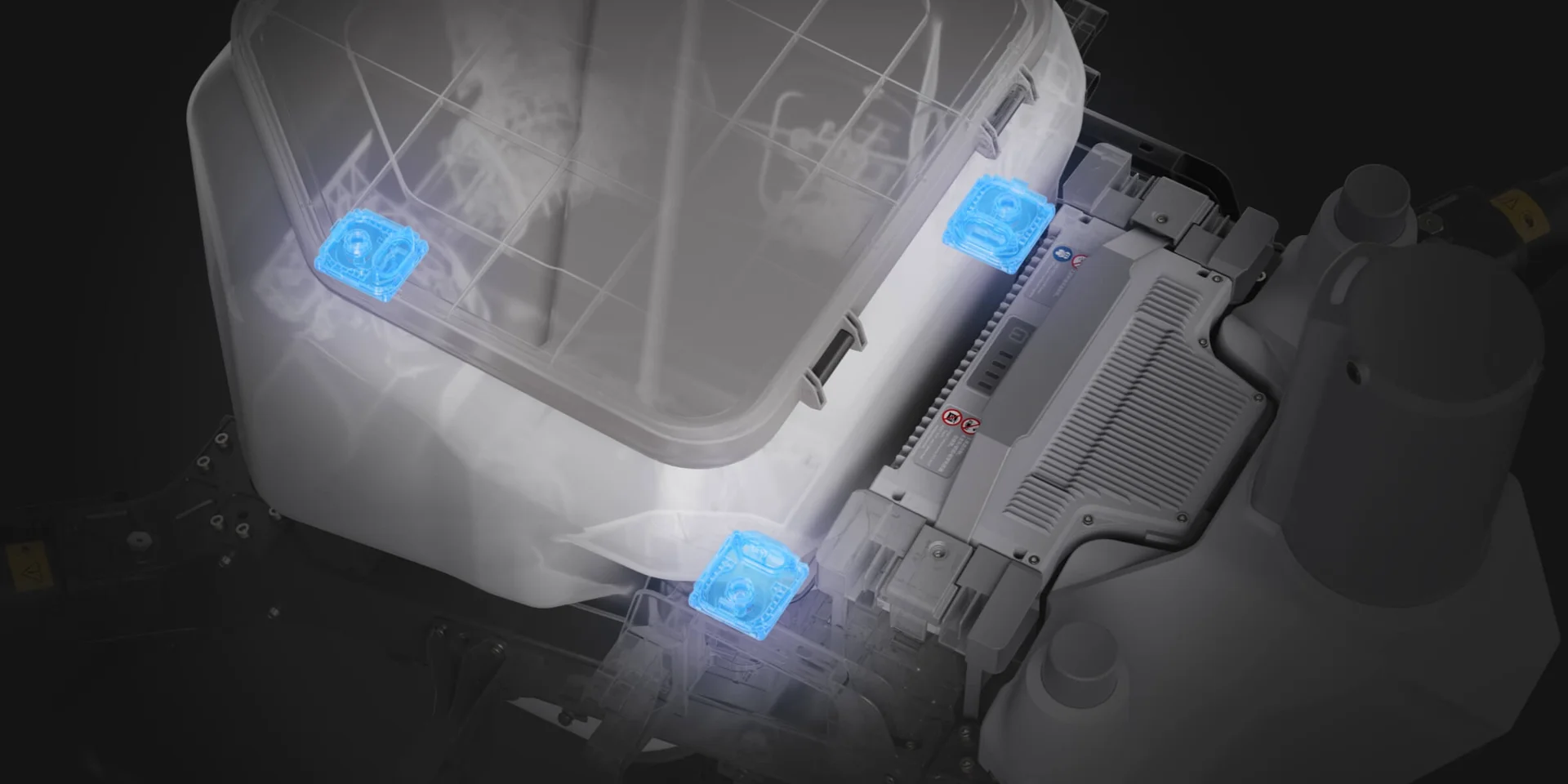
The remaining material is displayed in real time to help plan refills.
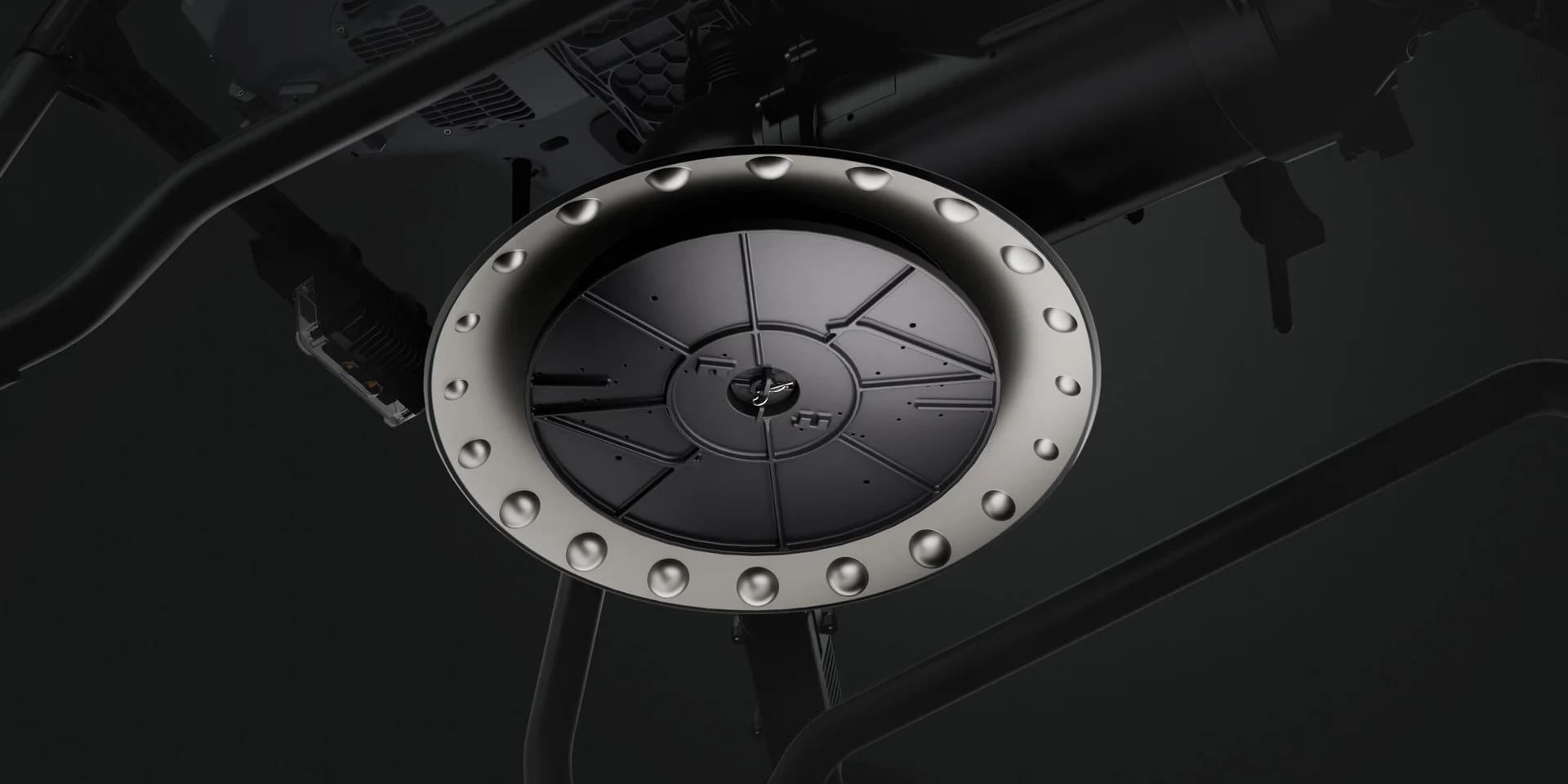
The stainless-steel disc distributes material across the working width.
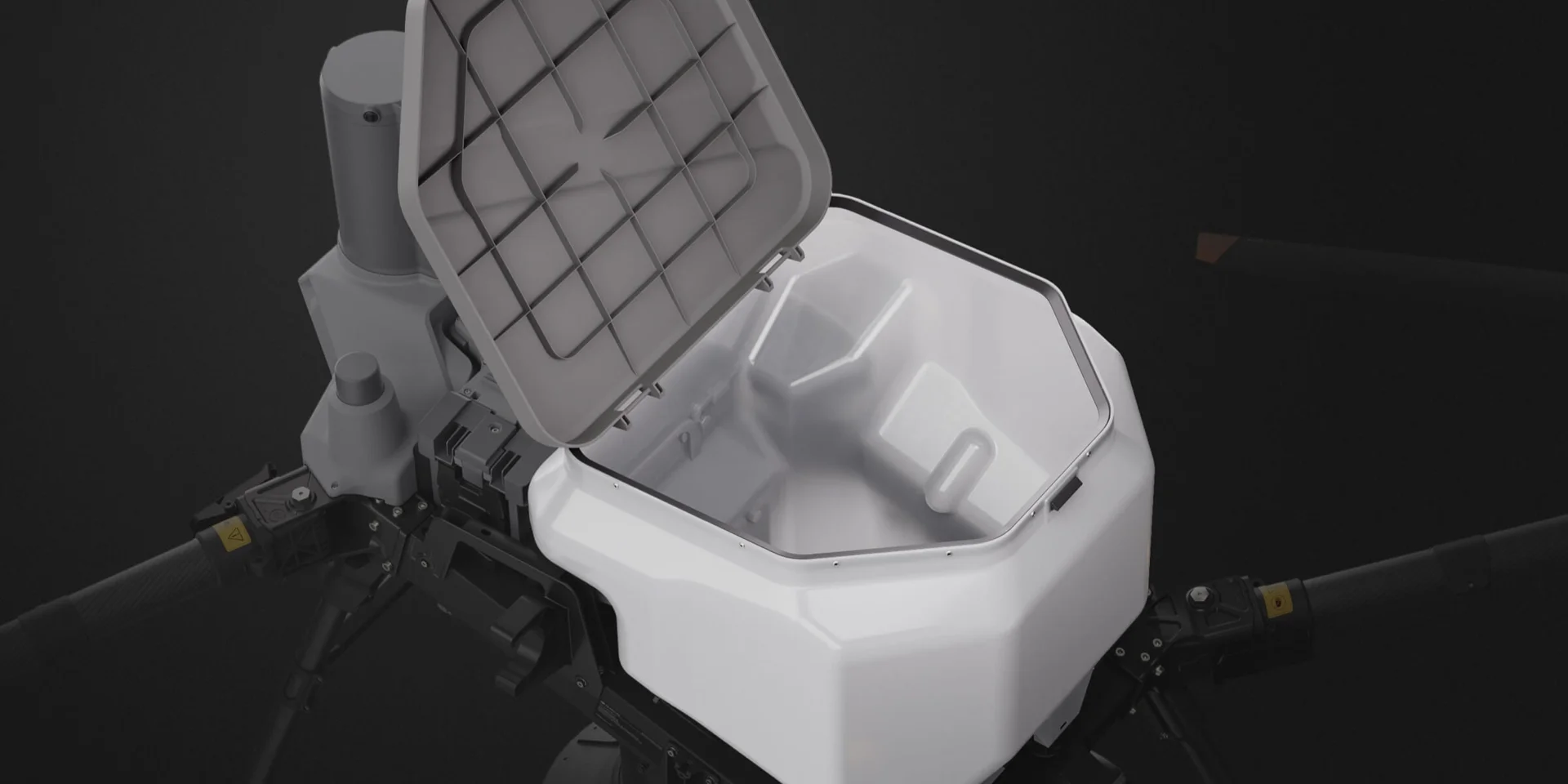
The large opening simplifies bulk loading and access to the hopper.
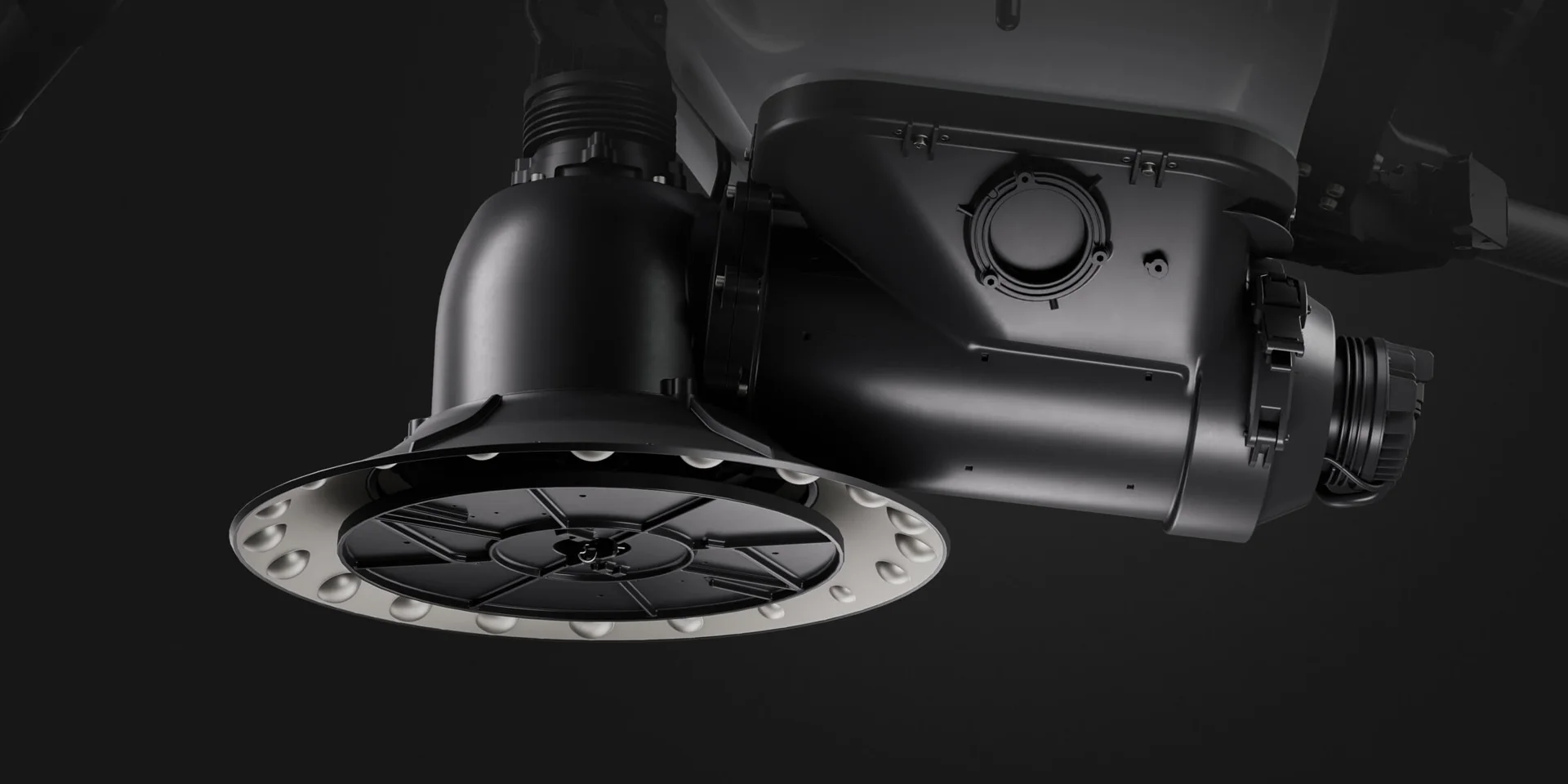
A high-torque motor drives the feeder, with a chamber designed to reduce blockage and leakage.
Five feeder sizes
Choose the feeder for the material, particle size and application rate. The large, medium-small and small feeders are optional equipment.
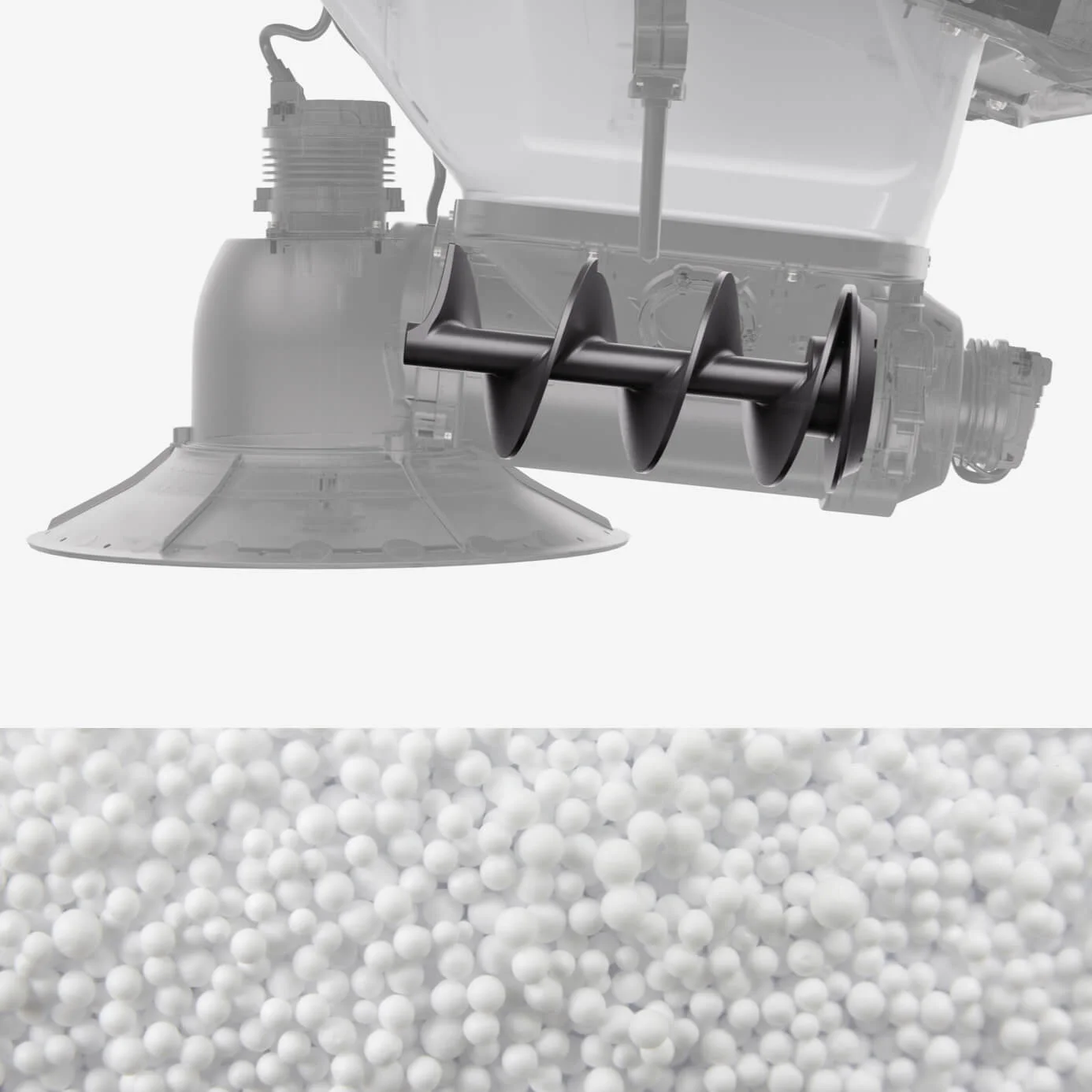
Fertilizer, wheat and feed. Particle size: 0.5–10 mm. Recommended rate: 75–750 kg/ha.
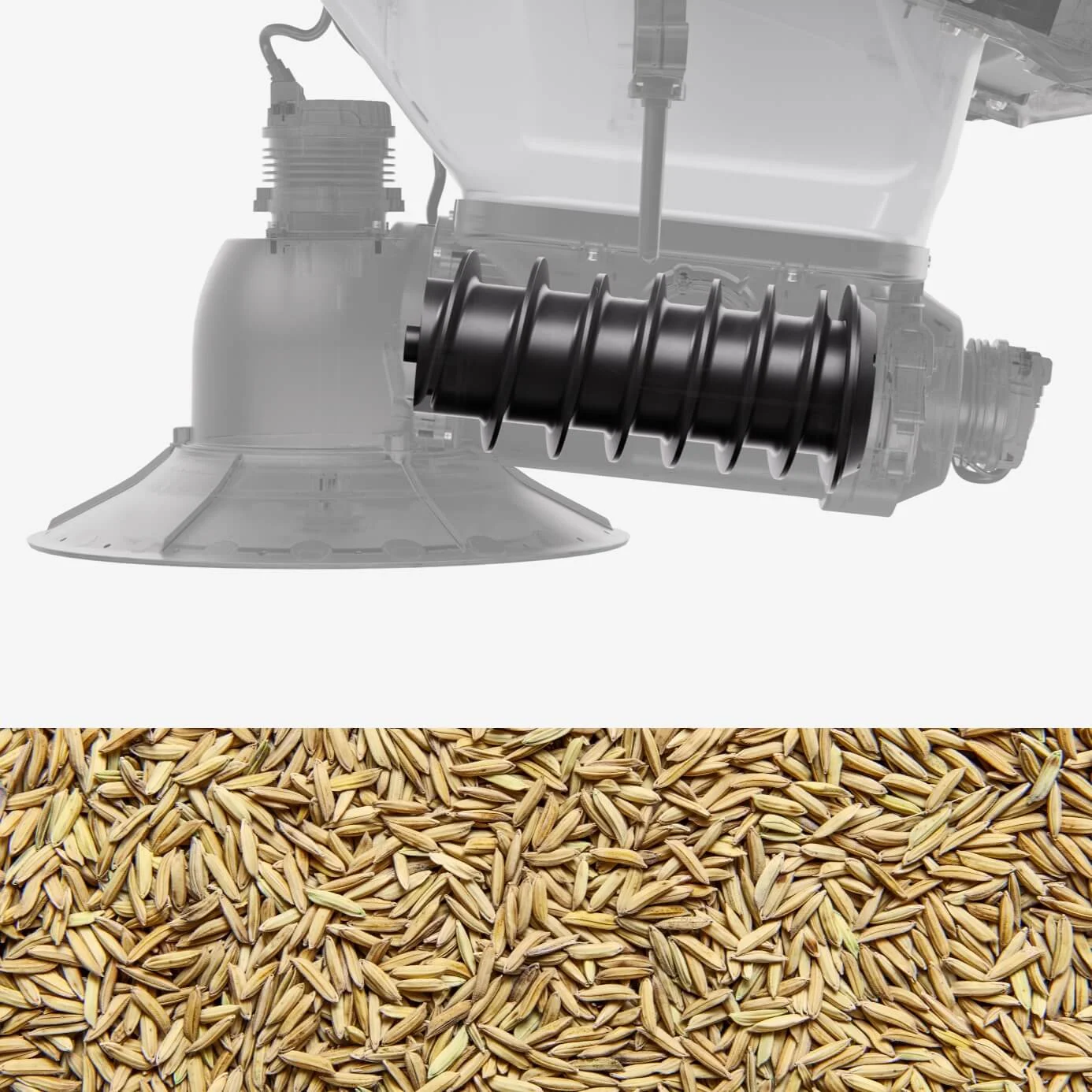
Rice and similar grains. Particle size: 4–6 mm. Recommended rate: 22.5–120 kg/ha.
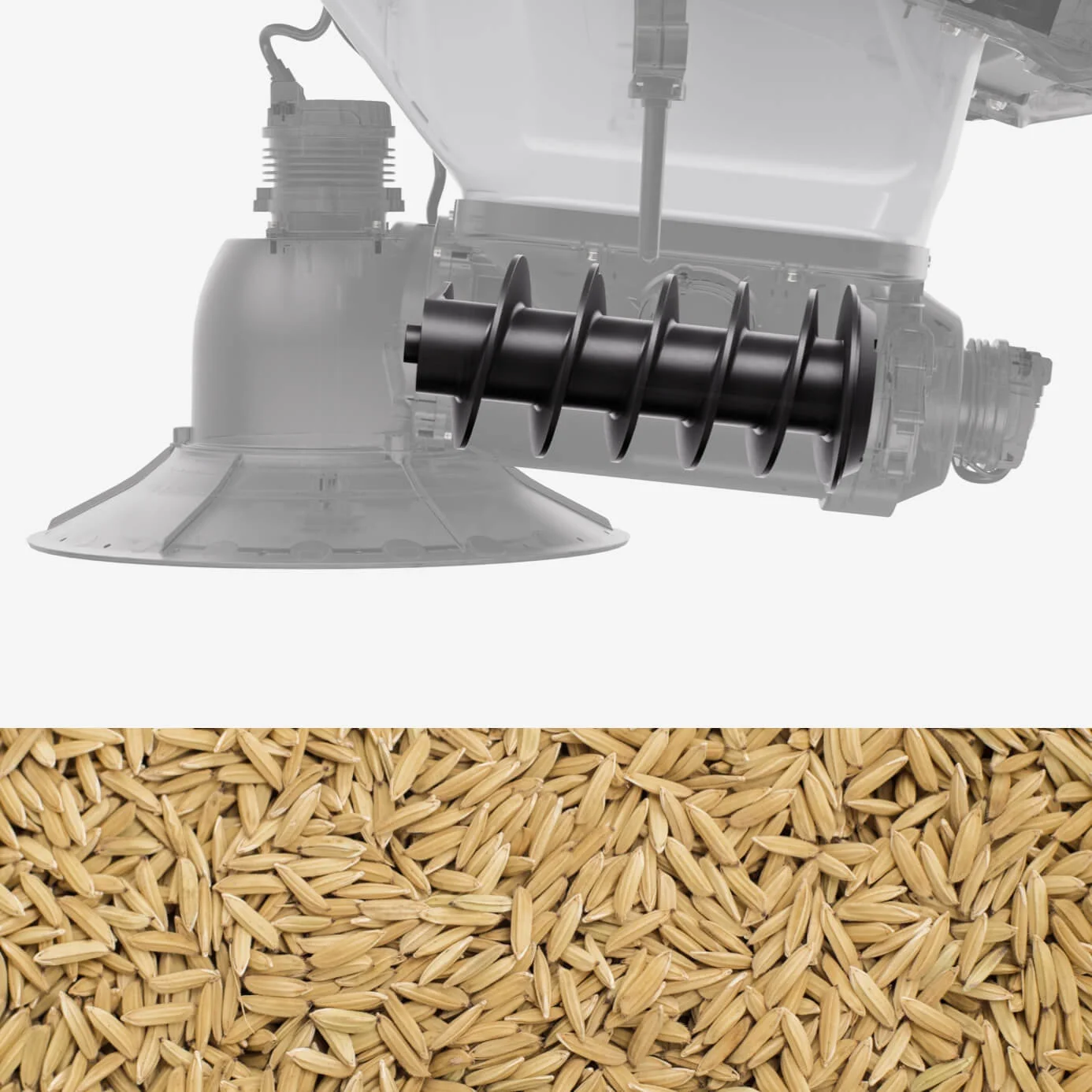
Rice and fertilizer. Particle size: 4–10 mm. Recommended rate: 75–270 kg/ha.
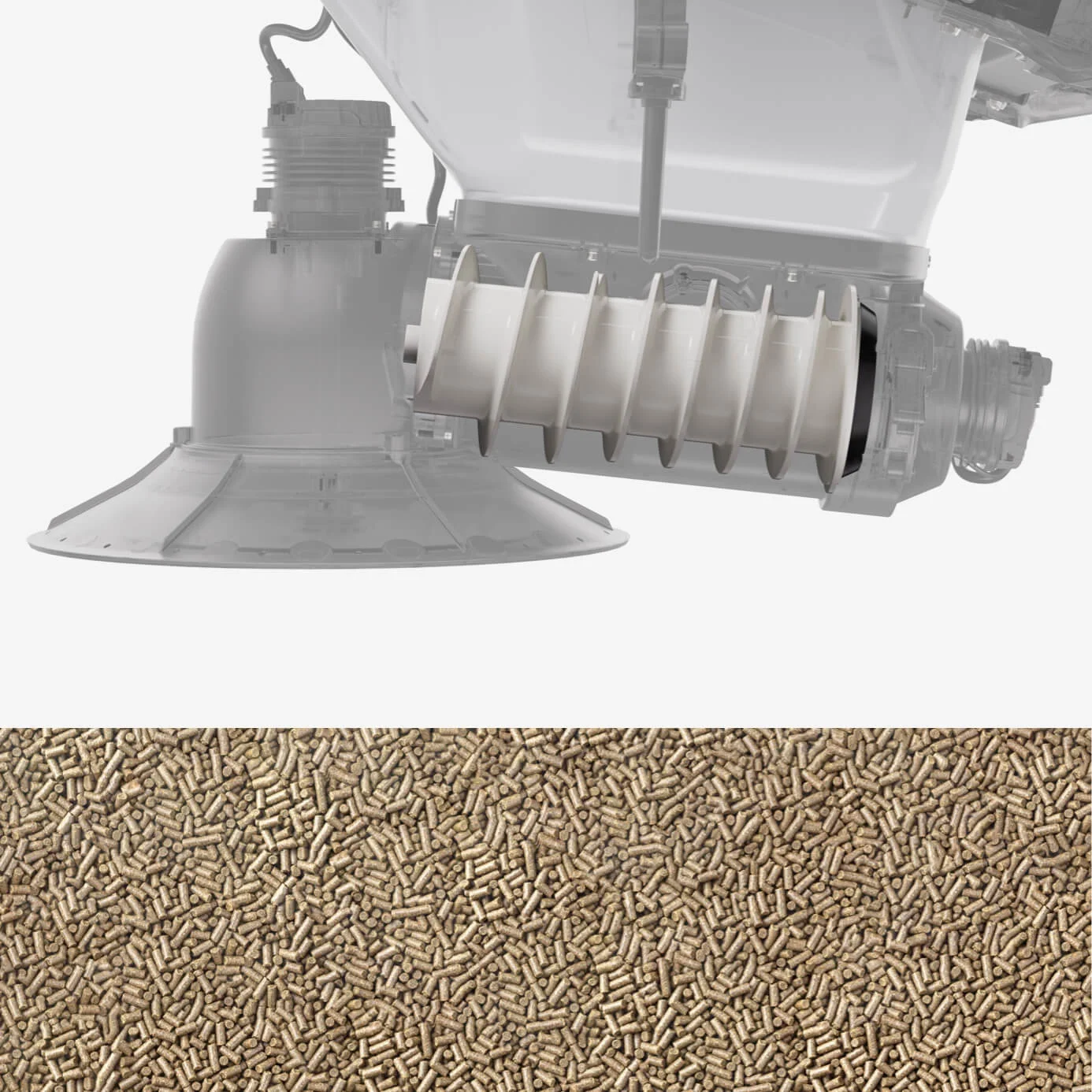
Small feed pellets. Particle size: 0.5–2 mm. Recommended rate: 22.5–120 kg/ha.
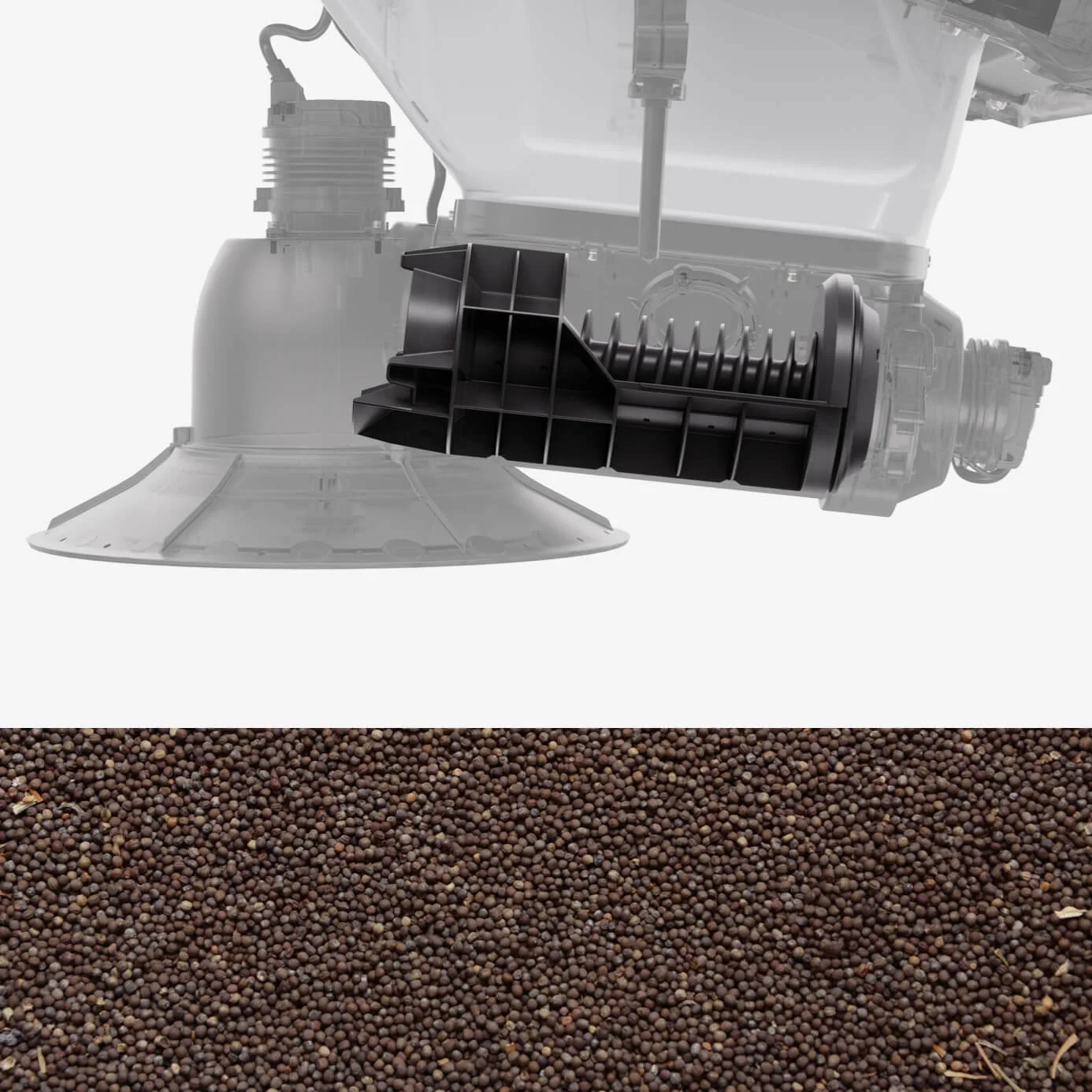
Rapeseed and suitable granular products. Particle size: 0.5–4 mm. Recommended rate: 3–22.5 kg/ha.
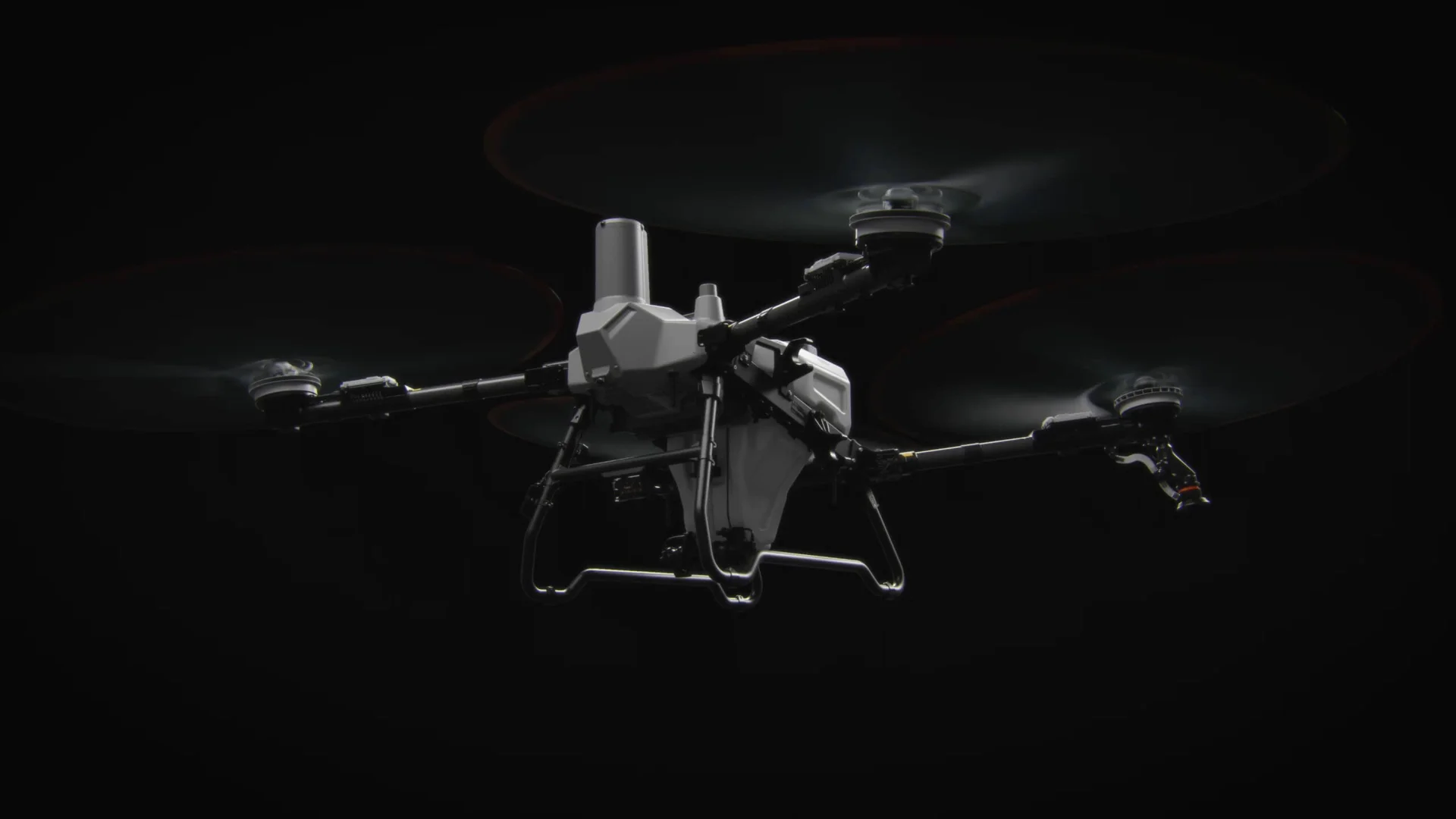
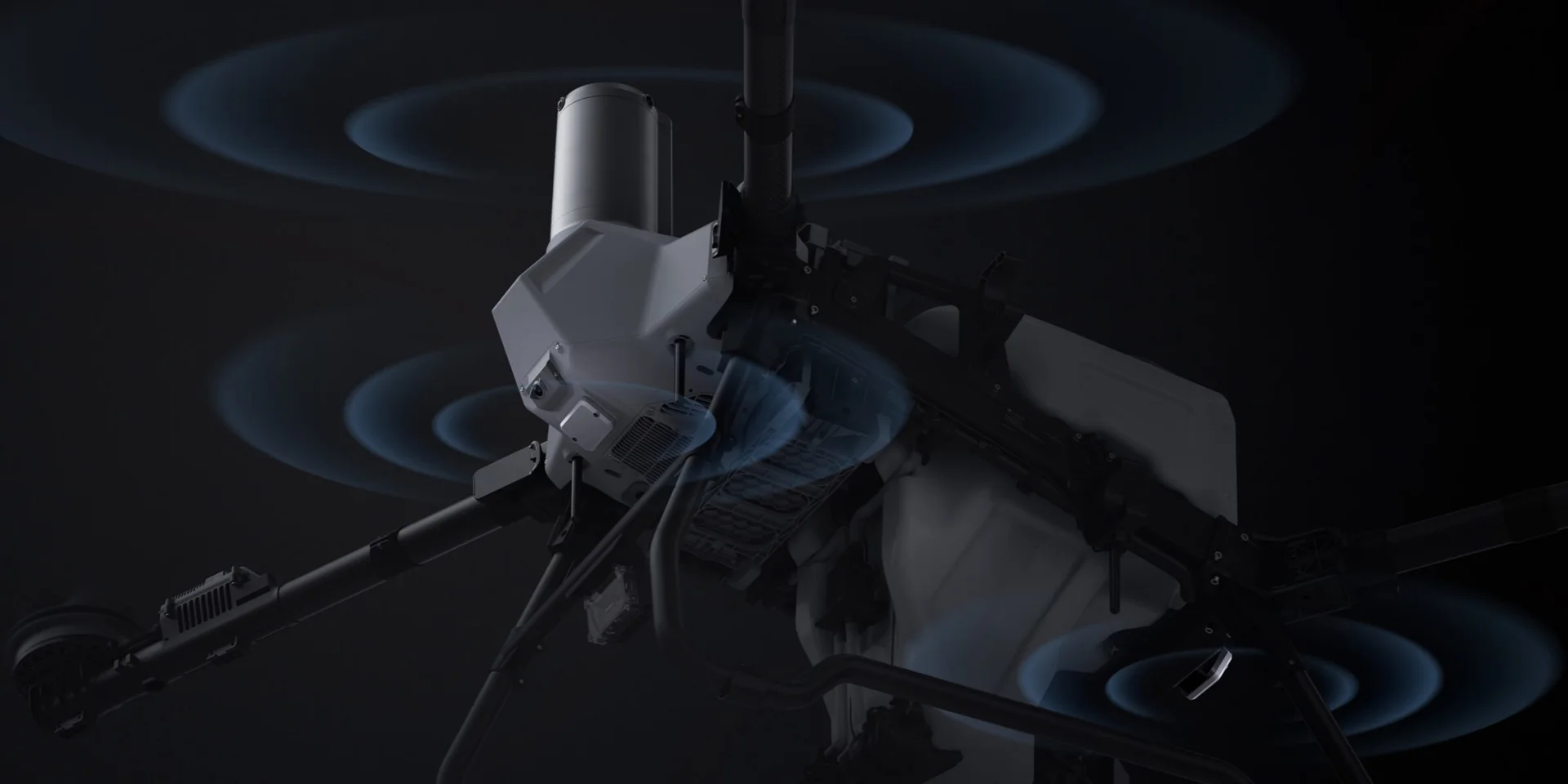
Radar generates a dense point cloud for obstacle detection. Combined with vision sensing, it supports awareness of the surrounding flight environment.
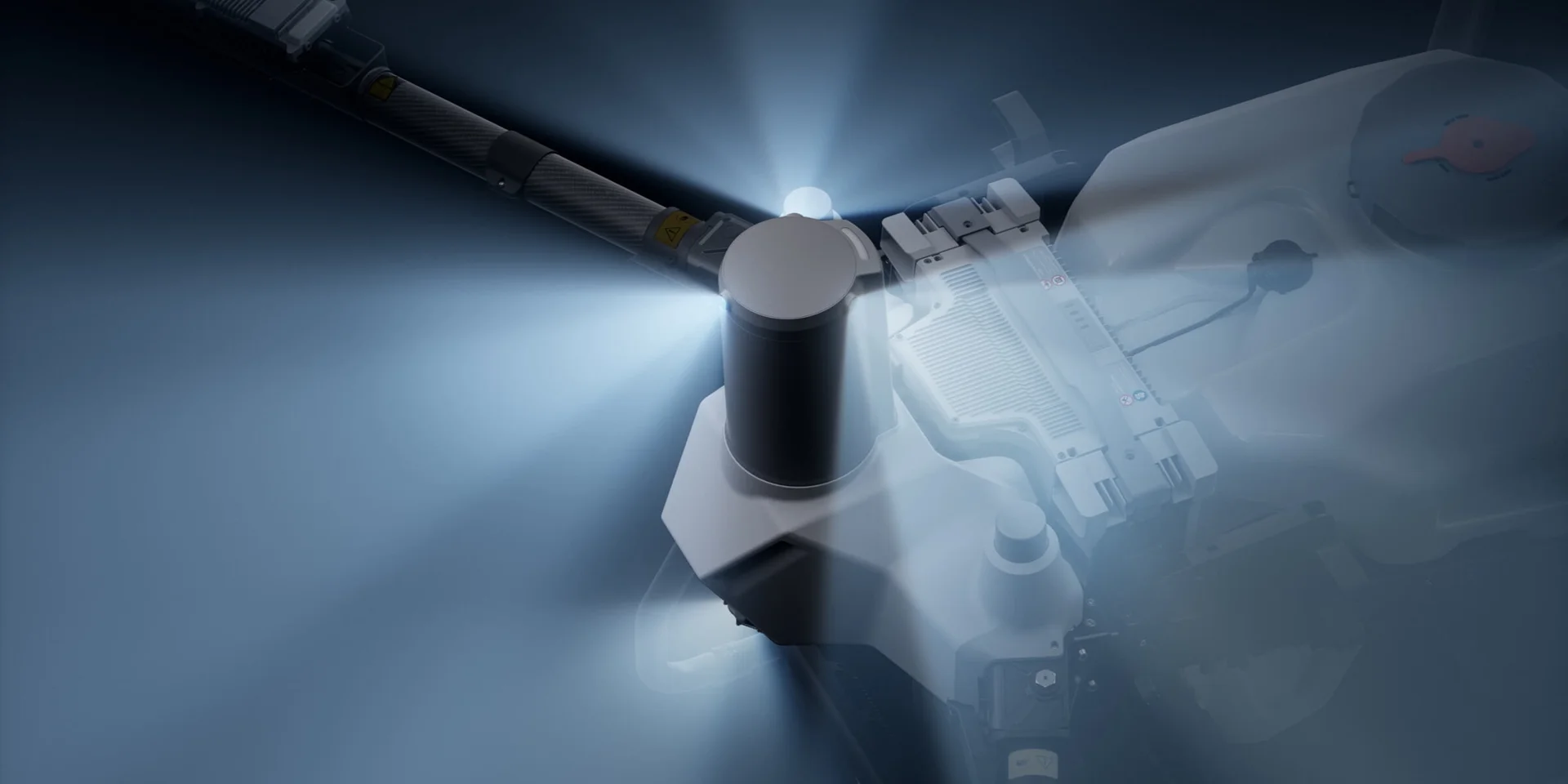
Three upper cameras and the low-light colour FPV camera provide complementary views around and below the aircraft.
Obstacle bypassing
The flight-assistance system can identify obstacles and adjust the route around them. Power lines and guy wires still require careful inspection and marking before work.
Obstacle information for future flights
Detected obstacles can be recorded in the field information to assist later operations. Check that the saved information still matches the site before each flight.
AR flight information
Field boundaries, obstacles and operation breakpoints can be overlaid on the camera view, helping the pilot interpret the route. AR is an assistance feature, not a substitute for checking the surroundings.
Lift up to 40 kg with the DL100
The optional lifting system adds cargo handling to the T55. A triaxial force sensor supports load measurement and balance control, alongside flight assistance and emergency cable release.
Flight speed can be reduced in advance when an obstacle is detected. The pilot must also check clearance for the load and cable.
The release mechanism allows the lifting cable to be detached in an emergency. Use it according to the operating instructions.
The force sensor detects load movement so the aircraft can adjust its attitude to reduce swinging.
The controller displays the cargo weight and can accumulate the lifted weight for job records.
Connection and positioning
O4 transmission connects aircraft and controller. Optional positioning and relay equipment can support operations where terrain or signal conditions are challenging.
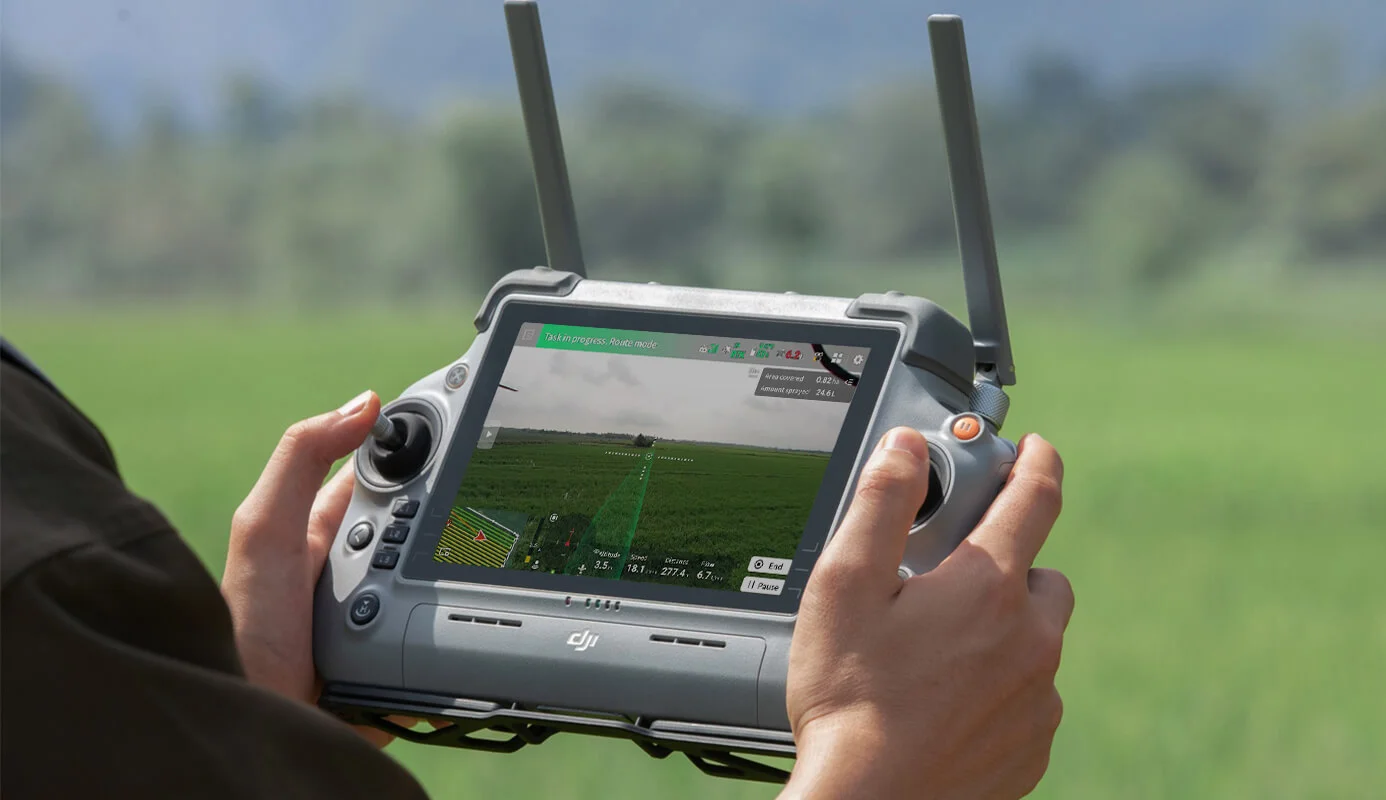
7-inch touchscreen with 1,400-nit brightness, physical controls and O4 transmission. Actual link performance depends on the environment and local operating limits.
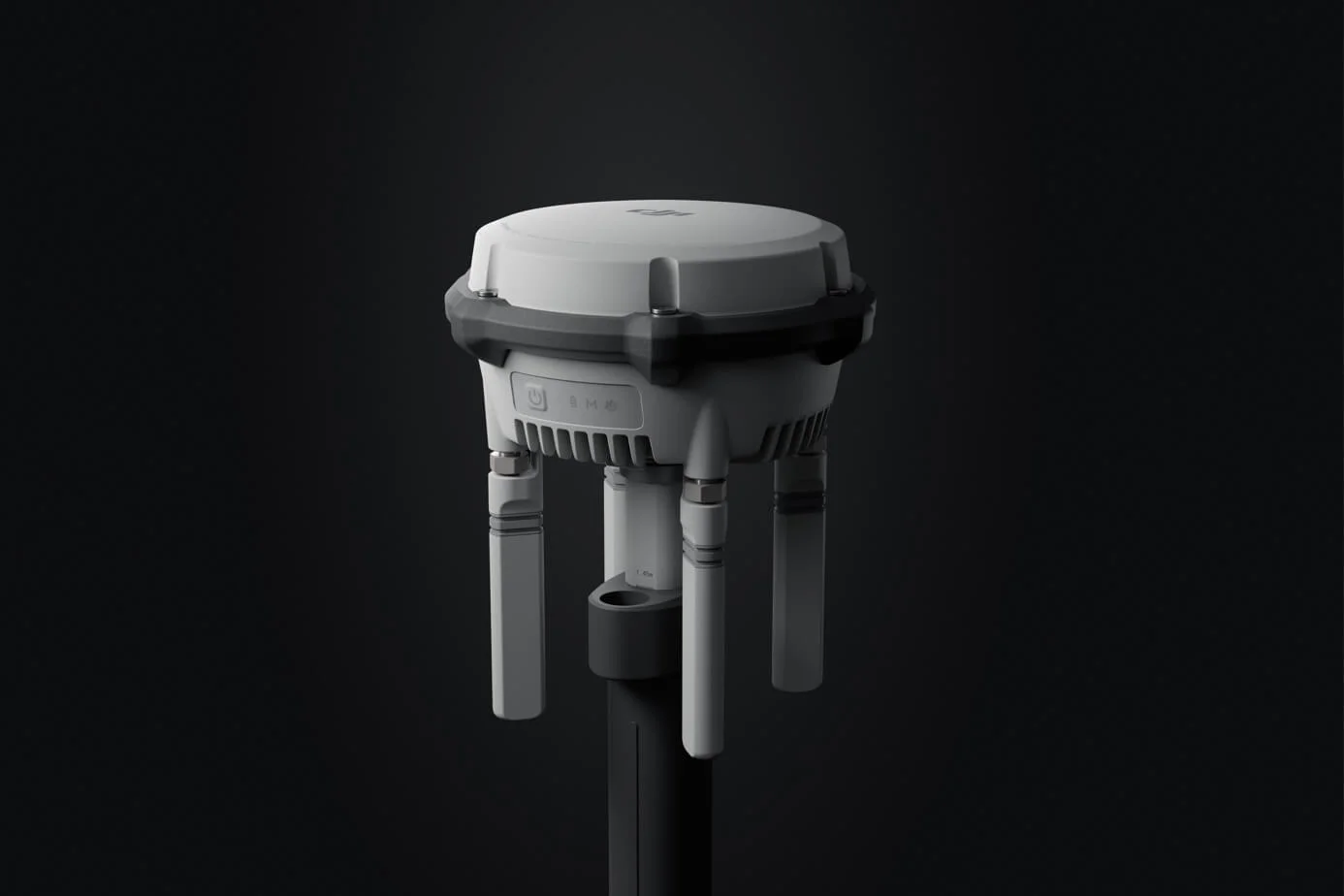
A positioning option for field operations, supporting RTK and PPP workflows. Accuracy depends on the positioning mode and operating conditions.
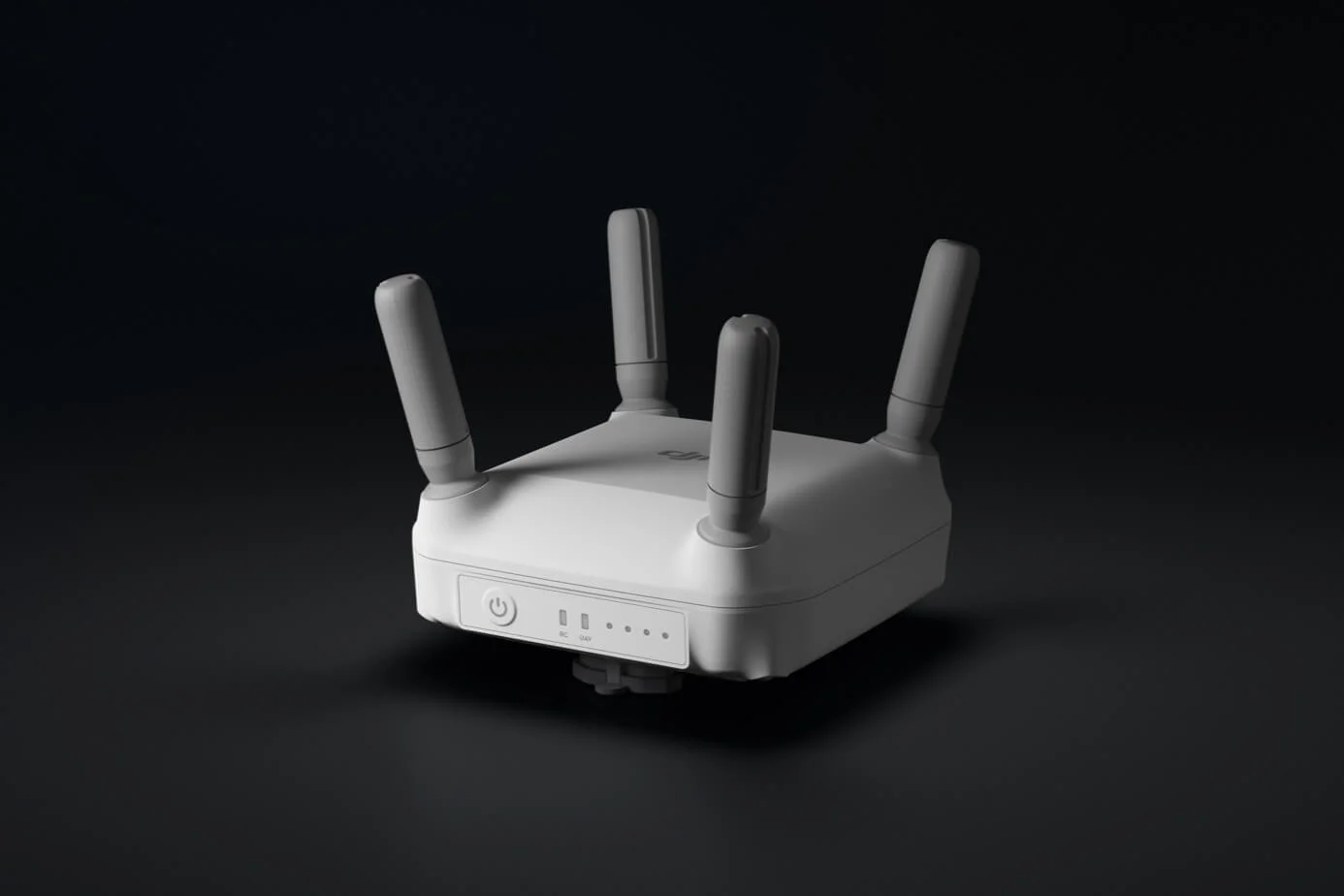
A relay can help maintain the transmission link where direct communication is obstructed and a mobile network is unavailable.
Cooling in flight. Charging on the ground.
Onboard battery heat sink
An air-cooled system and dedicated airflow path remove heat from the battery during flight. Ground cooling complements the onboard system between flights. Follow temperature limits and the charging instructions for the chosen battery.
Battery and charging options
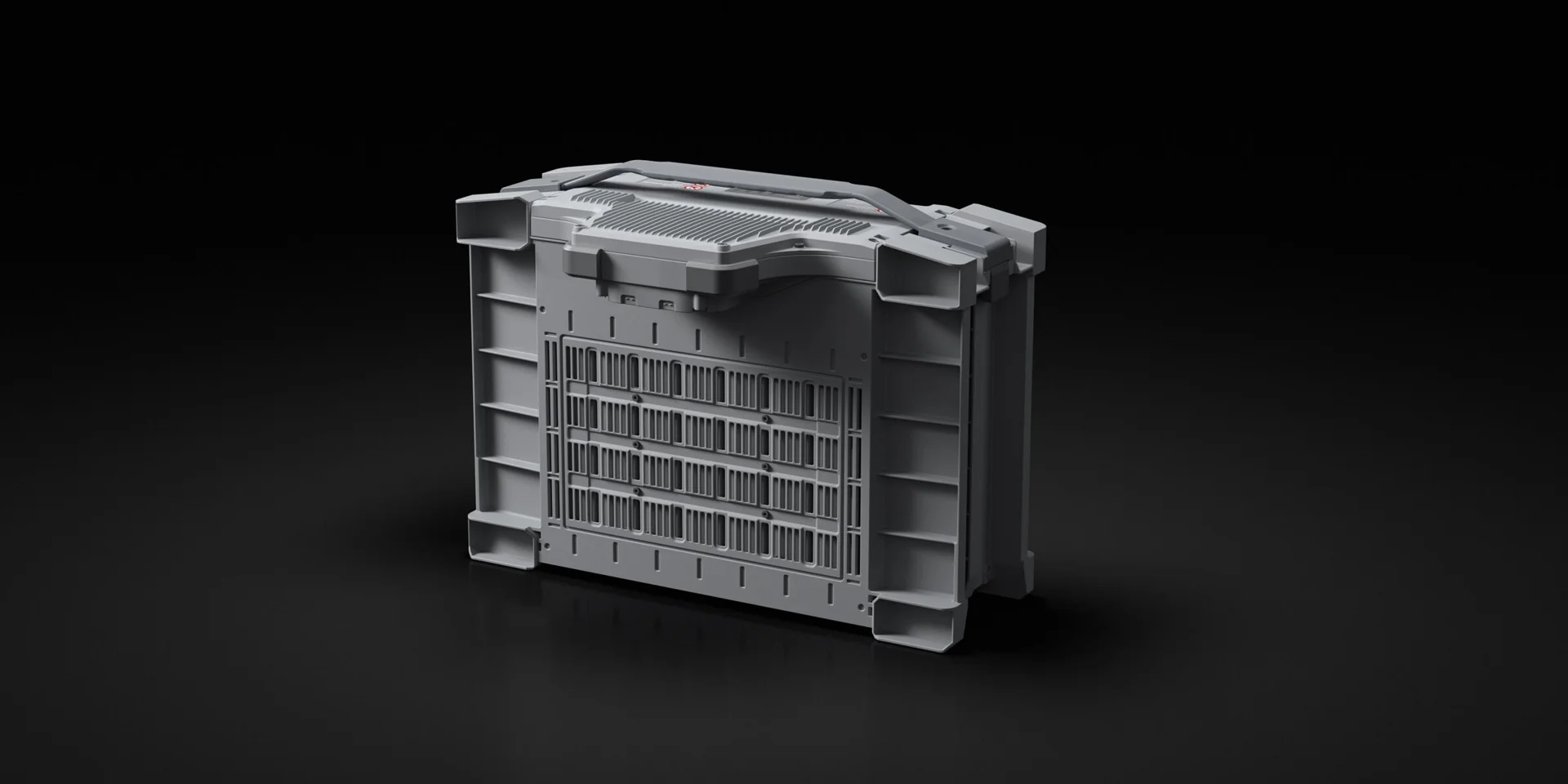
20 Ah capacity; approximately 8.3 kg. Integrated carrying handle.
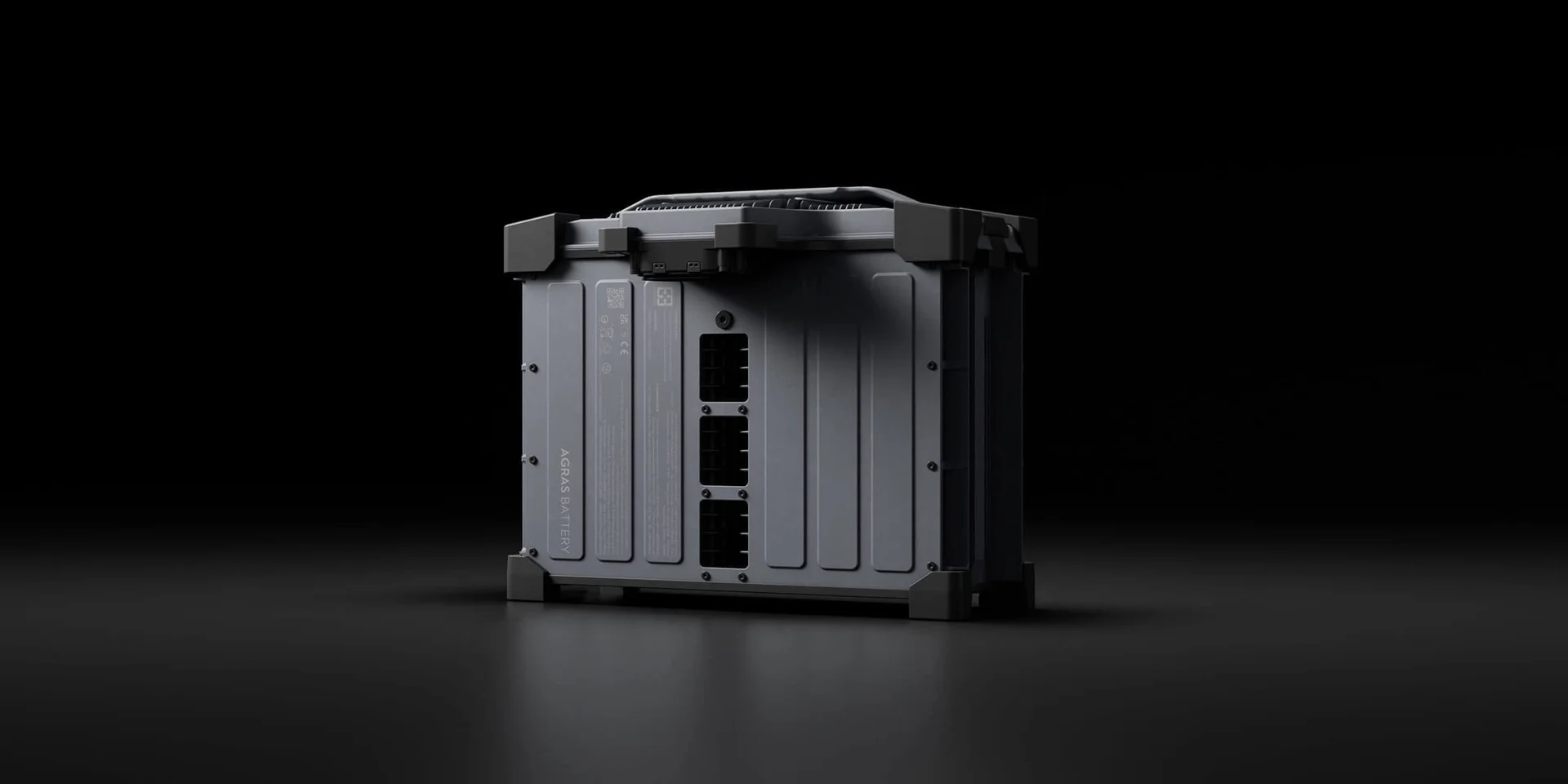
30 Ah capacity; approximately 11.7 kg. DJI also lists compatibility with D14000iE and C12000 charging equipment.
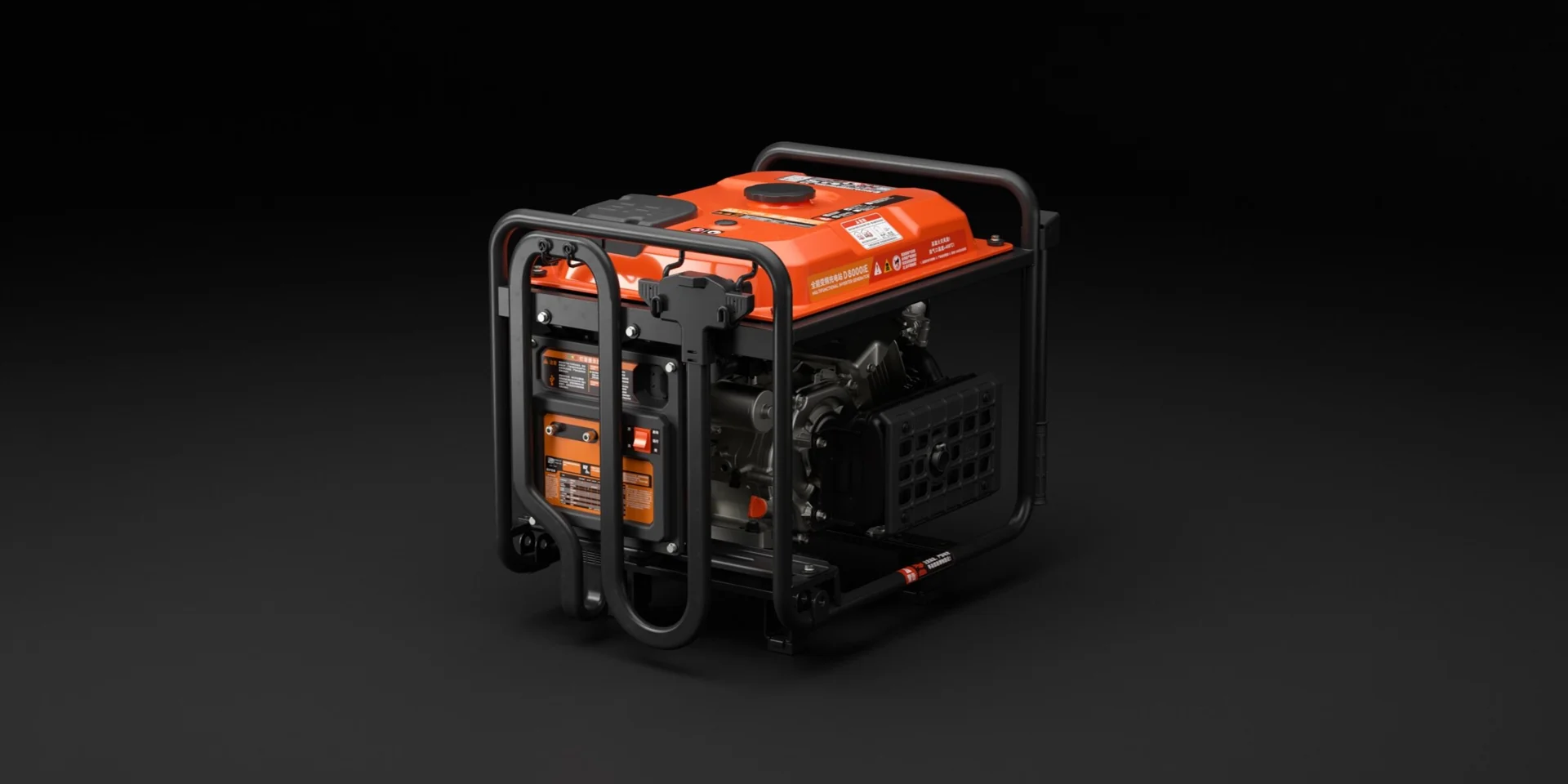
Up to 6,500 W charging output, a 48 V / 500 W DC output and a 1.8 m charging cable.
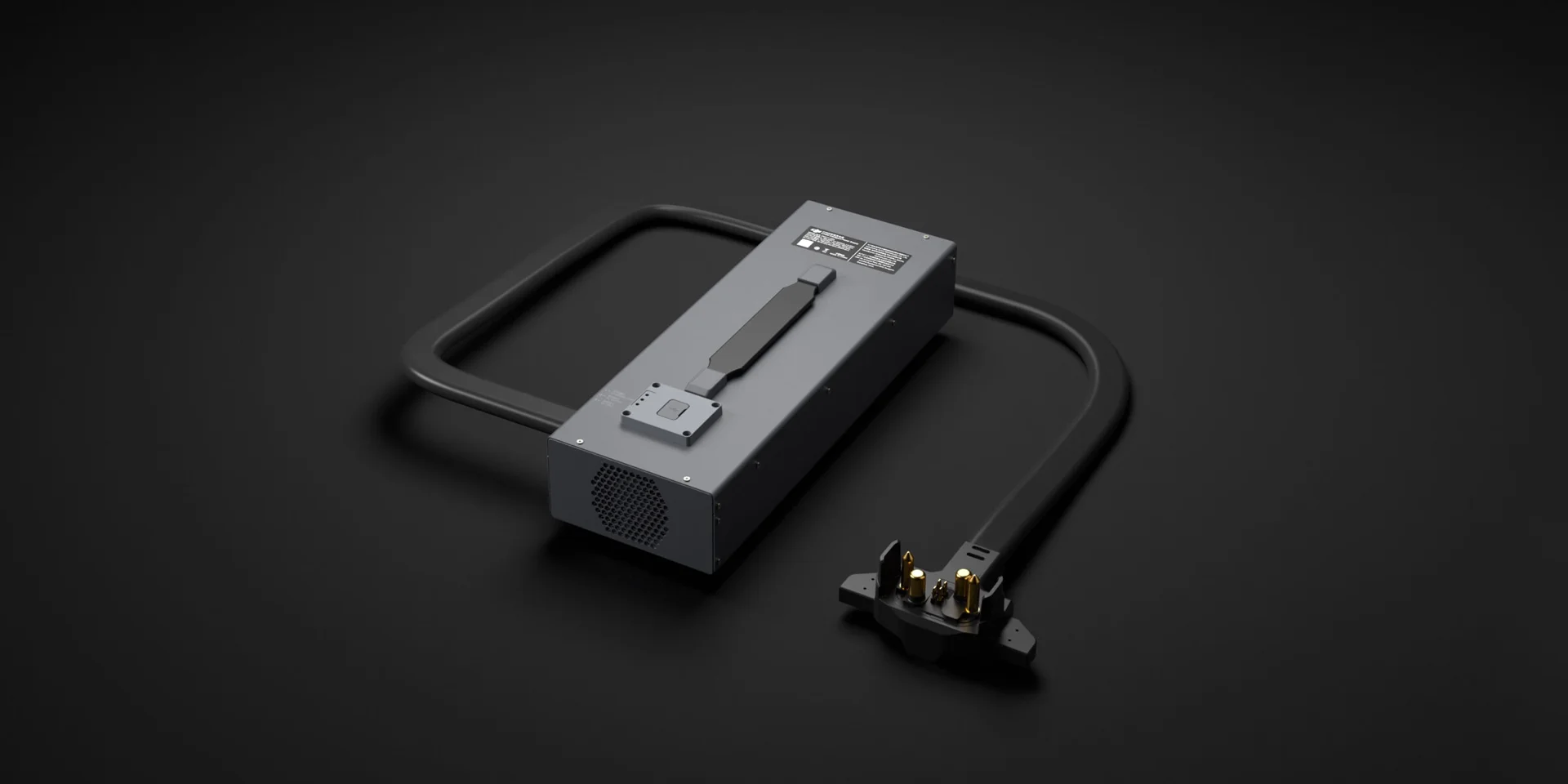
Up to 7,000 W with three-phase input. Adaptive power protection and a 1.8 m charging cable.
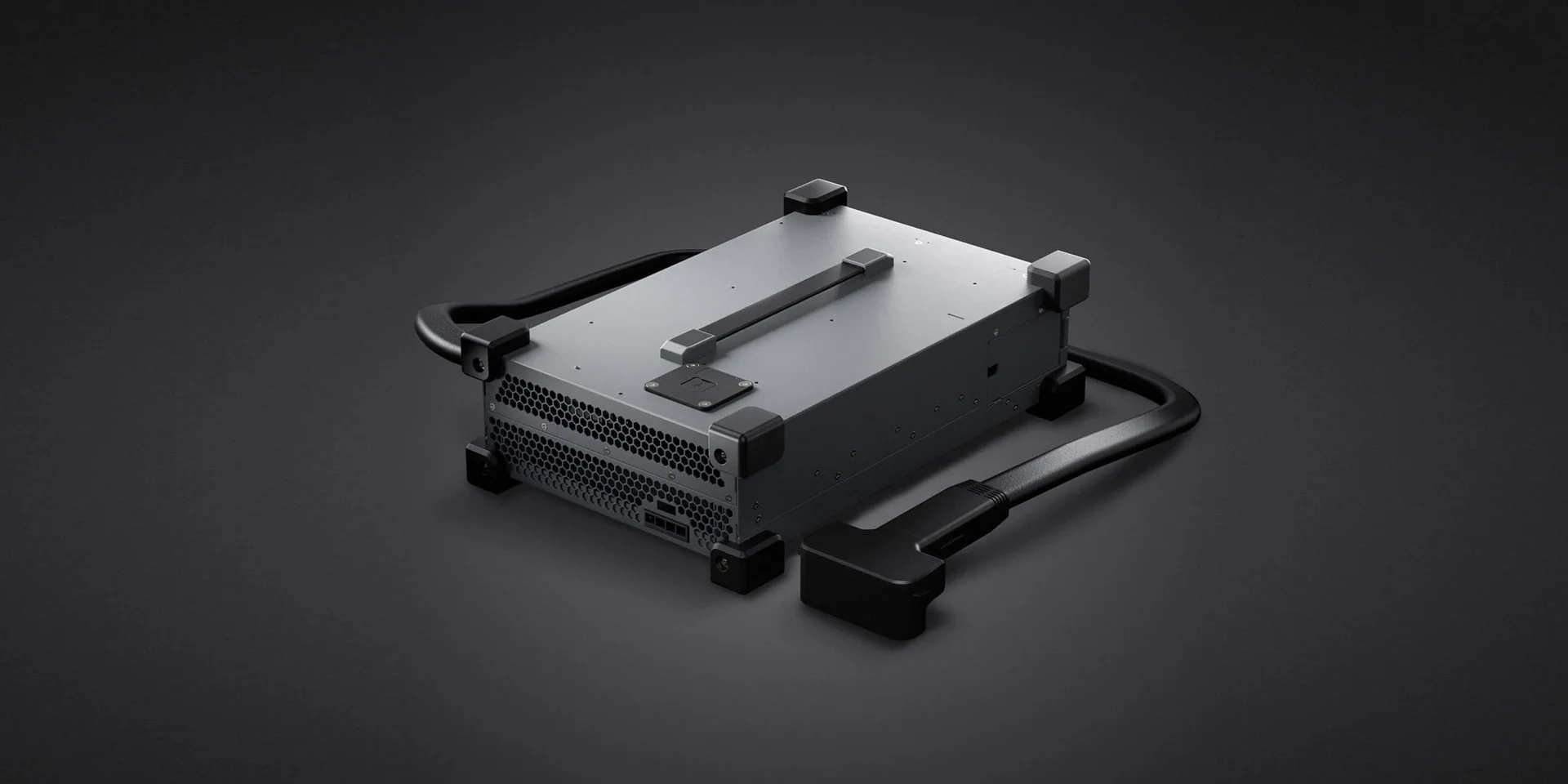
DJI presents this option with single-phase input, up to 9,000 W charging and a 1.5 m cable. Confirm the local power requirements and compatible setup before ordering.
Specifications
Detailed technical specifications
DJI — Specifications ↗ · DJI manuals and downloads ↗
Performance notes
Maximum values are not guaranteed working outputs. Payload limits depend on altitude, aircraft configuration and the operating conditions indicated by the DJI application. Spreading results vary with particle size, density and surface characteristics; DJI’s 10 m width test used a 3 m operating height and 1,100 rpm disc speed. Radar, vision and AR assistance are affected by lighting, rain, fog, sensor cleanliness and obstacle characteristics. Moving objects, cables and the suspended load require direct pilot attention. Accessories and functions may vary by market; the quotation confirms the supplied configuration.
Build your T55 configuration with ATTEX
Tell us about your crops, operating area and intended applications. Request a quote for the aircraft, application equipment, batteries and charging setup.
Request a quote