
DJI ENTERPRISE
DJI Dock 4
Always There, Always Ready
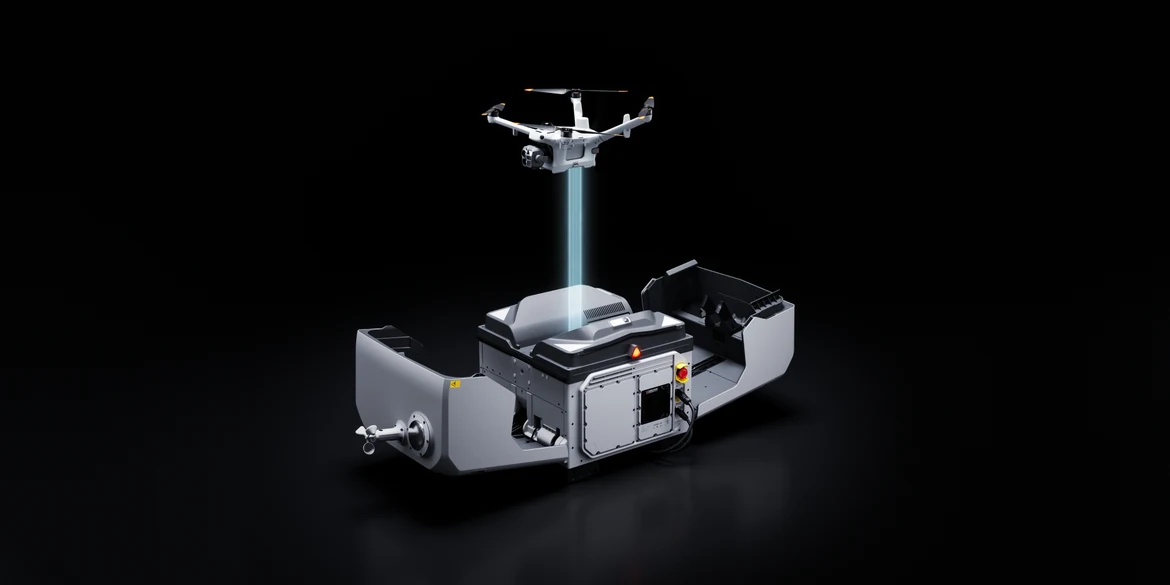
DJI’s first dock with automatic battery swapping
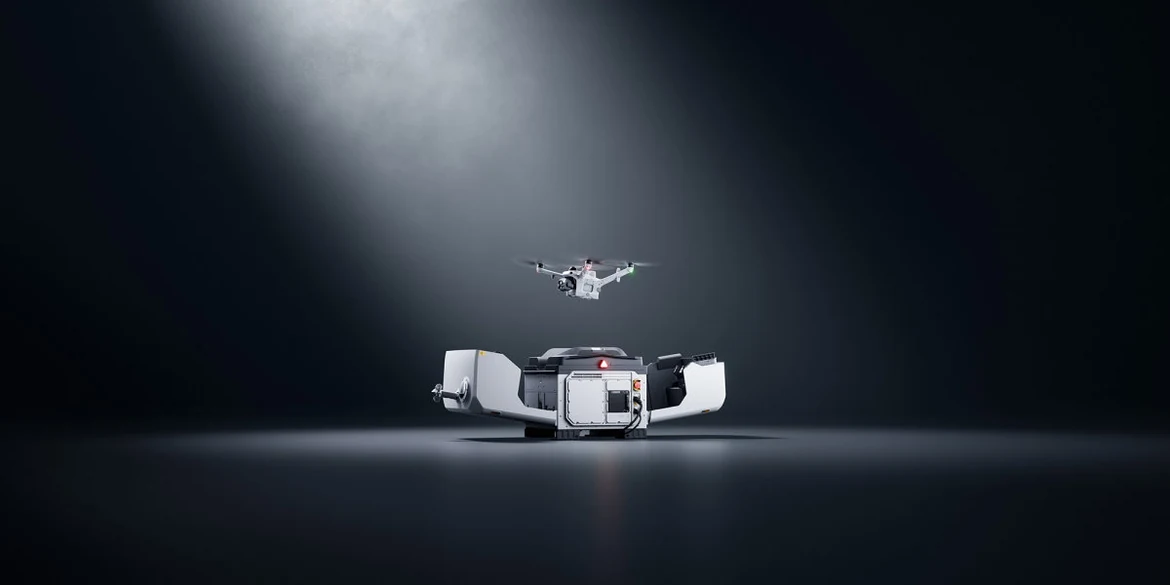
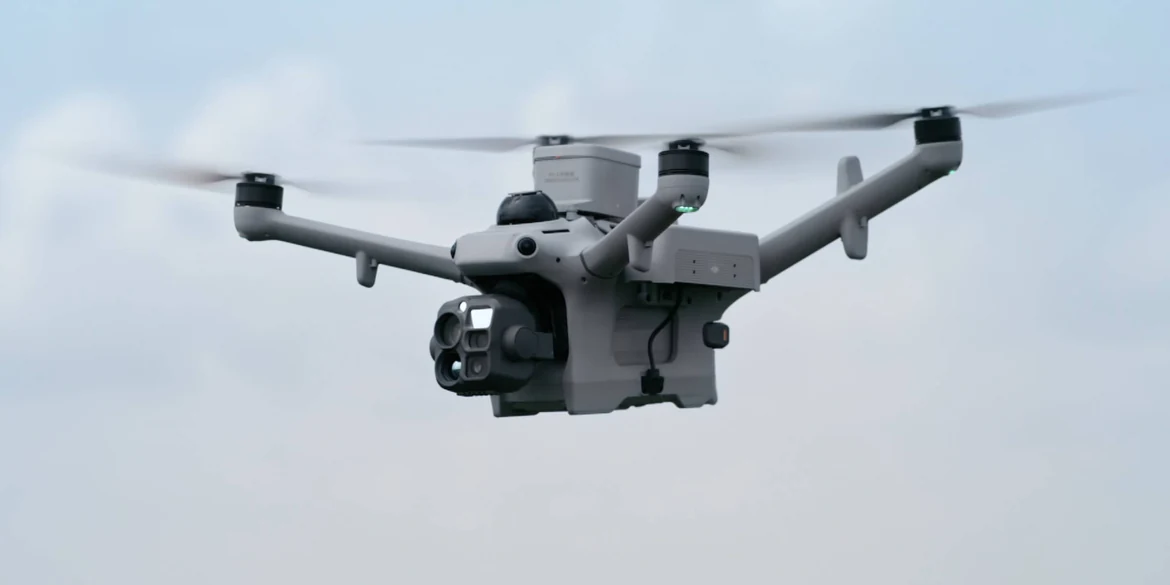
An automated drone station built for repeated missions, with 25-second battery swapping and the DJI Matrice 5TD. Thermal and visible imaging, LiDAR, radar and onboard AI connect with DJI FlightHub 2 to support remote response, inspection and continuous observation.[1][2][3]
Ready for rapid response
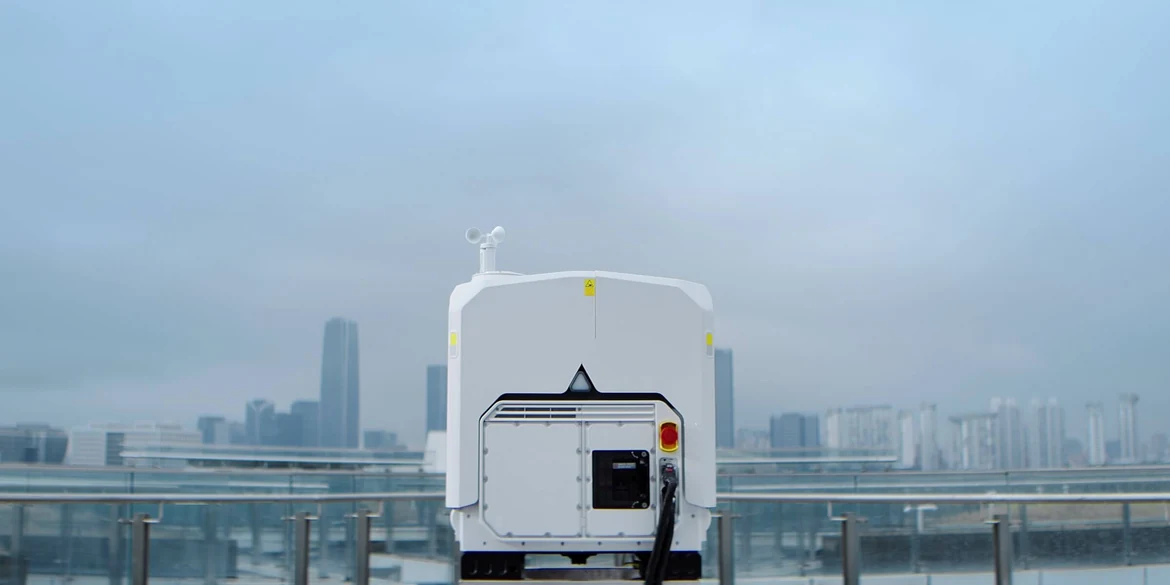
Launch on command
The aircraft takes off as the dock opens, without a pilot needing to attend the site. Remote dispatch supports emergencies at night, on weekends and during holidays.
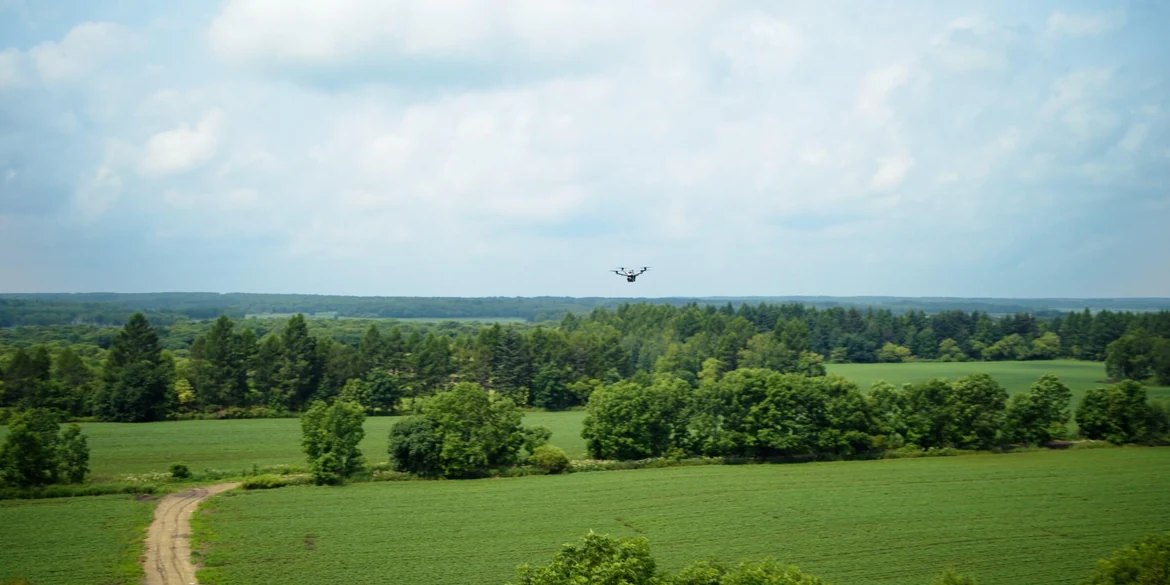
Direct flight at up to 21 m/s
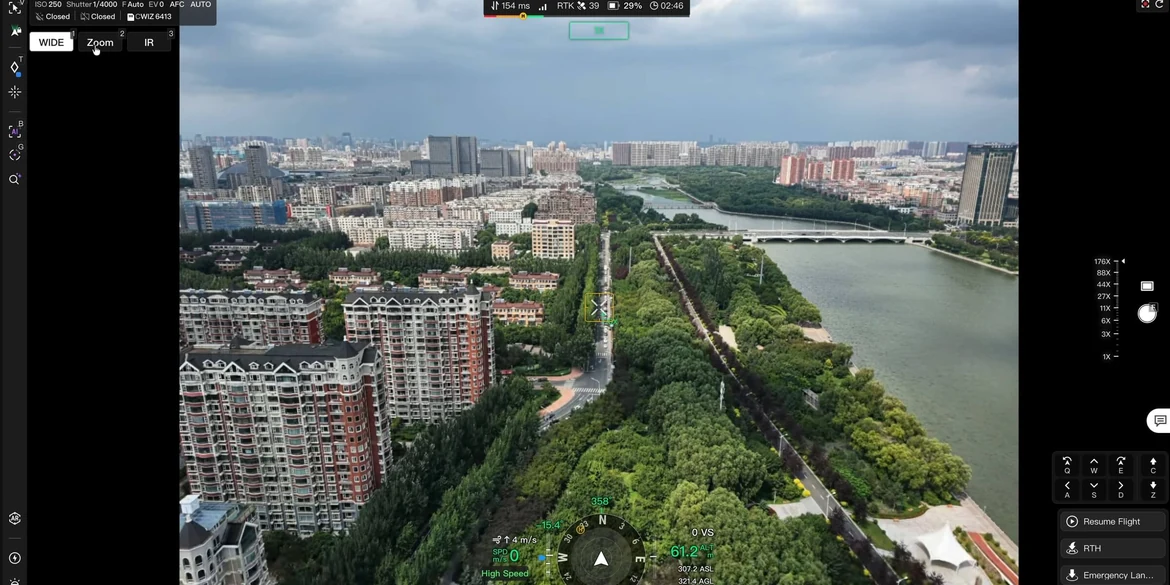
FlyTo tasks support a maximum speed of 21 m/s, allowing the drone to reach an incident directly and transmit live video to teams on the ground. Other flight modes are limited to 15 m/s.[4]
Battery swapping and continuous coverage
25-second battery swap
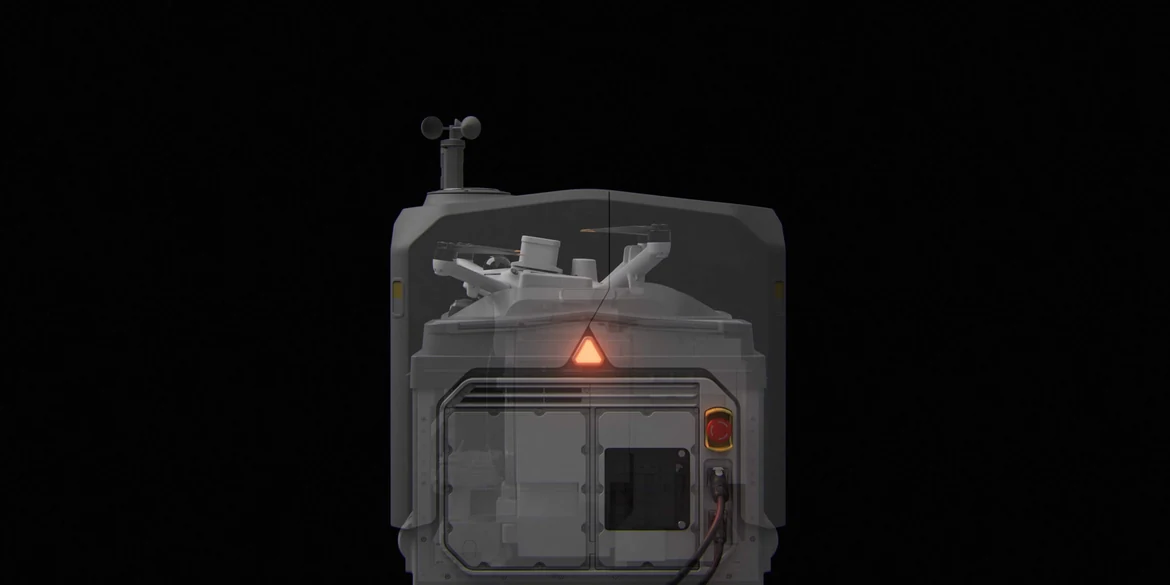
An automatic battery swap replaces a lengthy recharge between missions. DJI measures 25 seconds from the fully closed dock cover to completion of the swap. Flight data transfers to the dock during this process.[1]
Up to 59 minutes per flight
Matrice 5TD reaches a maximum flight time of 59 minutes in DJI’s controlled, windless test without a payload. Real endurance depends on operating conditions, payload and firmware.[5]
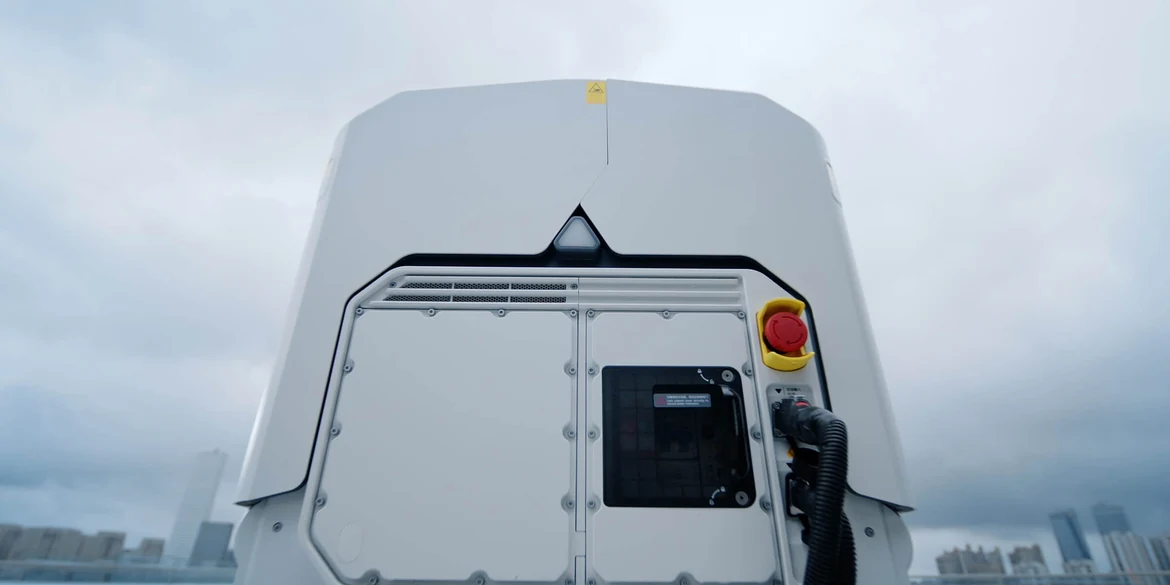
−40 to 50 °C dock operation
Automatic battery preheating in cold weather and compressor-based air conditioning in heat help keep the dock ready across its specified operating temperature range.
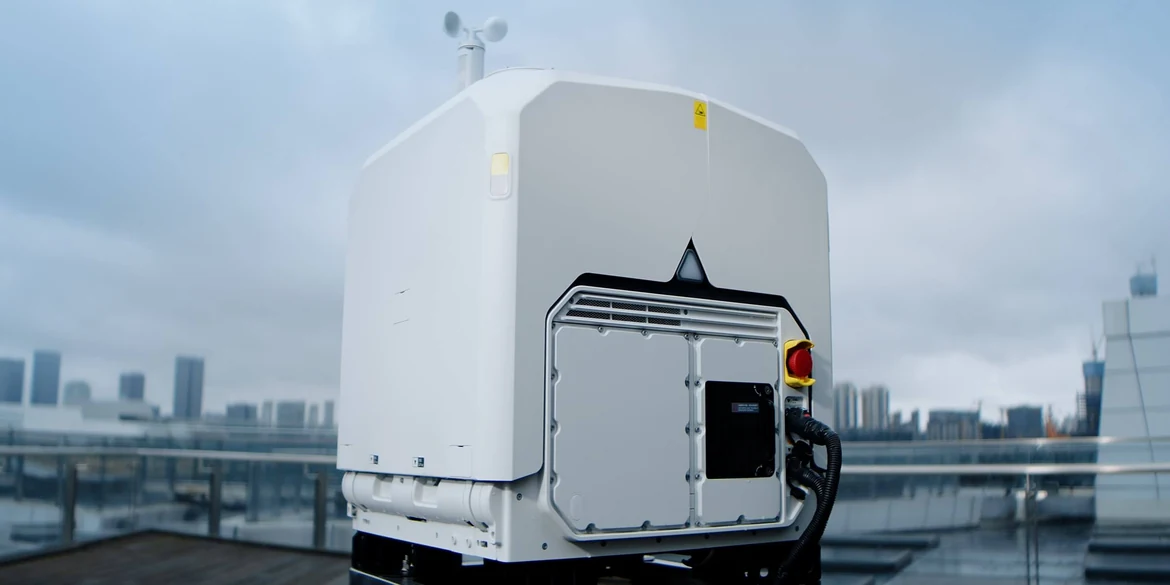
Aircraft task relay
Two aircraft in the same project can alternate automatically between operational points. One remains in flight while the other is on standby, maintaining situational awareness during extended incidents.
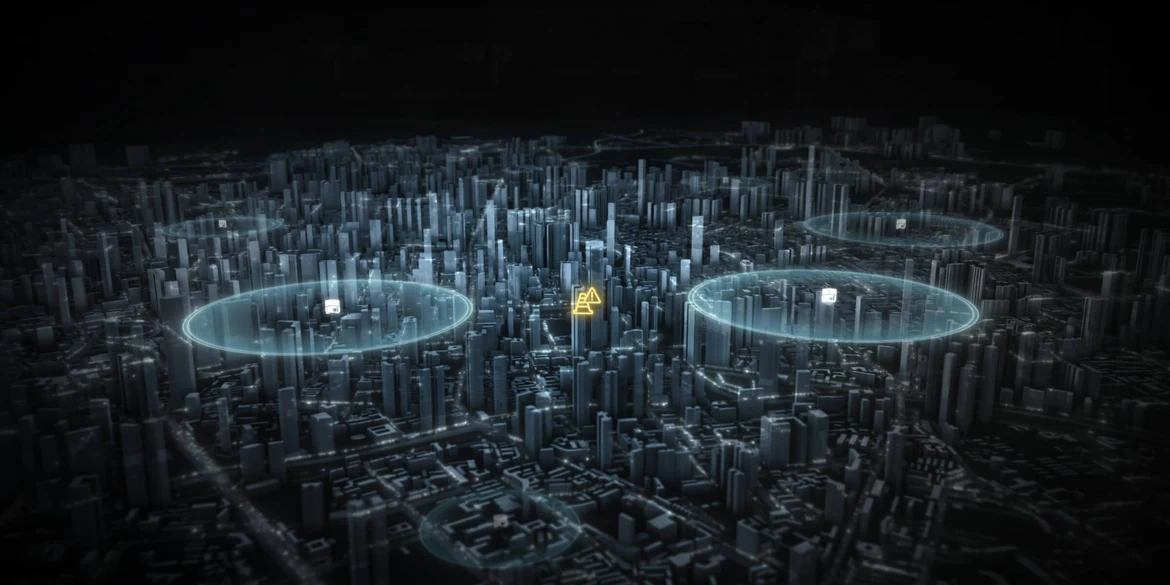
Live video and fast data transfer
Approximately 160 ms latency
The video-transmission architecture delivers a stated aircraft-to-cloud latency of approximately 160 ms, around 43% lower than the previous generation. Network quality and computer performance affect the actual result.[6]
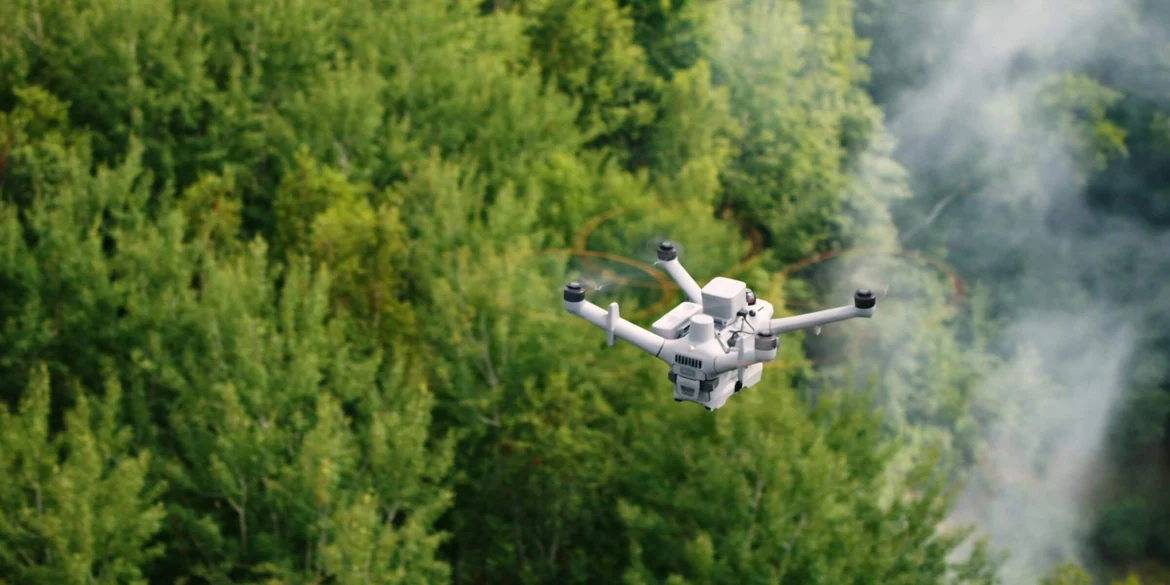
Connectivity in obstructed environments
Dual 4G modules, permitted sub-2 GHz bands and an elevated O4 Ground Station support reliable links in demanding locations. Cellular and radio-band availability varies by country.[7][8]
Up to 80 MB/s local transfer
A high-speed Wi-Fi channel automatically transfers flight files after landing. DJI reports up to 80 MB/s for large files in its interference-free laboratory test, using the included SD card; smaller files may transfer more slowly.[9]
Multi-sensor imaging, day and night
11× telephoto camera
The 252 mm equivalent telephoto camera supports reading signs at 400 m under DJI’s test conditions and inspecting bolt- and pin-level details at 100 m on power infrastructure.[11]
Native 1280 × 1024 thermal imaging
UHR mode produces 2560 × 2048 images and 2K recording. Up to 32× thermal zoom helps observe subjects at night and identify overheating or damaged insulators. The thermal sensor must not be exposed to intense energy sources.
Visible and thermal fusion
Edge and overlay fusion combine visible-light structure with thermal information in one frame, allowing operators to examine outlines and heat distribution together.
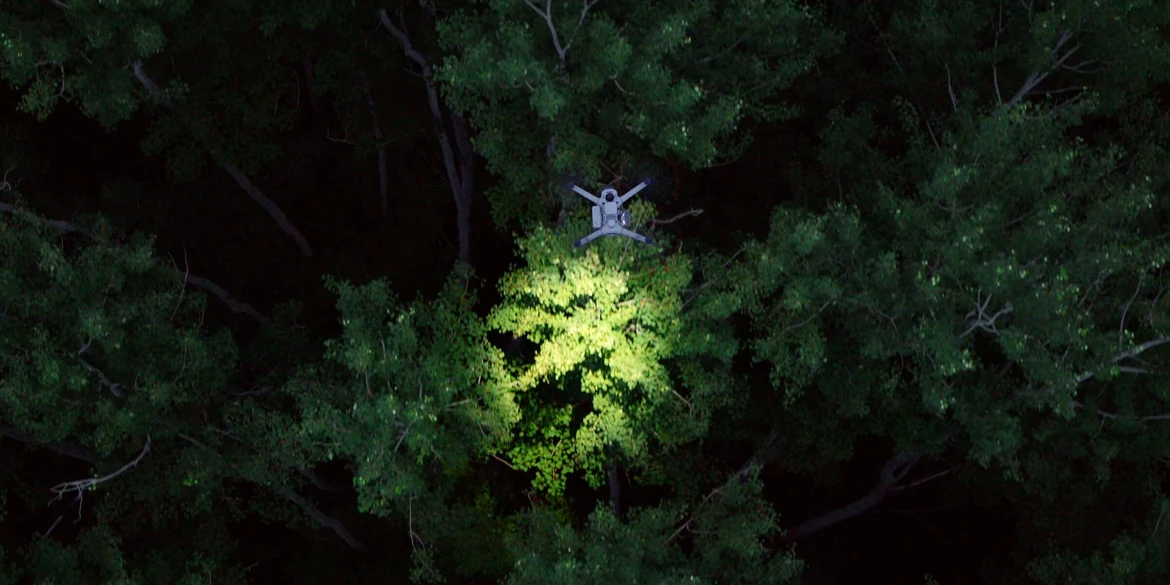
Colour night vision and NIR
The camera provides full-colour 4K night imaging without requiring the spotlight. NIR auxiliary illumination also supports monochrome night observation.
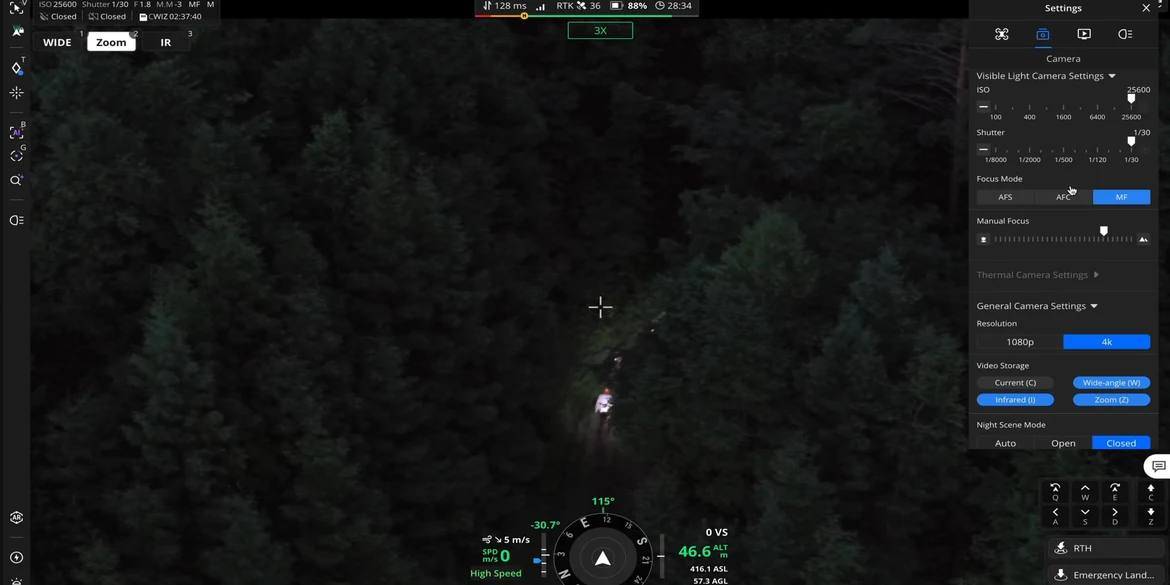
Laser ranging up to 3 km
Distance readings and PinPoint coordinates appear over the video feed for inspections, rescue and wildfire assessment. The 3 km specification applies at normal incidence with a 25% reflective target and 8 km visibility; rain and fog can reduce performance.
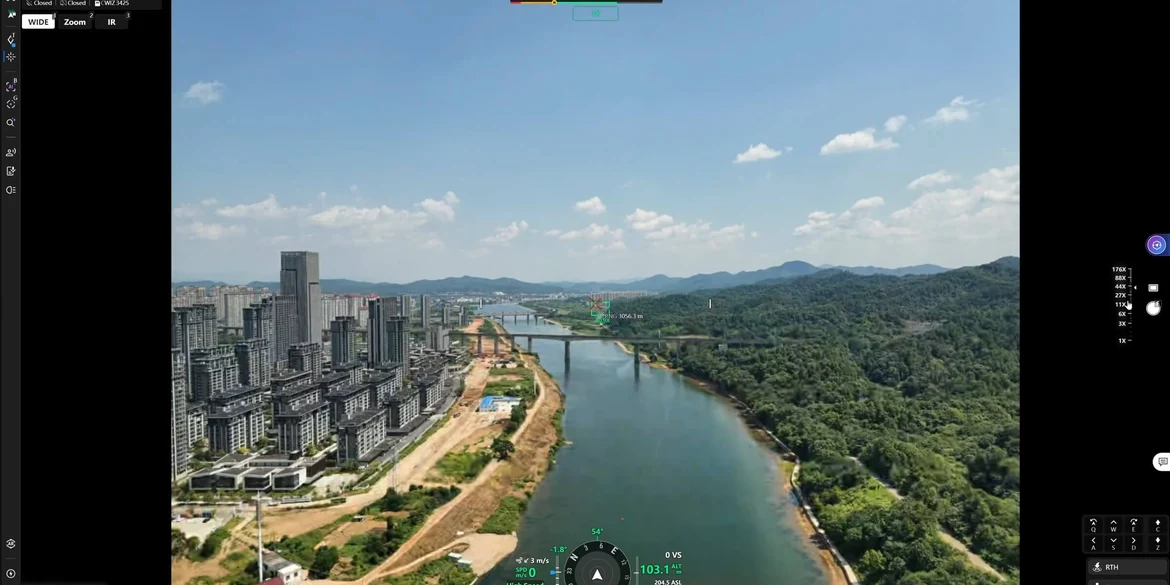
Surveying with the same aircraft
10 cm aerial survey accuracy at 12 MP
Matrice 5TD combines inspection and surveying capabilities associated with Matrice 4TD and Matrice 4D. DJI reports 10 cm aerial-triangulation checkpoint accuracy for prescribed 12 MP missions at 120 m, processed in Terra or FlightHub 2. Its stated 50% equipment ROI improvement refers to this combined capability, rather than a guaranteed financial return.[10][24]
Payloads and warning lights
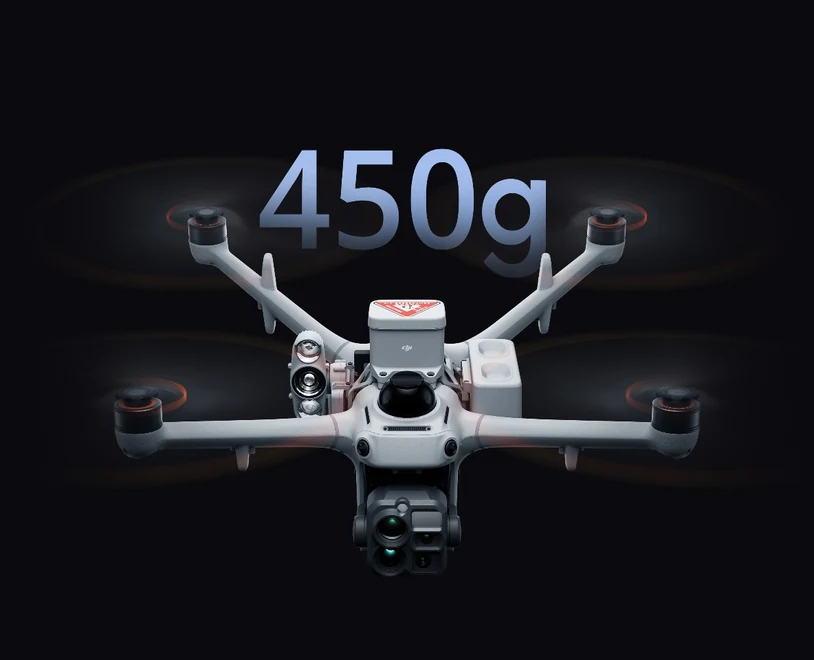
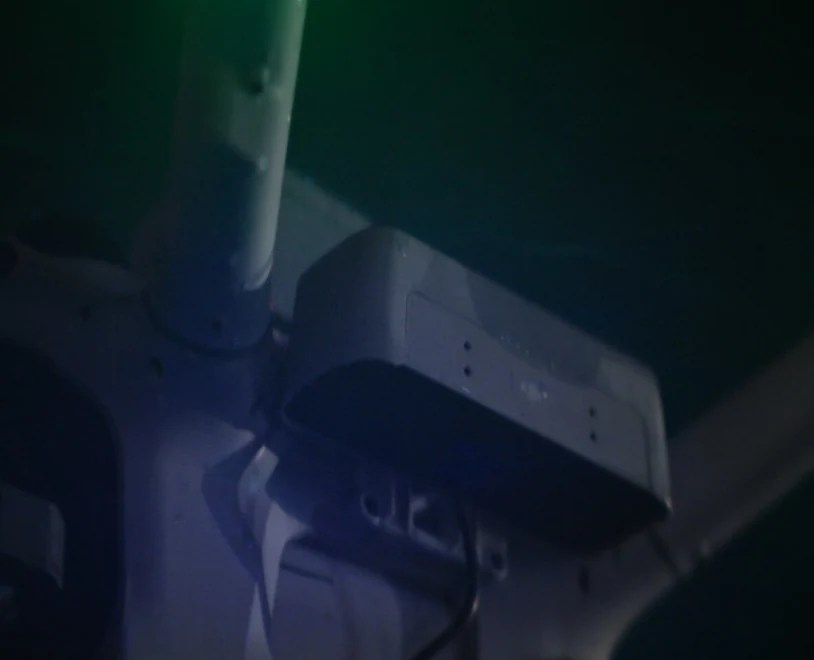
Speaker, spotlight and parachute together
Combine aerial voice guidance, illumination and ground-risk mitigation in one flight. When the spotlight is on, visual obstacle sensing is disabled; only mmWave radar and LiDAR remain active, reducing omnidirectional sensing performance.[25]
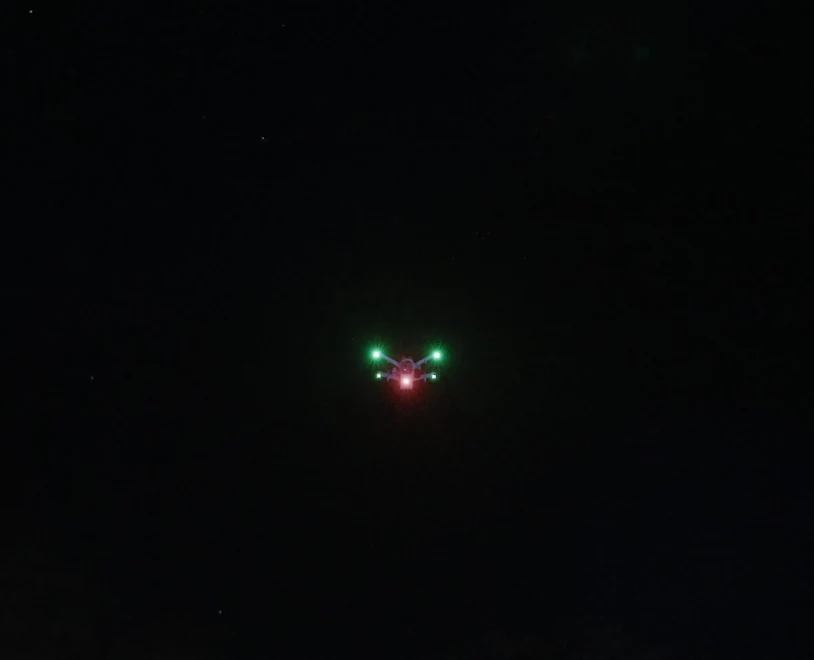
Integrated customizable warning light
Choose warning-light colours and flash patterns without installing an additional light on the aircraft.
Radar, LiDAR and six-direction vision
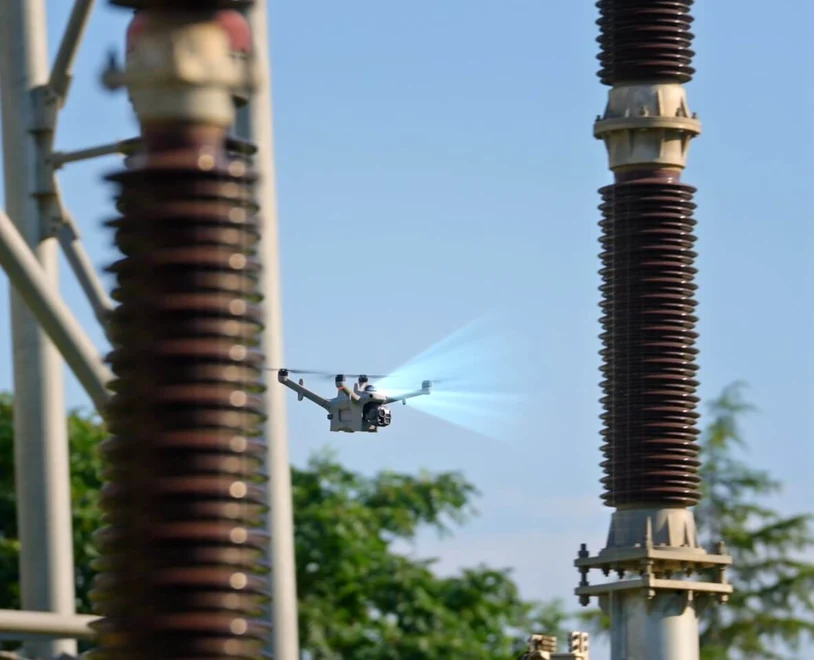
Sensing thin obstacles and wires
Rotating LiDAR, three-directional mmWave radar and low-light fisheye cameras work together around substations and crossing distribution lines, including at night. Detection of 11 mm black insulated wires is supported under the specified conditions; weather, material and geometry affect performance.[14][15]
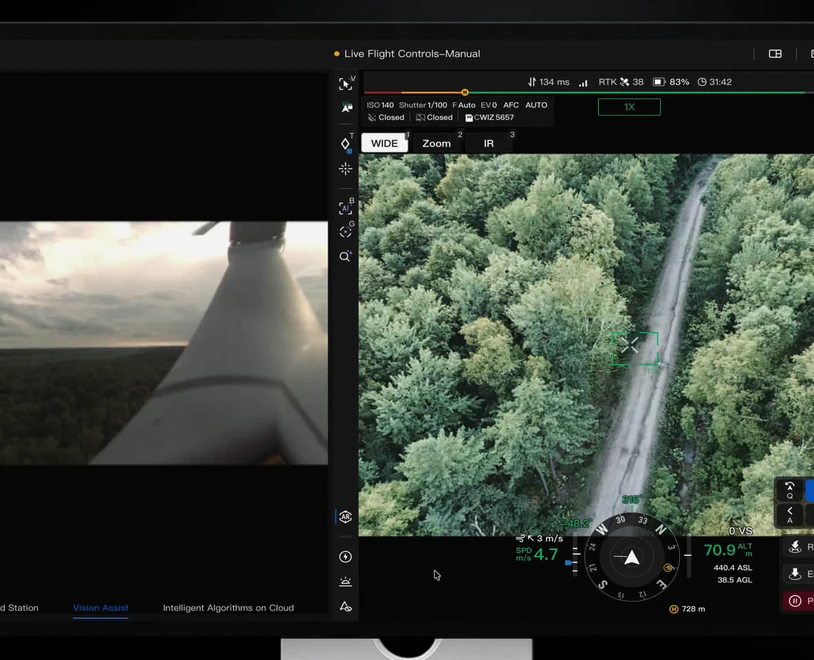
Flexible deployment with O4 Ground Station
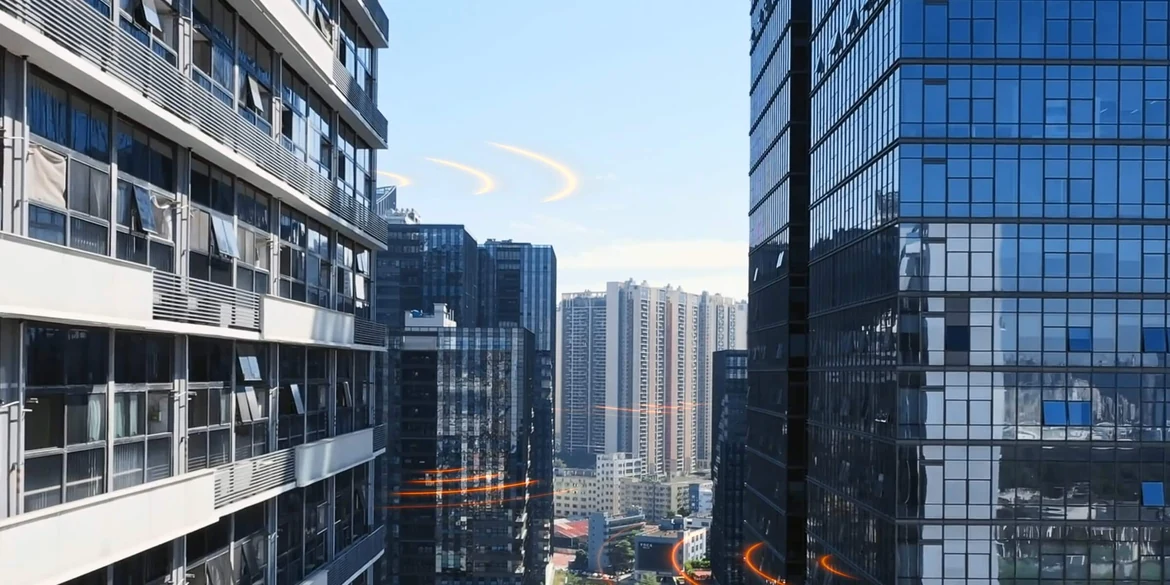
Deployment beside tall buildings
LiDAR and visual SLAM, anti-interference and anti-spoofing algorithms work with the required O4 Ground Station. An elevated, open installation location improves its signal. Near-high-rise deployment depends on satellite-system coverage and currently supports most Asia-Pacific regions; suitability for a Greek installation must be checked against DJI’s installation manual and a site survey.[2][17]

Vehicle mounting — coming soon
DJI expects mobile vehicle-mounted deployment in the first half of 2027, subject to firmware release. The drone takes off and lands only while the vehicle is parked, including landing at a new stopping point. The Vehicle-Mounted Gimbal Mount is required.[18]
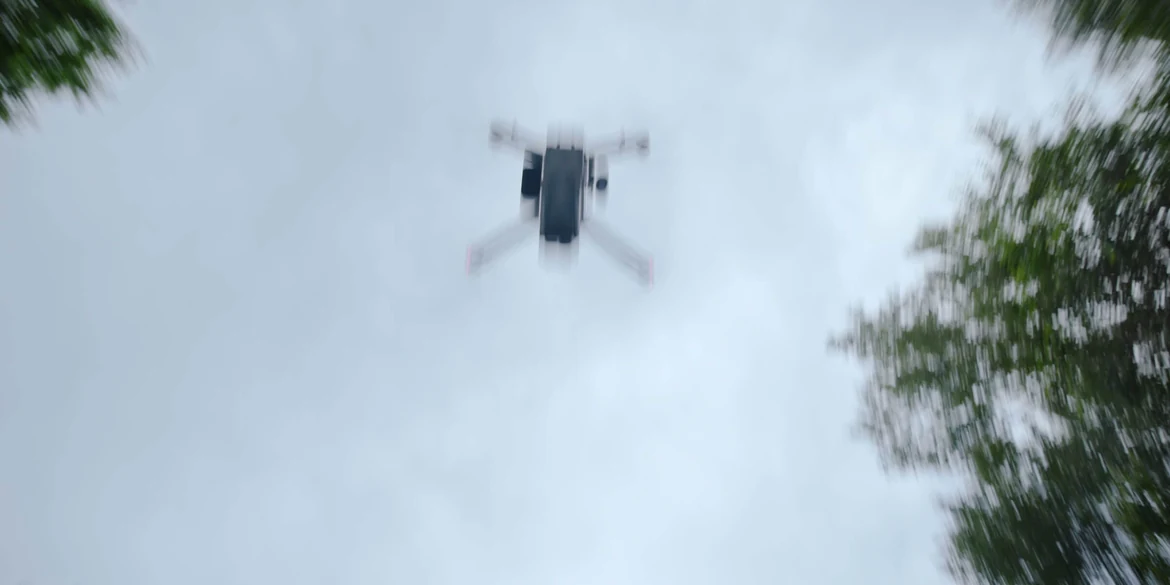
Multi-station roaming
The aircraft can switch between multiple O4 Ground Stations to reduce gaps in communications coverage. The dock connects through the O4 Ground Station to supported cloud, on-premises, appliance or third-party platforms.[2]

Additional flight safeguards
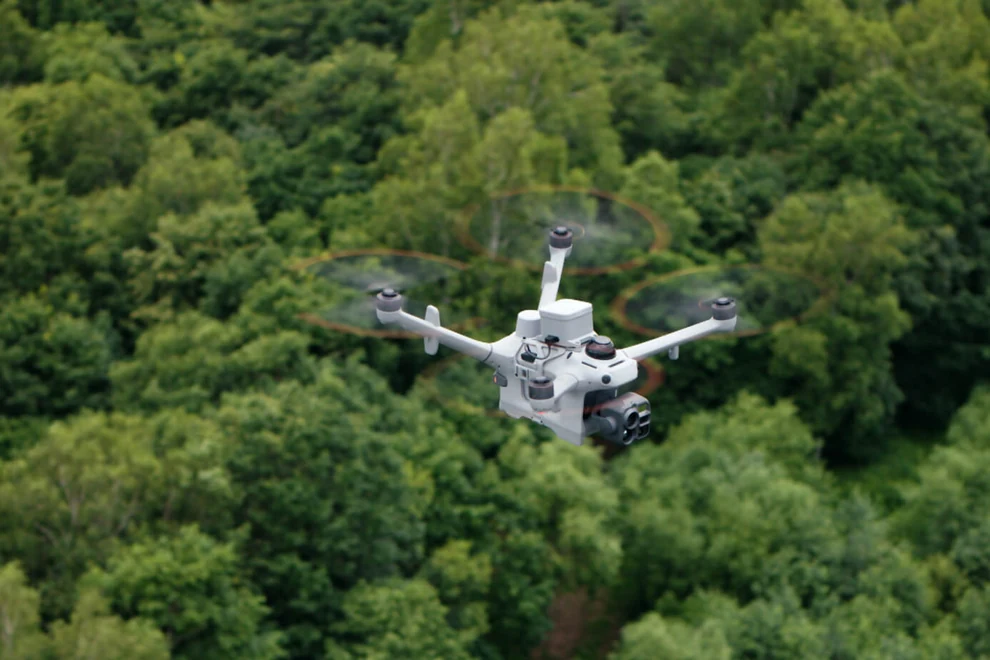
DJI AP1 parachute
The top-mounted AP1 has independent power, redundant links, automatic and manual deployment and a flight termination system. DJI states that Matrice 5TD with AP1 meets EU C5/UK5 requirements for STS-01 and EU C6/UK6 requirements for STS-02. Applicable operational approvals remain necessary.[19]
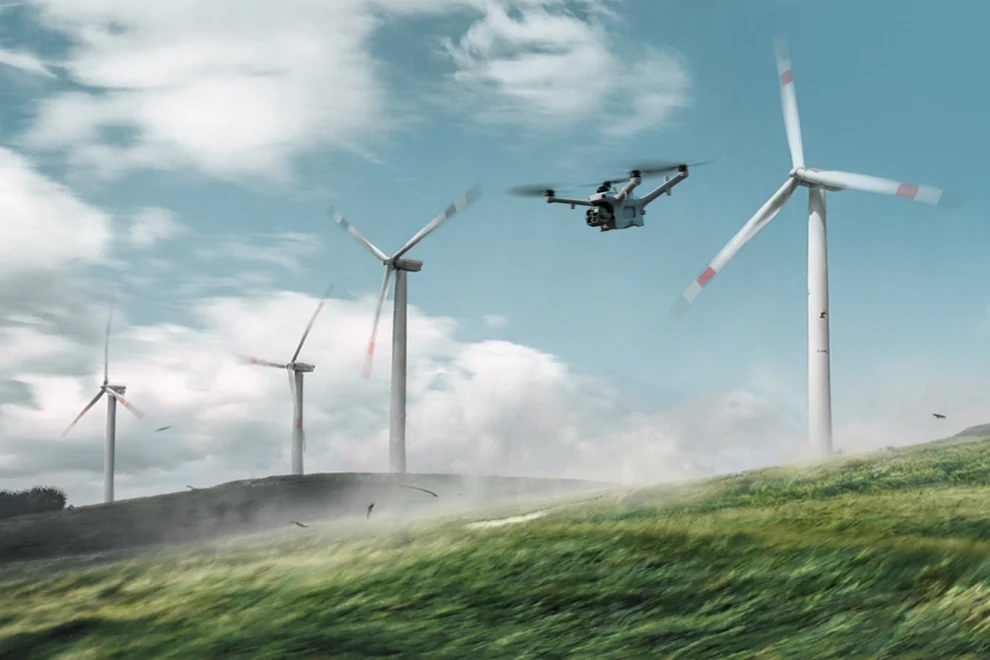
ADS-B and RID awareness
The built-in receiver warns about nearby aircraft and supported DJI drones, with tracks displayed on the map. Detection applies to aircraft transmitting ADS-B Out and selected DJI models supporting RID and OID.[20]
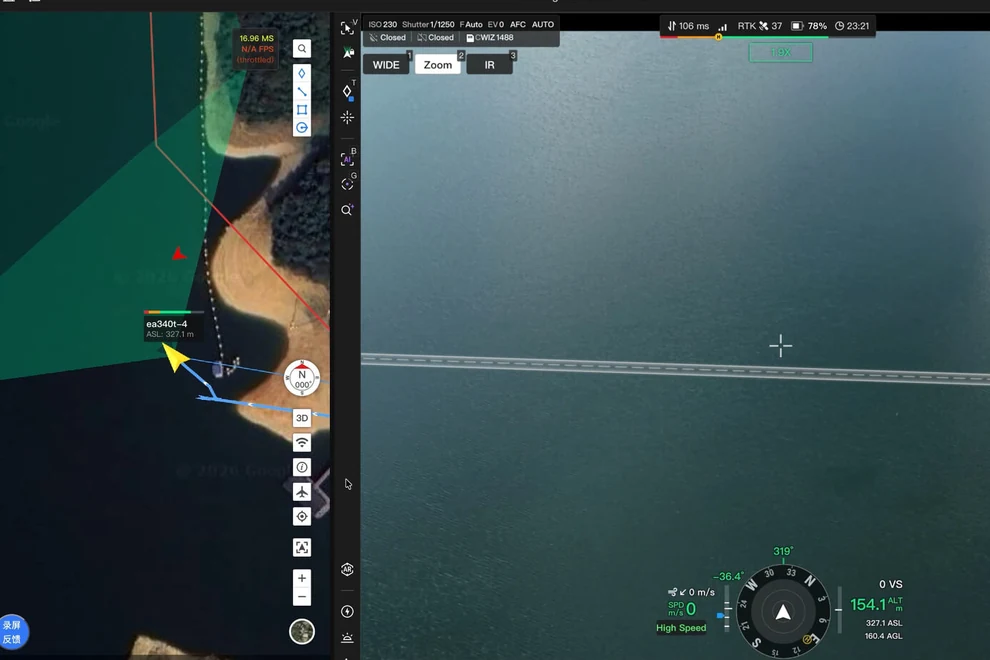
High-wind descent RTH
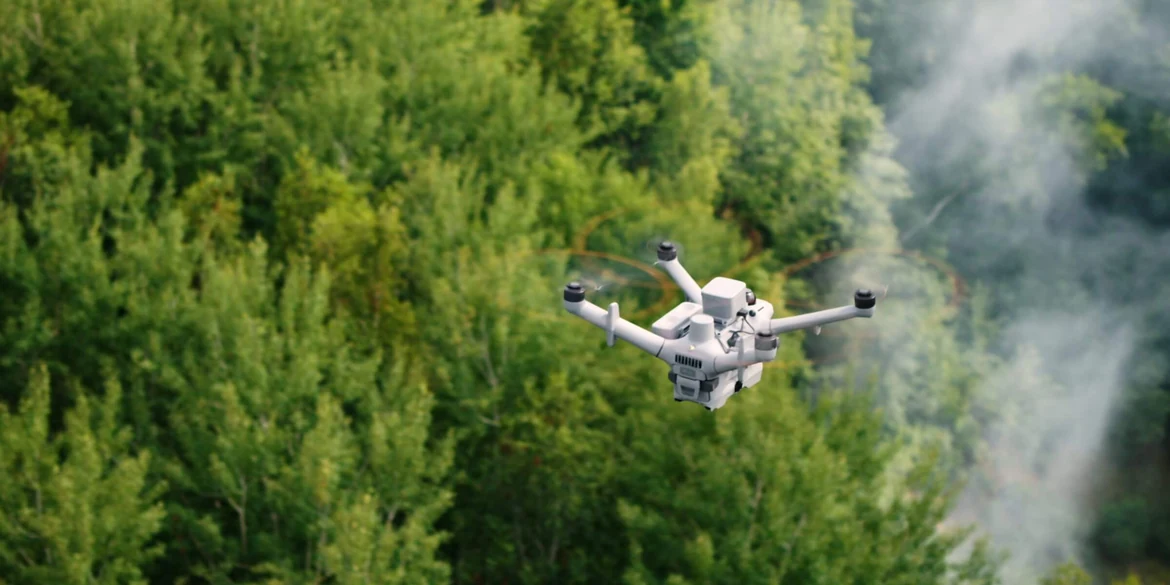
The aircraft supports takeoff, landing and operation in wind speeds up to 12 m/s. If wind strengthens on the return leg, High-Wind Descent RTH lowers the aircraft as it returns, including over mountainous or forested terrain.
AI from detection to response
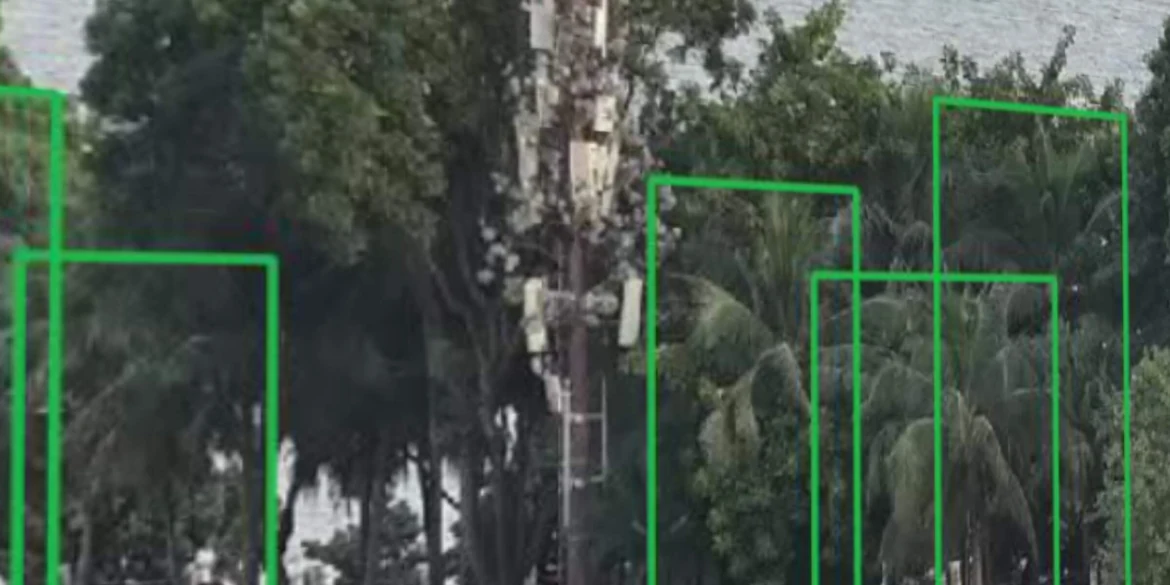
17 onboard detection categories
Onboard AI analyzes live video for 17 object types. Infrared hotspot detection and third-party AI models extend the detection options.[3]
Search by text or image
FlightHub 2’s Virtual Cockpit supports object searches using text or an image. A multimodal large language model interprets the prompt, identifies matching objects and triggers alerts.[3]
FlightHub 2 Copilot
Natural-language requests can be converted into aircraft commands, routes and scheduled tasks. Detected anomalies can generate SMS, email or platform alerts and trigger photos, recording, tracking or hovering.[3]

Triggered and scheduled workflows
Third-party alerts, including first-response calls, can initiate drone dispatch. Periodic workflows link data collection, modeling, analysis and reporting into a repeatable process.[3]
AI post-processing and reports
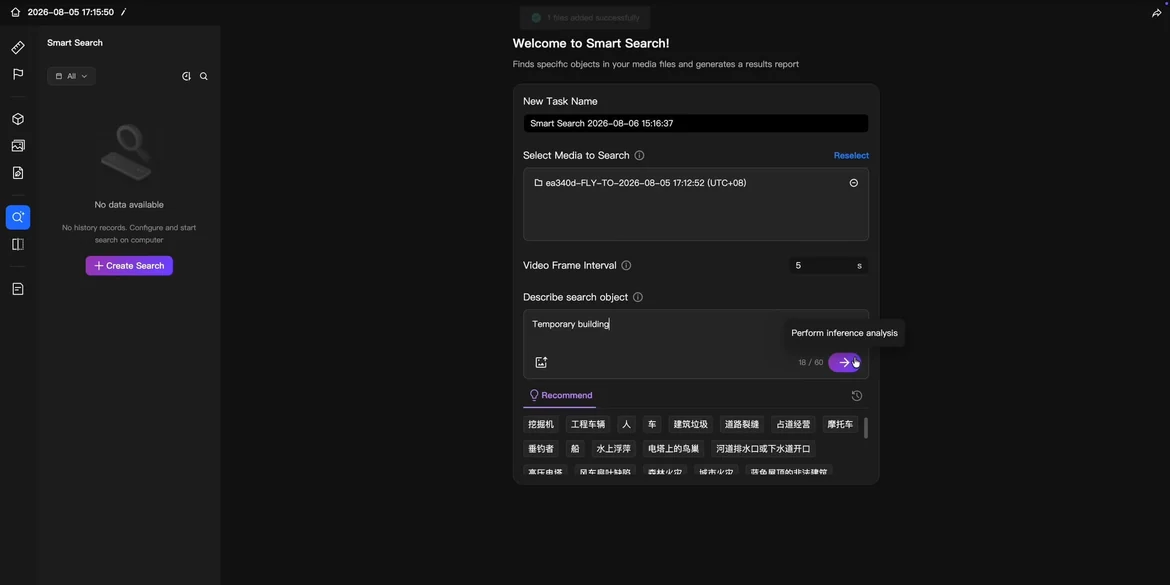
Post-processing smart detection
AI compares new data with historical aerial photographs or 3D models, annotates findings and exports reports. Smart Detection highlights facility damage, ground changes and newly appearing unauthorized structures.[3]
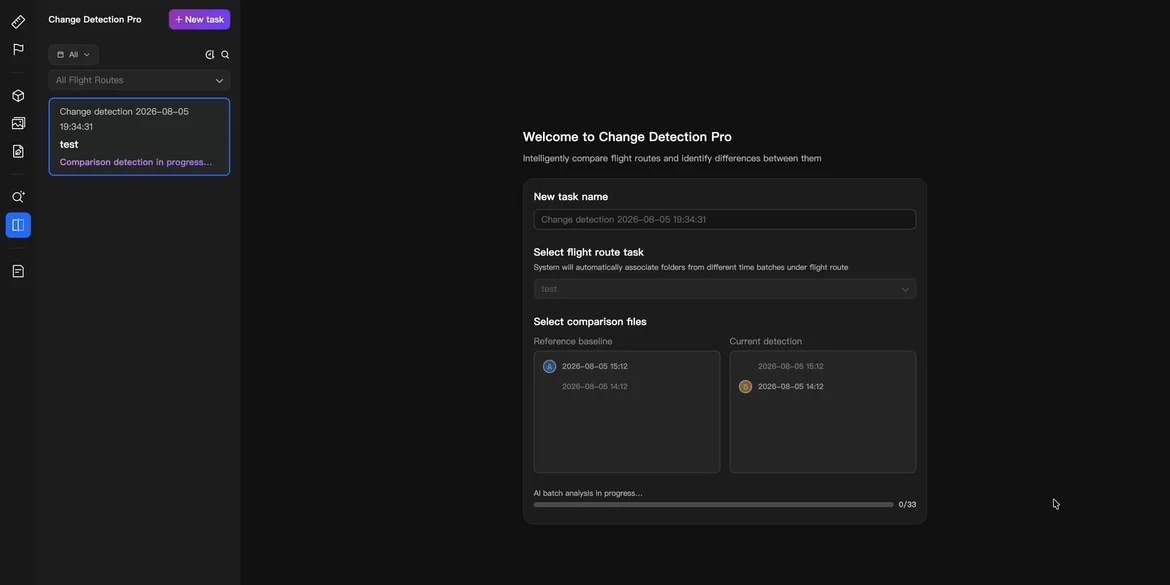
Change Detection Pro
Automated comparison of historical aerial imagery marks changed areas and creates a change report, reducing manual image-by-image review.[3]
Connected software for the complete operation
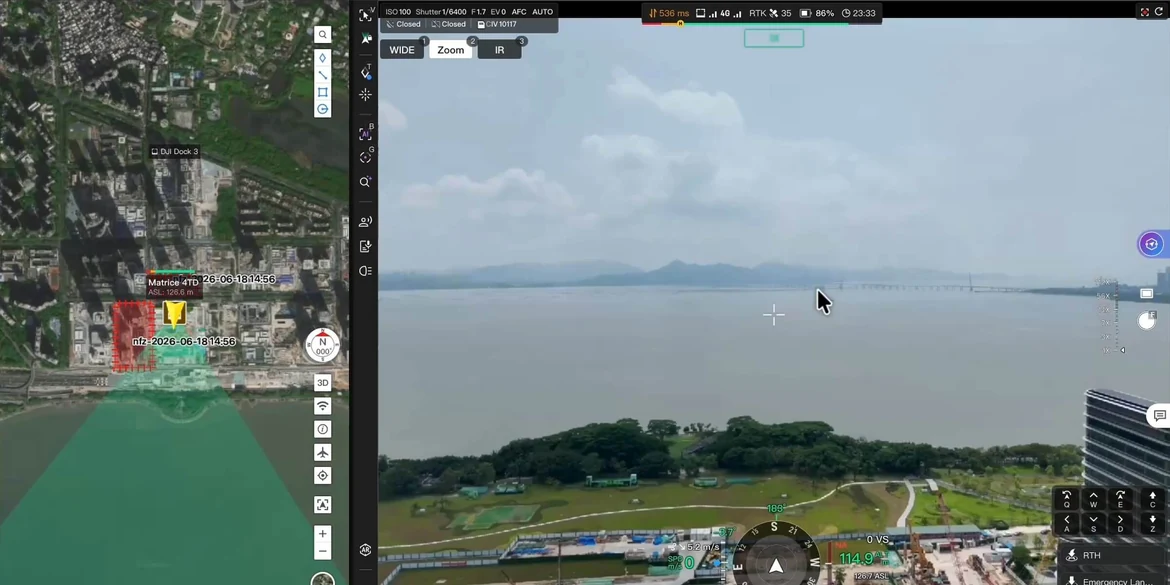
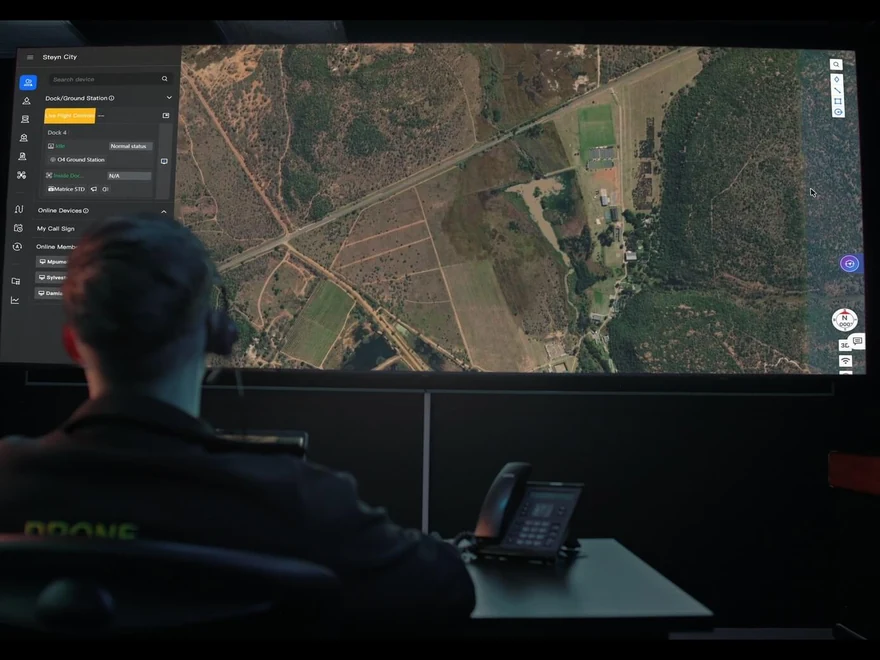
FlightHub 2 operations centre
Virtual Cockpit control, route editing, timeline task scheduling, multiple live streams and a shared dashboard connect remote teams. Cloud detection, anomaly alerts, post-processing and OTA maintenance support deployment through long-term upkeep.
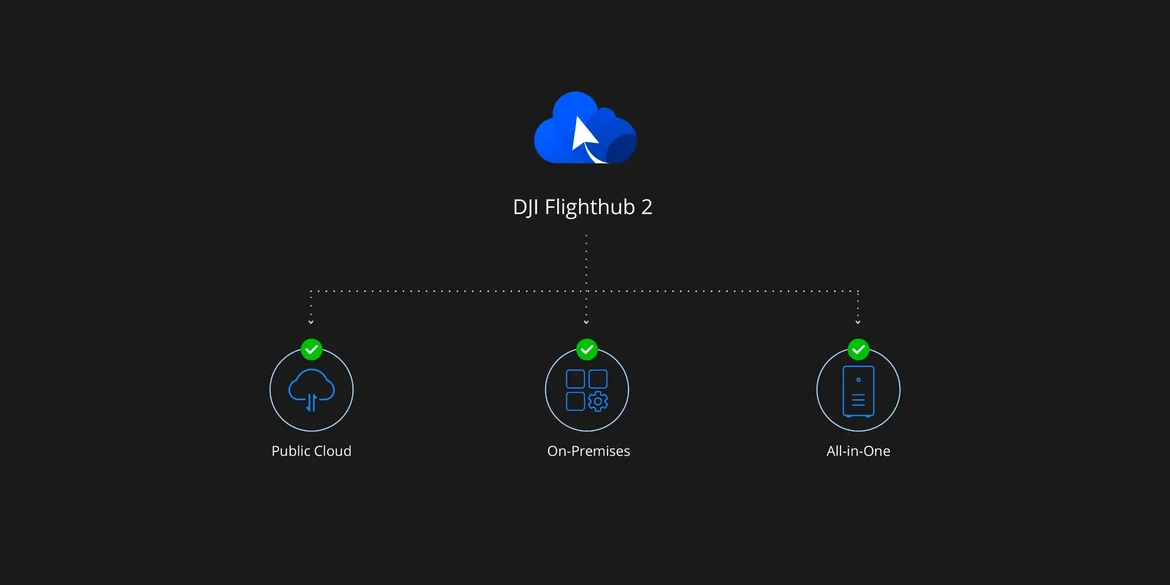
Public cloud, On-Premises and all-in-one
Choose public-cloud SaaS, an all-in-one appliance or the On-Premises Version according to deployment and data-management needs. Integration options include OpenAPI, embeddable front-end components and MQTT Bridge. Available OpenAPI functions differ between public cloud and On-Premises.[21]
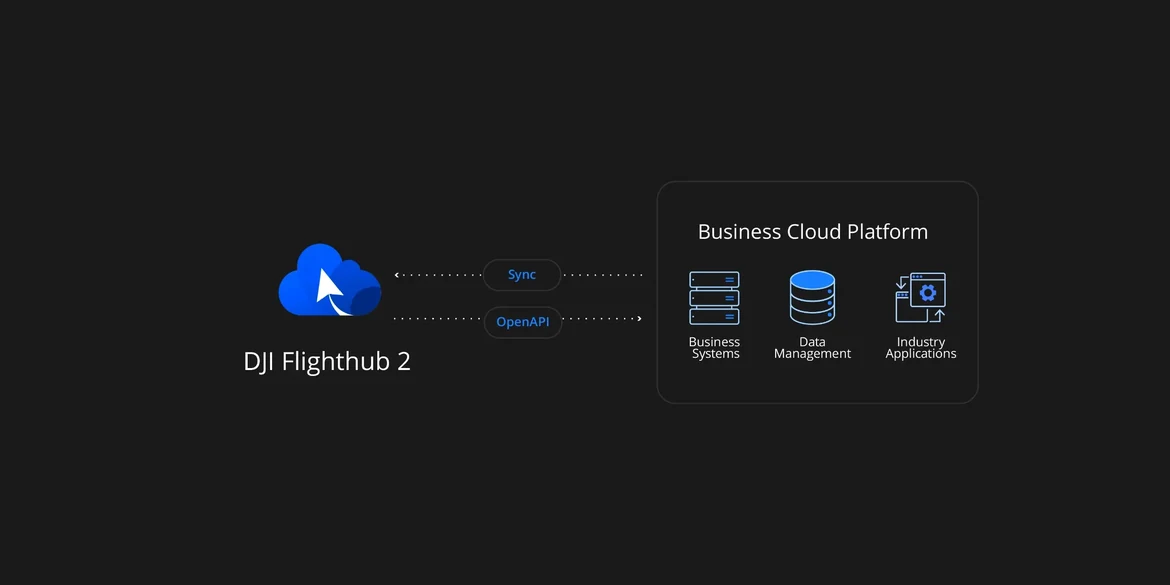
FlightHub Sync and OpenAPI
FlightHub Sync supports no-code connections to other cloud platforms. OpenAPI enables software integrations, including supported 2D and 3D modeling functions. Consult DJI’s API documentation for the supported scope.
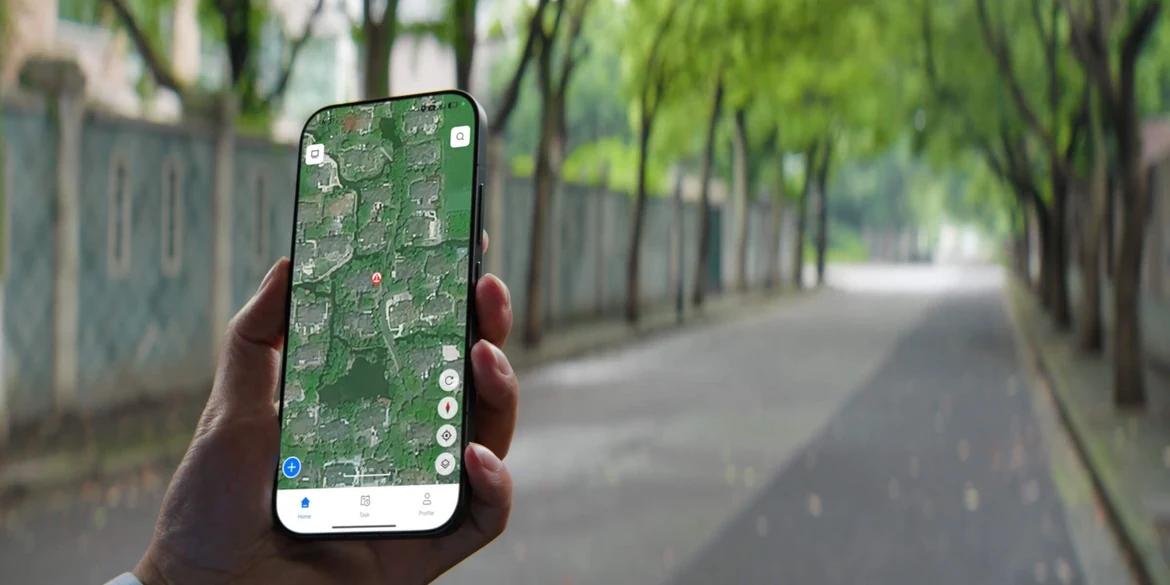
DJI Enterprise app: dispatch from your phone
The app handles on-site dock configuration and debugging, task triggering and remote viewing. A task command wakes the aircraft and dispatches it to the selected location.
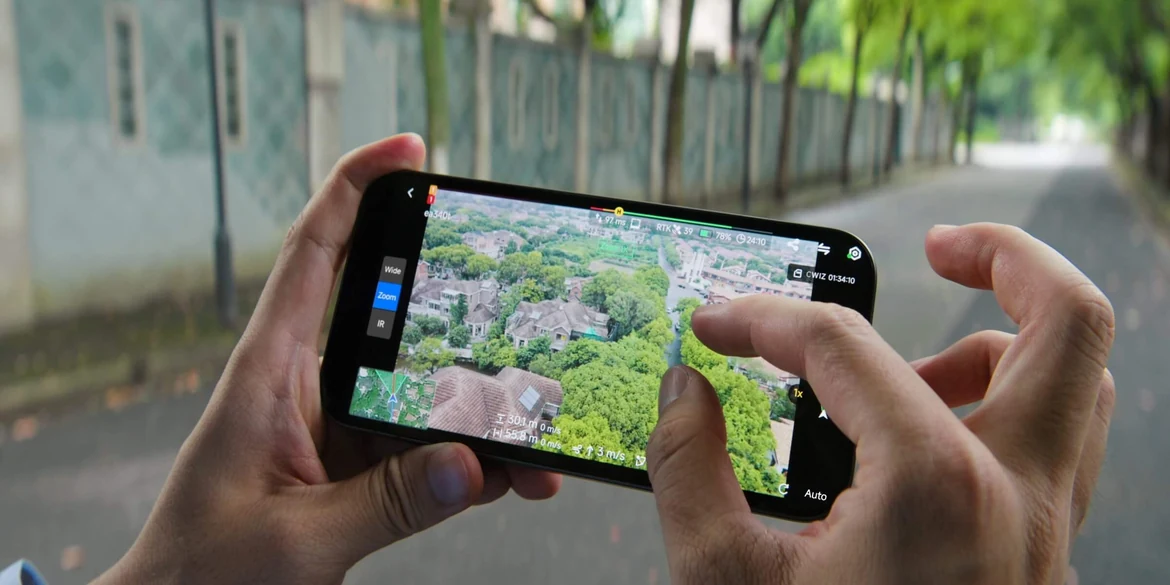
Remote viewing and control
Low-latency live video gives remote crews a current view of the site, supporting informed off-site decisions. Actual responsiveness depends on network conditions.[6]
Ground and airspace risk mitigation
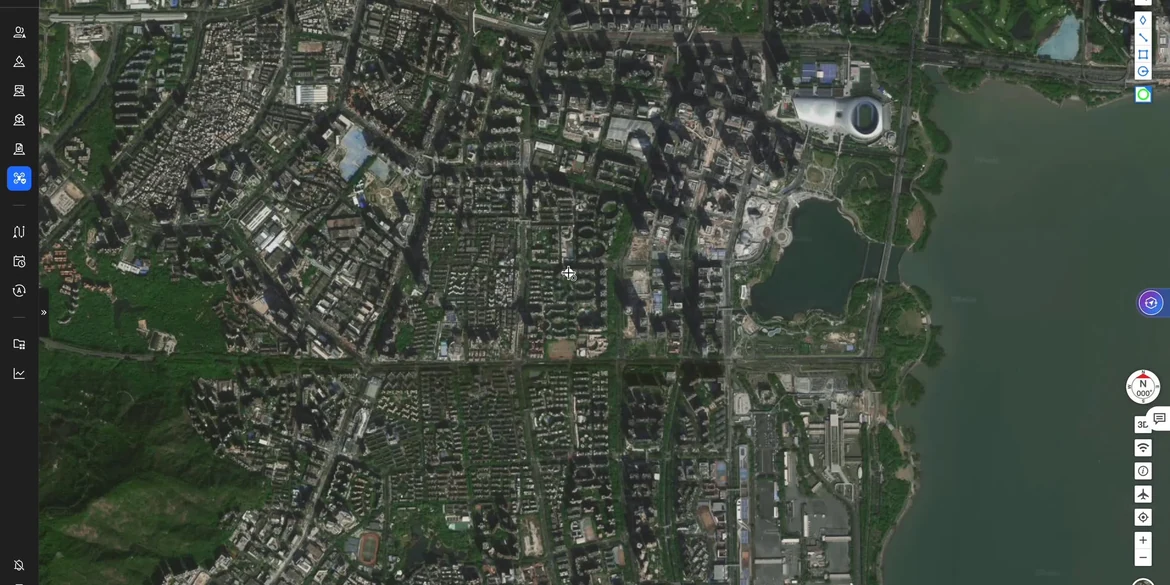
Parachute and custom flight boundaries
The DJI parachute reduces impact following a sudden system failure. Custom flight zones are enforced directly by the flight controller to help keep the aircraft within its authorized operating area.
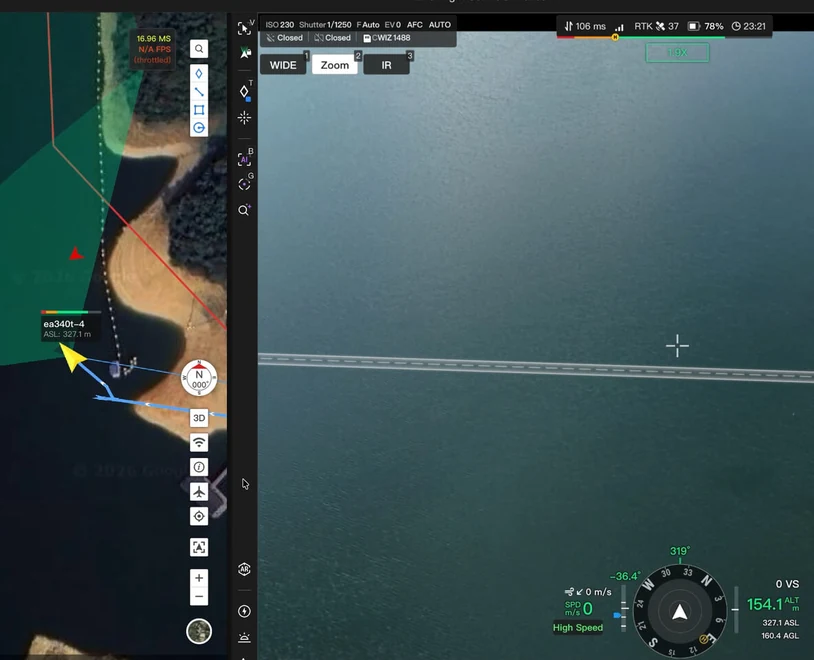
O4 Ground Station airspace sensing
A third-party Remote ID receiver can connect to O4 Ground Station through MQTT to provide nearby-aircraft information. Aircraft ADS-B/RID sensing displays supported traffic in FlightHub 2.[20]
Third-party airspace information
Connected airspace-information services can show local conditions, restrictions and risk guidance for planning and in-flight assessment. DJI also provides a dedicated dock-compliance reference and document-download page.
Data protection throughout the lifecycle
Collection
Operational, flight and device data enters encrypted channels when generated, helping protect it against interception and manipulation.
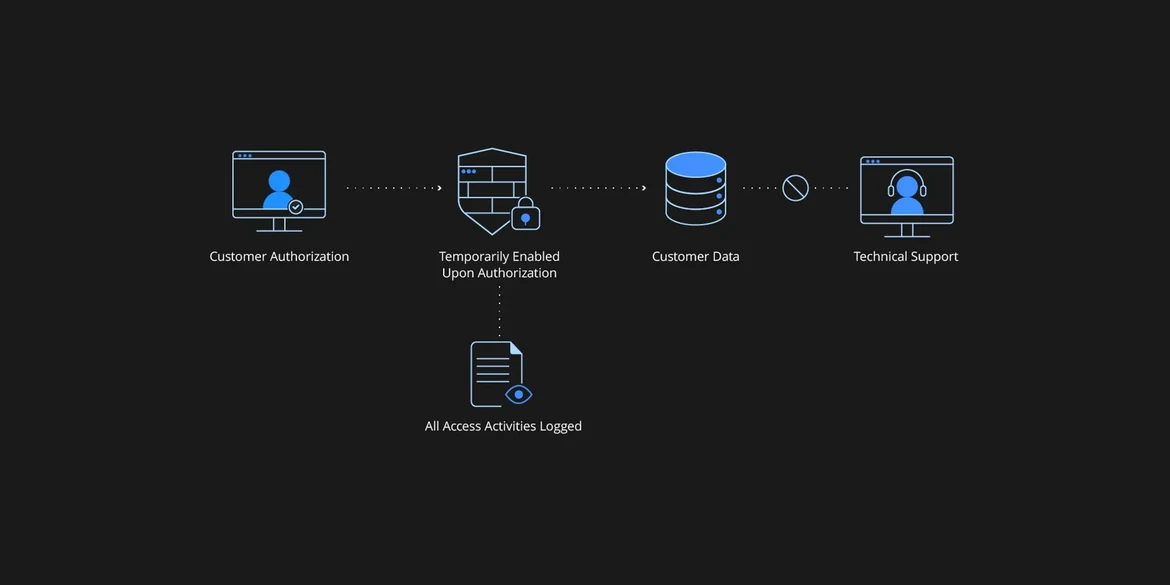
Transmission
DJI specifies TLS 1.2+ and AES-256 protection between the aircraft and dock, and HTTPS, WSS and TLS for uploads between dock and cloud.
Storage
Sensitive stored information is protected with AES-256-CBC. Access permissions restrict users to authorized data, while access logs provide an audit trail.
Deletion
Deletion is available at account, organization and device levels. Account removal concerns the user’s data; organization deletion removes associated organizational data. Local logs and cache can be cleared through the DJI Pilot app, or device data erased with a factory reset.
Open development ecosystem
Onboard AI development
The AI Inside platform introduces a model architecture supporting dual-stream encoding, quantization tools and deployment channels for onboard algorithms.
Third-party payload integration
Three E-Port interfaces and a 450 g payload allowance support devices such as gas detectors and current-flow meters, subject to integration and installation requirements.
TerraGS-CesiumJS web plugin
The CesiumJS-based plugin lets third-party platforms load and interact with large, high-precision 3D Gaussian Splatting datasets in real time for urban reconstruction, mixed reality and digital twins.
Cloud-to-cloud coordination
FlightHub 2 OpenAPI connects operational data and supported functions to third-party cloud platforms.
Service and support
Matrice 5TD: Care Enterprise Plus
The listed first-year service includes repairs within coverage limits, eligible shared fleet coverage, one battery replacement per year, one flyaway claim per year, covered-region two-way shipping and expert support. Region-specific terms and binding requirements apply.[23]
Additional official warranty year
DJI lists an additional year of official extended warranty for the Matrice 5TD aircraft body, gimbal camera and O4 Ground Station, with professional engineering support and original replacement parts. Confirm the applicable package and local service terms with ATTEX.[26]
Application areas
First response, security and inspection
DJI presents Dock 4 for Dock as First Responder operations, site security, infrastructure inspection, agriculture and mining. The appropriate installation, aircraft payload and software workflow depend on the location and mission.
Key technical specifications
| Dock weight | 66 kg without compartment batteries or aircraft |
|---|---|
| Dock dimensions | Open: 1750 × 640 × 550 mm; closed: 639 × 640 × 836 mm. Includes wind gauge and mounting brackets. |
| Power supply | 100–240 V AC, 50/60 Hz; maximum 2000 W |
| Protection | Dock IP56; aircraft IP55; O4 Ground Station IP67. Installation and wear affect protection. |
| Dock / aircraft temperature | −40 to 50 °C |
| Swap / turnaround | Swap <25 s; landing-to-next-takeoff <45 s in controlled tests. |
| Battery storage / charging | Up to 3 batteries in 4 compartments; 2 parallel charging channels; 15–95% in 27 min at 25 °C. |
| Dock backup power | Approx. 4.5 h per battery at 25 °C, 90–10%; sequential use of 3 batteries. No aircraft charging, air conditioning or wind-gauge heating during an outage. |
| Matrice 5TD weight | 2600 g including battery, propellers and microSD; maximum takeoff weight 3050 g |
| Aircraft dimensions | 393 × 477 × 230 mm without propellers |
| Flight / hover time | Up to 59 / 55 min in windless tests at 20 m, to 0% battery; flight test at 15 m/s without payload. |
| Speed / wind | 21 m/s FlyTo, 15 m/s other modes; wind resistance 12 m/s |
| Transmission (CE) | Up to 12 km unobstructed and interference-free, one-way non-return test; not an operating-radius guarantee. |
| Visible cameras | Wide: 1/0.98-inch, 23.5 mm, f/1.8; medium tele: 1/1.28-inch, 70 mm, f/2.88; tele: 1/1.5-inch, 252 mm, f/2.8. All 50 MP; lens defogging supported. |
| Thermal camera | 1280 × 1024 at 30 Hz; UHR 2560 × 2048 at 30 fps; 32× zoom; f/0.85 |
| Thermometry | High gain −40 to 150 °C, ±2 °C or ±2%; low gain 0 to 550 °C, ±5 °C or ±3% (whichever is greater). |
| Aircraft battery | 12,138 mAh; 21.42 V; 260 Wh; Li-ion 6S; 925 g |
| AL2D spotlight | 115 g excluding bracket; 11.2 ±0.5 lux at 100 m in spotlight mode, 25 °C laboratory test; IP55. |
| AS2D loudspeaker | 188 g excluding bracket; 120.5 dB at 1 m; effective distance 400 m in 25 °C laboratory tests; IP55. Live, recorded, imported-file and text-to-speech modes. |
| AP1 parachute | 107 g excluding bracket; minimum effective deployment height 35 m; stabilized descent <6 m/s under DJI test conditions. Below 35 m it may not fully inflate; some cases require manual deployment. |
Official DJI resources
Test conditions, limitations and service notes
DJI’s figures refer to production units in controlled tests; results vary with environment, use and firmware. Images illustrate capabilities. Follow local rules and applicable certification requirements. Activate Matrice 5TD in the DJI Enterprise app before use and carry out regular maintenance.
- Battery-swap timing starts with the dock cover fully closed and ends when the swap is complete; controlled-test result.
- O4 Ground Station is required. Gateway Mode connects through Ethernet or Cellular Dongle 2 to FlightHub 2 cloud, On-Premises, all-in-one and compatible Cloud API/FlightHub Sync platforms.
- AI workflow covers task breakdown, route planning, dispatch, detection, analysis and reporting.
- 21 m/s applies only to FlyTo tasks; other modes support up to 15 m/s.
- 59 minutes: windless laboratory, no payload, 20 m altitude, constant forward speed 15 m/s, battery depleted to 0%. Environment, use and firmware affect endurance.
- Latency is indicative and depends on network and computer performance.
- 4G is unavailable in some countries or regions; confirm local availability.
- Permitted operating frequencies vary by country and region.
- 80 MB/s: near-field interference-free test with 2.4/5.8 GHz dual-band support and the included SD card. Wi-Fi transfer starts after landing. The maximum relates to large files; small files may be slower.
- 10 cm checkpoint accuracy: 120 m altitude, classic orthographic/oblique area route without Terrain Follow, 12 MP wide-angle photos, good light and distinct angular surface features. O4 Ground Station calibrated using custom network RTK; FlightHub 2 default speed, 70% side and 80% front overlap; bare hard diffuse-reflective reference markers; processing in Terra or FlightHub 2.
- 400 m detail example was measured with the telephoto camera directly facing the target in controlled conditions.
- Some accessories are separate purchases and may affect sensing or flight performance; follow their instructions.
- The Matrice 5TD Accessory Mount is required.
- mmWave radar may be restricted or unavailable in some regions.
- Sensing supports 11 mm black rubber-insulated wires. Weather, material, position and shape affect detection and bypassing. Fast-moving objects cannot be actively avoided. Radar may be partially or fully restricted locally; consult the manual.
- Vision switches to monochrome below 12 lux.
- Near-high-rise deployment depends on satellite positioning coverage, currently most Asia-Pacific regions. Place O4 Ground Station in an open area and survey its installation location with a Matrice 4 Series or Matrice 4D aircraft before deployment. Consult the installation manual for coverage and procedures.
- Vehicle mounting is expected in H1 2027 via subsequent firmware information. No takeoff or landing while the vehicle moves. The Vehicle-Mounted Gimbal Mount is required; observe road safety, height limits and local rules.
- DJI states Matrice 5TD with AP1 meets EU C5/UK5 operational requirements (STS-01) and EU C6/UK6 requirements (STS-02).
- Traffic sensing currently covers crewed aircraft transmitting ADS-B Out and selected DJI models with RID and OID.
- FlightHub 2 integration channels include atomic-function OpenAPI, embeddable front-end components and MQTT Bridge device-data forwarding.
- Dock repair-parts cover pays only for required parts within the coverage scope and limit.
- Care Enterprise varies by region. Repairs are subject to coverage scope and amount. Fleet sharing requires eligible Plus products activated and bound within the same 30-day period. Flyaway cover requires account linking and gateway binding in DJI Enterprise. Two-way shipping applies in covered regions; extra logistics and customs outside coverage are payable by the user.
- DJI’s equipment-ROI comparison refers to combining Matrice 4TD and Matrice 4D operational capabilities in Matrice 5TD.
- Turning on the spotlight disables visual obstacle sensing. Only radar and LiDAR remain active, reducing omnidirectional sensing performance.
- The extra official warranty year covers the aircraft body, gimbal camera and O4 Ground Station, with main components under official warranty and engineering support.
Request an offer for DJI Dock 4
Tell us about your site and intended operation. An ATTEX representative will contact you about the configuration, installation and software that fit your project.